




Laser Vision Correction Types – Complete Guide by Leevision
Introduction
At Leevision, we believe that everyone deserves clear vision without relying on glasses or contact lenses. Modern laser vision correction types allow patients to achieve improved eyesight safely, quickly, and effectively. Whether you are nearsighted, farsighted, or have astigmatism, there is likely a procedure that fits your needs perfectly.
Laser surgery has changed the way people see the world, and at Leevision, we offer advanced treatments tailored to each patient. In this guide, we will cover the different types of laser vision correction, explain how laser surgery corrects vision, and discuss the ideal laser vision correction age for safe and effective results.
Learn more about our comprehensive eye care services at Leevision
What is Laser Vision Correction?
Laser vision correction is a procedure that reshapes the cornea—the clear front part of your eye—so that light can focus precisely on the retina. This correction helps eliminate common vision problems, including:
-
Nearsightedness (Myopia): Difficulty seeing distant objects
-
Farsightedness (Hyperopia): Difficulty seeing close objects
-
Astigmatism: Blurred or distorted vision at all distances
At Leevision, we use state-of-the-art laser technology to ensure accurate results with minimal discomfort. With correct vision laser procedures, patients can often experience clearer vision within 24–48 hours.
Learn about LASIK technology from American Academy of Ophthalmology.
Laser Vision Correction Types at Leevision
1. LASIK Surgery
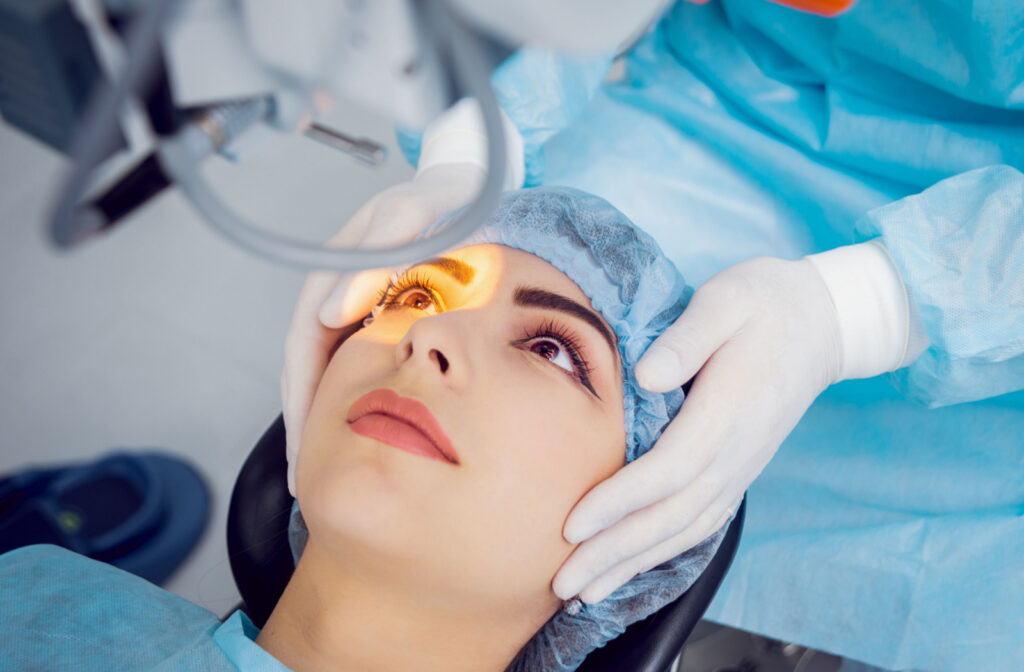
LASIK (Laser-Assisted In Situ Keratomileusis) is the most popular procedure at Leevision. It involves creating a thin flap in the cornea and reshaping the underlying tissue with a laser.
Key Benefits:
-
Quick and minimally painful procedure
-
Fast recovery (often same day or next day)
-
Suitable for nearsighted, farsighted, and astigmatic patients
How it works: The laser precisely removes corneal tissue to improve the eye’s focusing ability. This is exactly how laser surgery corrects vision for most patients.
Read more about LASIK from Mayo Clinic.
2. PRK Surgery
Photorefractive Keratectomy (PRK) is ideal for patients with thinner corneas or certain eye conditions. The outer corneal layer is gently removed, and the laser reshapes the cornea underneath.
Benefits:
-
No corneal flap (lower risk of flap complications)
-
Effective for nearsighted, farsighted, and astigmatic patients
-
Slightly longer recovery than LASIK
Tips for patients: PRK may be recommended for individuals involved in contact sports or those with active lifestyles.
Learn about PRK from WebMD.
3. SMILE Surgery
Small Incision Lenticule Extraction (SMILE) is a minimally invasive procedure that removes a small lens-shaped piece of corneal tissue through a tiny incision.
Benefits:
-
Less dry eye compared to LASIK
-
Reduced risk of flap complications
-
Fast recovery and minimal discomfort
Patient Tip: SMILE is especially suitable for patients with nearsightedness who prefer a minimally invasive approach.
4. LASEK Surgery
Laser Epithelial Keratomileusis (LASEK) combines aspects of LASIK and PRK. A thin layer of the corneal epithelium is lifted, and the laser reshapes the cornea.
Benefits:
-
Safer for thin corneas
-
Lower risk of flap complications
-
Ideal for patients with specific corneal conditions
Patient Tip: Healing may take longer than LASIK, but the procedure is highly effective and safe when performed by specialists at Leevision.
How Does Laser Surgery Correct Vision?
Secondary keyword: how does laser surgery correct vision
At Leevision, lasers work by reshaping the cornea with extreme precision, ensuring light focuses correctly on the retina.
Mechanism:
-
Nearsightedness: Laser flattens the cornea to reduce focusing power
-
Farsightedness: Laser steepens the cornea for better near vision
-
Astigmatism: Laser smooths the irregular curvature for clearer vision
Laser technology at Leevision ensures minimal discomfort, fast recovery, and excellent results for most patients.
Laser Vision Correction Age
Secondary keyword: laser vision correction age
Ideal age: 18–40 years, when vision is stable.
Considerations:
-
Vision must not have changed significantly in the past year
-
Certain eye conditions may affect eligibility
-
Older adults may benefit from laser procedures combined with cataract treatment
Patient tip: Leevision specialists conduct a full eye examination to determine the right age and procedure for each patient.
Benefits of Laser Vision Correction at Leevision
-
Long-lasting vision improvement
-
Reduced dependence on glasses or contacts
-
Quick and painless procedures
-
Minimal downtime and fast recovery
-
Improved confidence and quality of life
Risks and Considerations
While laser vision correction at Leevision is safe, some risks may include:
-
Temporary dry eyes
-
Glare or halos around lights
-
Mild discomfort or blurry vision for a few days
-
Rare complications (minimized with modern technology and experienced surgeons)
Tip: Proper pre-operative evaluation and post-operative care ensure the best outcomes.
Choosing the Right Procedure at Leevision
Patient guide:
-
LASIK: Best for most patients with normal corneas
-
PRK: Recommended for thin corneas or active lifestyles
-
SMILE: Minimally invasive, ideal for nearsightedness
-
LASEK: Safe for patients with specific corneal conditions
Leevision specialists provide personalized recommendations based on eye health, age, lifestyle, and vision goals.
FAQs
Q1: How long does laser vision correction last?
A: Most patients enjoy permanent results. Age-related changes may occur over decades.
Q2: Is laser vision correction safe for all ages?
A: Generally safe for adults with stable vision, typically between 18–40 years.
Q3: Can I correct both near and far vision?
A: Yes, with customized LASIK or PRK procedures.
Q4: How much does laser eye surgery cost?
A: Costs vary by procedure and clinic. Consult Leevision specialists for details.
Q5: Are there non-surgical alternatives to laser vision correction?
A: Glasses and contact lenses are still reliable options, but laser surgery provides long-term freedom from corrective lenses.
Conclusion
At Leevision, we provide safe, effective, and personalized solutions for better eyesight. Understanding laser vision correction types, how laser surgery corrects vision, and the ideal laser vision correction age empowers patients to make informed decisions.
Explore our full range of eye care Book Consultation Now at Leevision.