



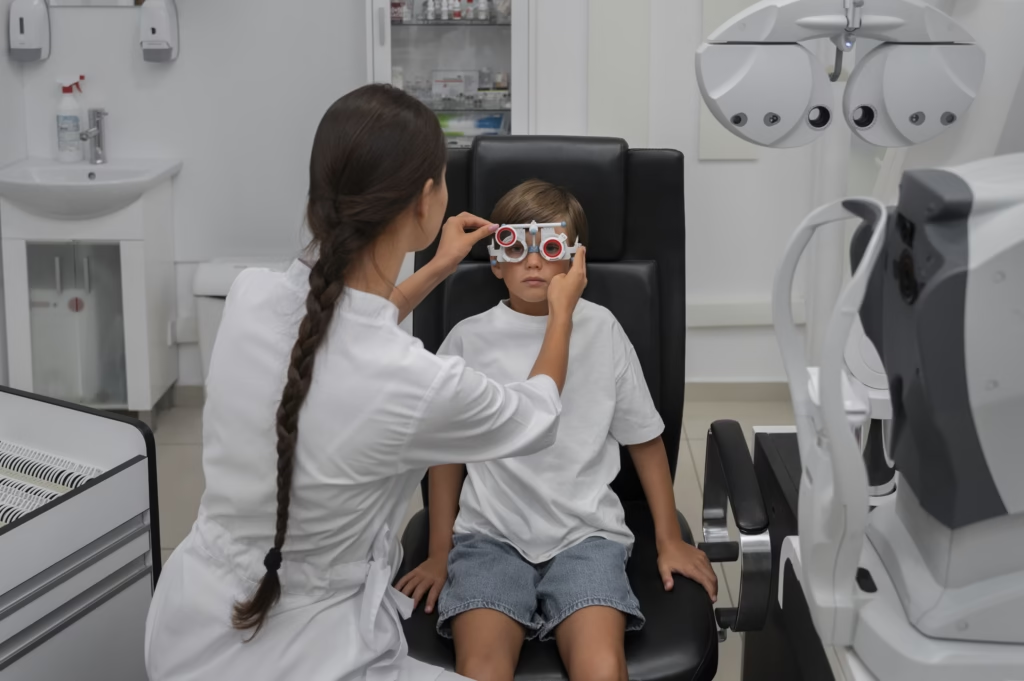
Healthy vision is one of the most important factors in a child’s overall growth, learning, communication and daily life. From recognizing faces during infancy to reading, writing and participating in school activities, vision plays a crucial role in how children understand the world around them. Yet, many parents are unaware that vision problems in children often go unnoticed until they begin to affect academic performance or behaviour. This is why pediatric vision screening and regular pediatric eye exams are essential.
The eyes of a child develop rapidly from birth until early adolescence. Any disruption in this development whether due to refractive errors, misalignment or eye diseases can have long-term consequences if not detected early. Regular kids eye exams performed by a trained pediatric optometrist can detect problems early and prevent lifelong visual challenges.
This article explores the importance of pediatric vision screening, signs of vision problems, when children should get an eye exam for kids and how early detection supports healthy child development.
Why Vision is Crucial for Child Development
Vision influences almost every aspect of a child’s growth. According to studies, up to 80% of learning in early childhood is visual. Children rely on their eyes for:
- Recognizing shapes, patterns and colors
- Developing hand eye coordination
- Building reading and writing skills
- Understanding spatial awareness
- Learning through observation
When a child has an undiagnosed vision problem, it may appear as slow learning, poor behavior, lack of concentration or difficulty in school. Many times, these issues are mistakenly labeled as attention problems when the core issue is visual.
A timely pediatric eye exam can help detect these problems before they interfere with development.
What Is Pediatric Vision Screening?
Pediatric vision screening is a quick evaluation performed at schools, clinics or pediatric offices to check whether a child might have a vision problem. It is not a replacement for a comprehensive eye exam but it is the first line of defense in identifying risk.
Screenings typically look for:
- Nearsightedness (myopia)
- Farsightedness (hyperopia)
- Astigmatism
- Lazy eye (amblyopia)
- Eye misalignment (strabismus)
- Red flags for eye diseases
If a screening identifies a potential problem, the child is referred to a pediatric optometrist for a detailed evaluation.
Pediatric vision screenings are simple, painless and extremely effective at catching problems early.
Why Pediatric Eye Exams Are More Important Than Screenings
While screenings help identify risk, pediatric eye exams are more comprehensive and detailed. A pediatric eye exam includes:
- Vision acuity testing
- Refraction test
- Eye alignment assessment
- Eye movement tests
- Eye health evaluation using specialized equipment
- Depth perception and focusing tests
A pediatric optometrist is trained to work with infants, toddlers and school-aged children, ensuring accurate diagnosis even for those who cannot yet speak or read.
Screenings detect problems. Eye exams diagnose and treat them.
Stages of Vision Development in Children
Understanding how a child’s vision develops helps parents appreciate the importance of early care.
0–6 Months
- Babies begin to focus on objects
- Eye-hand coordination develops
- Tracking moving objects improves
6–12 Months
- Depth perception sharpens
- Babies recognize familiar people visually
1–3 Years
- Eyes become more coordinated
- Visual learning increases significantly
3–5 Years
- Children develop pre-reading visual skills
- They need clear vision for drawing, puzzles and identification tasks
5+ Years
- Vision becomes central to academic performance
- Undetected problems may appear as reading difficulty or slow learning
Every stage requires healthy vision. Any interruption can slow developmental progress.
Common Vision Problems in Children
- Refractive Errors
Includes nearsightedness, farsightedness and astigmatism.
These can cause blurred vision, headaches or eye strain during reading.
- Amblyopia (Lazy Eye)
Occurs when one eye is weaker.
Early detection is crucial because treatment is most effective before age 7.
- Strabismus (Eye Misalignment)
If untreated, it can lead to double vision or amblyopia.
- Convergence Insufficiency
Affects reading and near work.
May cause headaches or difficulty focusing on close tasks.
- Childhood Eye Diseases
Such as congenital cataract or glaucoma which require immediate treatment.
Signs Your Child May Need a Kids Eye Exam
Parents should watch for:
- Frequent eye rubbing
- Squinting
- Holding objects too close
- Sitting too close to screens
- Tilting the head
- Difficulty reading
- Frequent headaches
- Poor attention
- Complaints of blurry vision
- One eye turning inward or outward
If your child shows any of these signs, schedule an eye exam for kids immediately.
When Should Children Get Pediatric Eye Exams?
Experts recommend:
- At 6 months – First pediatric eye exam
- At 3 years – Preschool exam
- Before starting school (age 5–6)
- Every year after that, especially if your child wears glasses or has symptoms
Screenings at school are helpful, but they do not replace annual comprehensive exams.
How Poor Vision Affects Learning and Behavior
Vision problems can mimic learning difficulties such as dyslexia or ADHD. A child who cannot see clearly may:
- Lose focus quickly
- Avoid reading or writing
- Have poor hand eye coordination
- Struggle with math or copying from the board
- Perform below grade level
Early pediatric vision screening and regular pediatric eye exams ensure that children perform their best in school and daily life.
The Role of a Pediatric Optometrist
A pediatric optometrist specializes in diagnosing vision problems unique to children. They understand how to examine kids who may feel shy, scared or unable to explain symptoms.
They also provide:
- Vision therapy
- Eyeglasses for children
- Eye alignment treatment
- Monitoring of visual development
Choosing the right specialist makes a significant difference.
The Long-Term Benefits of Early Vision Screening
- Better academic performance
- Improved attention and behaviour
- Prevention of long-term vision loss
- Early correction of refractive errors
- Higher confidence in sports and daily tasks
- Greater safety during play
- Early detection of eye diseases
Children who see clearly, learn clearly.
Frequently Asked Questions
- What is pediatric vision screening?
It is a quick check to identify potential vision problems in children. Screenings help identify children who need further testing.
- How is a pediatric eye exam different?
A pediatric eye exam is a detailed evaluation of vision and eye health performed by a pediatric optometrist.
- When should my child have their first eye exam?
At 6 months old, then at 3 years, before starting school and every year after.
- What are common signs of vision problems in kids?
Squinting, headaches, poor reading performance, eye rubbing and sitting too close to screens.
- Can vision problems affect learning?
Yes. Up to 80% of learning is visual, so poor vision directly affects school performance.
- Are school vision tests enough?
No. They are basic screenings and cannot detect all eye problems.
- What is the role of a pediatric optometrist?
To diagnose, treat and monitor eye and vision problems in children.
- Can children wear glasses at a young age?
Yes. Glasses can be prescribed safely even for infants if necessary.
- Are vision problems hereditary?
Some are. If parents have eye problems, children should be examined earlier and more frequently.
- What happens if vision problems are not treated early?
It can lead to permanent vision loss, poor school performance and developmental delays.
Conclusion:
Vision is one of the most important senses for a child’s overall development. Clear sight supports learning, communication, behavior and emotional well-being. Regular pediatric vision screening, followed by comprehensive pediatric eye exams, ensures early detection and treatment of problems that may otherwise go unnoticed.
By staying proactive and visiting a qualified pediatric optometrist, parents can protect their child’s visual health and give them the best start in life. A simple kid eye exam can make a lifelong difference.