







Cataract with Laser—Modern Eye Surgery Explained
Cataract with laser is an advanced, state‑of‑the‑art approach to treating cataracts that enhances precision and safety over traditional methods. With laser technology increasingly used in ophthalmology, patients now benefit from improved visual outcomes and a more predictable cataract surgery experience. In this comprehensive guide, we’ll break down what laser cataract surgery is, how it works, who’s a candidate, what to expect during recovery, and answer common questions to help you make an informed choice about your eye health.
What is Cataract Surgery with Laser?
Cataracts occur when the natural lens of the eye becomes cloudy, leading to blurred vision, glare, and difficulty with everyday activities like reading or driving. Traditionally, cataract removal involved manual techniques using handheld instruments to break up and remove the cloudy lens. However, with the evolution of technology, laser surgery for cataracts has emerged as a highly precise alternative.
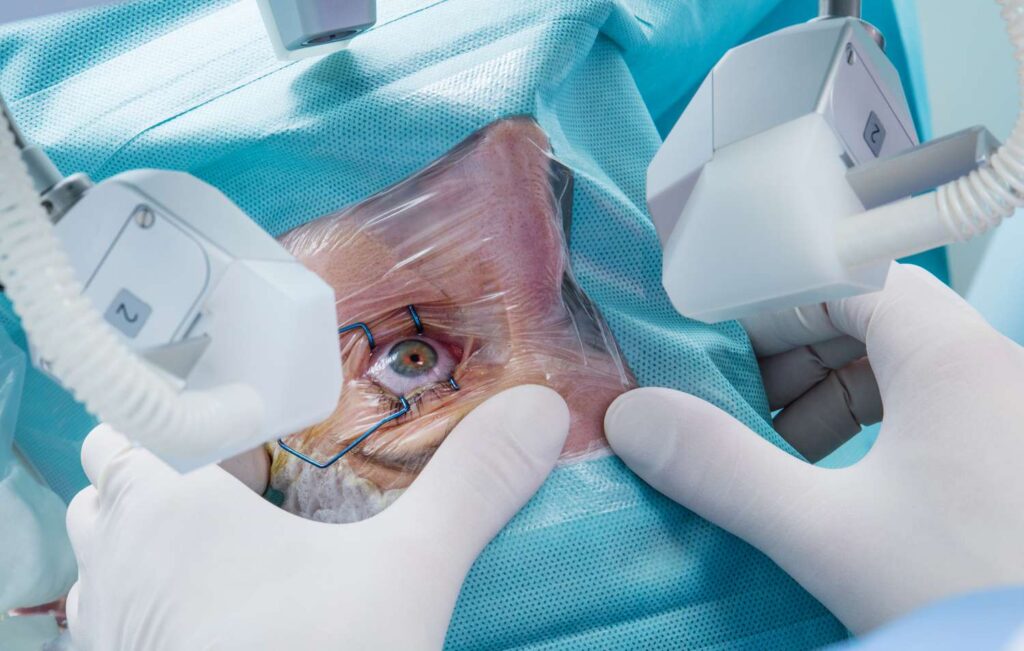
Laser‑assisted cataract surgery uses a femtosecond laser — the same type of laser used in some refractive surgeries — to perform key steps in the cataract removal process. These include creating incisions, opening the lens capsule, and softening the cataract for easier removal. Because the laser is computer-guided based on detailed imaging of your eye, the procedure can be tailored specifically to your unique anatomy.
At Lee Vision, our surgeons employ the latest laser systems to ensure the highest level of precision and safety for every patient. Laser cataract surgery is sometimes called “bladeless” cataract surgery for this reason. Learn more about our cataract surgery services for detailed patient information.
Cataract Surgery Procedure – Step by Step
Understanding the cataract surgery procedure laser involves can help alleviate concerns and build confidence. Here is a clear, step‑by‑step look at what typically happens during a laser cataract surgery:
1. Preoperative Assessment and Eye Mapping
Before surgery, your eye will undergo detailed imaging, often using optical coherence tomography (OCT) and wavefront analysis. This creates a precise map of your eye’s anatomy, which guides the laser during the procedure. Imaging ensures customized incisions and optimal lens positioning. You can read more about preoperative eye assessments on our website.
2. Anesthesia and Preparation
Laser cataract surgery is usually performed under local anesthesia with numbing eye drops, ensuring you are comfortable throughout. Sedation may also be offered for relaxation.
3. Laser‑Guided Incisions
Unlike traditional cataract surgery where a surgeon manually creates incisions, the laser makes these openings with pinpoint precision, reducing variability. This includes the main incision to access the cataract and any smaller incisions for instruments.
4. Capsulotomy (Opening the Lens Capsule)
The laser creates a perfectly centered, circular opening in the anterior lens capsule (the capsule that holds the lens). This step is critical for optimal lens placement and visual outcomes. Traditional manual capsulotomies can vary in size and shape, but laser capsulotomies tend to be more consistent.
5. Lens Fragmentation
The laser softens and segments the cataract, making it easier to remove with gentle suction. This reduces the amount of ultrasound energy needed, which can help protect delicate eye tissues.
6. Phacoemulsification and Lens Removal
Once the cataract is pre‑treated with the laser, the surgeon uses a small probe that emits ultrasound waves (phacoemulsification) to break up and remove the lens fragments. Because the laser has already done much of the work, this step is often faster and gentler.
7. Intraocular Lens (IOL) Implantation
After the cloudy lens is removed, a clear intraocular lens (IOL) is placed inside the lens capsule. There are many types of IOLs available, including monofocal, multifocal, and toric lenses, which can address presbyopia and astigmatism in addition to vision correction.
Following surgery, your eye is usually covered with a protective shield, and you will rest briefly before going home. Many patients experience improved vision within a day or two.
Benefits of Laser Surgery for Cataracts
Laser cataract surgery offers several advantages over traditional manual techniques. While not every patient is a candidate for laser‑assisted procedures, many benefit from its enhanced precision and safety.
- Greater precision: The laser’s computer‑guided incisions and capsulotomies are highly reproducible, which is essential for effective IOL positioning.
- Customized treatment: Preoperative imaging allows for individualized planning based on your eye’s unique anatomy.
- Reduced energy use: By pre‑softening the cataract, the laser often reduces the amount of ultrasound energy required, which can lead to faster recovery.
- Improved outcomes: For patients with astigmatism, laser systems can make precise arcuate incisions to improve visual outcomes without glasses.
- Safer incisions: Laser incisions may heal more predictably and with less induced astigmatism than manual cuts.
According to the Mayo Clinic, cataract surgery in general is one of the safest and most effective surgical procedures, with long-term success rates exceeding 95% when complications are minimized through advanced techniques like laser guidance.
Laser Eye Surgery for Cataracts – Who is a Candidate?
Laser eye surgery for cataracts isn’t automatically the best option for everyone. Ideal candidates typically include:
- Patients with visually significant cataracts that interfere with daily activities like reading, driving, or working.
- Individuals who want the most precise and customized surgical approach available.
- People with corneal astigmatism who may benefit from laser‑assisted arcuate incisions.
- Patients interested in premium IOL options to reduce dependence on glasses.
- Those in good overall eye health without significant macular degeneration, uncontrolled glaucoma, or severe dry eye.
Your ophthalmologist will evaluate your medical history, eye health, and lifestyle needs to determine whether laser cataract surgery is right for you. Comprehensive eye exams, including corneal topography and OCT, help identify any conditions that might affect candidacy or outcomes. You can also read expert insights on WebMD on laser cataract surgery for additional guidance.
At Lee Vision, we provide a thorough evaluation to ensure that if laser cataract surgery is recommended, it aligns with your visual goals and ocular health.
Recovery and Safety Considerations
Recovery after laser cataract surgery is usually fast and straightforward. Most patients notice clearer vision within a day or two, although full stabilization may take a few weeks. Below are key points to understand about recovery and safety:
Post‑Operative Care
- Eye drops: Your surgeon will prescribe antibiotic and anti-inflammatory eye drops to prevent infection and control inflammation.
- Avoid rubbing: Don’t rub your eye during the initial healing period to reduce the risk of complications.
- Protective eyewear: Use the shield provided at night to prevent accidental rubbing.
- Avoid strenuous activities: Heavy lifting and intense exercise should be avoided for the first week.
Possible Risks
Although rare, complications can occur with any surgical procedure. These may include infection, inflammation, retinal detachment, or posterior capsule opacification (PCO). The use of advanced laser systems aims to reduce these risks by improving precision and consistency.
According to All About Vision, posterior capsule opacification is the most common long-term complication, but it is easily treated with a quick laser procedure if needed months or years after surgery.
FAQs
1. Is laser cataract surgery better than traditional cataract surgery?
Both traditional and laser-assisted cataract surgeries are effective. However, laser-assisted surgery offers increased precision, customization, and may reduce the need for ultrasound energy. Not every patient needs laser surgery — your eye surgeon will guide the best option based on your eye’s health.
2. Does laser cataract surgery hurt?
No. Laser cataract surgery is performed under local anesthesia with numbing drops. Most patients feel minimal to no discomfort during the procedure. Sedation may also be offered for added relaxation.
3. How long does the procedure take?
The laser portion adds precision but the overall procedure is typically quick. Most laser cataract surgeries take about 10–20 minutes, and many patients go home the same day.
4. Will I need glasses after laser cataract surgery?
Some patients achieve excellent vision without glasses, especially if they choose premium IOLs. However, glasses may still be needed for certain activities, particularly reading or computer work, depending on your visual goals and IOL choice.
5. Are there age limits for laser cataract surgery?
Cataracts typically develop with aging, and laser cataract surgery is commonly performed in older adults. There’s no upper age limit, but candidacy depends on overall eye health rather than age alone.
6. Can both eyes be treated at the same time?
Usually, cataract surgery is performed on one eye at a time to ensure safety and optimal healing. Surgery on the second eye can be scheduled shortly after the first, often within days to weeks.
7. What makes cataract with laser different from traditional cataract surgery?
Cataract with laser differs from traditional cataract surgery because it uses advanced femtosecond laser technology to perform key steps such as precise incisions, capsulotomy, and lens fragmentation. This laser-guided approach increases accuracy, reduces the use of ultrasound energy, and can lead to faster recovery and better visual outcomes. Patients who want a highly customized and modern treatment often prefer this technique.
If you’re considering cataract with laser and want personalized guidance, contact Lee Vision today to schedule a comprehensive evaluation with our expert ophthalmologists. Modern laser technology continues to transform eye care, helping patients see more clearly and live with greater independence.