



Eye Exam Machine: Understanding the Technology Behind a Comprehensive Eye Examination
Most people expect to read an eye chart during an eye exam. While that remains an important part of evaluating vision, today’s comprehensive eye examinations involve much more than checking whether you can read letters from across the room. Modern eye care relies on advanced diagnostic technology that helps ophthalmologists identify vision changes, detect eye diseases at earlier stages, and develop treatment plans based on each patient’s individual needs.
If you’ve ever wondered why your ophthalmologist moves you from one device to another during an appointment, you’re not alone. One of the most common questions patients ask is, “What does each eye exam machine actually do?”
At LeeVision in Flushing, Queens, comprehensive eye examinations are performed using advanced diagnostic equipment that allows Dr. David H. Lee, MD, a Board-Certified Ophthalmologist, to evaluate not only how well you see but also the overall health of your eyes. Each machine provides a different piece of information, helping create a complete picture of your vision and eye health while supporting evidence-based treatment decisions.
Whether you’re experiencing blurred vision, eye strain after long hours on digital devices, or simply scheduling your annual eye examination, understanding the purpose of each eye exam machine can help you feel more informed and comfortable during your visit.
Why Modern Eye Exams Involve More Than an Eye Chart
Many eye conditions develop gradually without causing noticeable symptoms in their early stages. Diseases such as glaucoma, diabetic retinopathy, and certain retinal disorders may begin affecting the eye long before vision changes become obvious.
This is why ophthalmologists rely on advanced diagnostic equipment instead of vision charts alone.
A modern vision testing machine provides objective measurements that cannot be determined through a standard visual acuity test. These technologies allow physicians to evaluate the cornea, retina, optic nerve, eye pressure, focusing ability, and overall eye function with a level of detail that was not possible years ago.
For patients living in New York City, especially those in Flushing and Queens, regular exposure to computers, smartphones, tablets, and prolonged screen use has made comprehensive eye examinations increasingly important. Digital eye strain, dry eye symptoms, and changing vision have become common concerns among students, office professionals, and commuters who spend much of their day looking at digital displays.
What Is an Eye Exam Machine?
An eye exam machine is a general term used to describe the specialized diagnostic equipment ophthalmologists and optometrists use during a comprehensive eye examination. Rather than relying on a single device, several machines work together to evaluate different parts of the eye.
Each machine measures specific aspects of vision or eye health. Some determine how clearly you see, while others create detailed images of the retina, measure eye pressure, or examine the shape of the cornea.
These advanced technologies help physicians:
- Detect eye diseases earlier
- Monitor changes over time
- Measure vision accurately
- Plan personalized treatment
- Improve long-term vision preservation
- Reduce the need for unnecessary testing
Most tests are painless, non-invasive, and take only a few minutes to complete.
Types of Eye Exam Machines Used During a Comprehensive Eye Examination
During your appointment, you may encounter several different devices. Although they may appear complex, each serves a specific purpose in evaluating your eye health.
Digital Visual Acuity System
The familiar eye chart has evolved into a digital testing system that measures how clearly you can see letters, numbers, or symbols at various distances.
This initial assessment helps establish your baseline vision and determines whether additional refractive testing is needed.
Although simple, this remains an important part of every comprehensive examination.
Phoropter

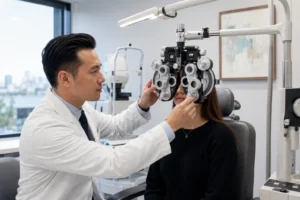
One of the most recognizable instruments in eye care is the phoropter—the device placed in front of your face while your doctor asks, “Which is clearer, one or two?”
This eyesight test machine fine-tunes your eyeglass or contact lens prescription by comparing multiple lens combinations. The process helps determine the most comfortable correction for distance and near vision.
Patients often worry about giving the “wrong” answer during this test. In reality, ophthalmologists look for consistent patterns rather than perfect responses, so there is usually no need to feel anxious if two choices seem similar.
Autorefractor

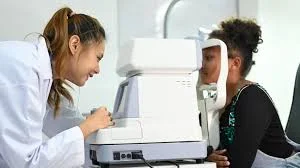
Before the phoropter test begins, many practices use an autorefractor.
This computerized eye testing machine estimates your refractive error by measuring how light travels through the eye.
While it provides a useful starting point, the final prescription is always refined by your physician using additional testing and your visual feedback.
Autorefraction is especially helpful for children, patients receiving their first eye examination, and individuals who have difficulty describing changes in their vision.
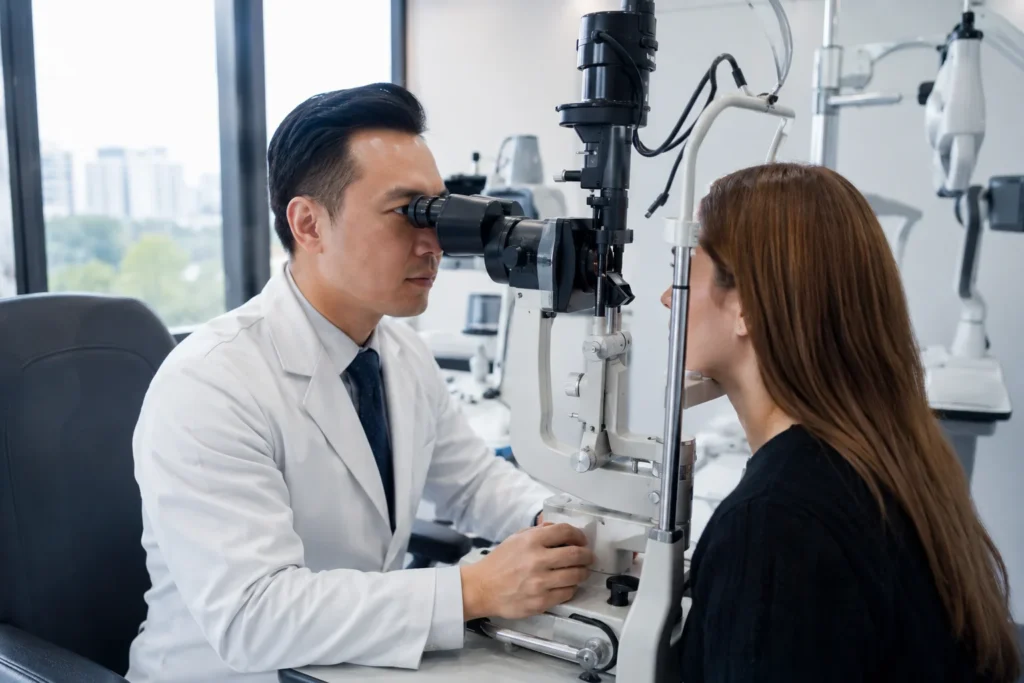
Slit Lamp Biomicroscope
Although many patients simply call it the “bright light machine,” the slit lamp is one of the most valuable diagnostic instruments in ophthalmology.
Using high-intensity illumination and magnification, it allows your ophthalmologist to examine:
- Eyelids
- Cornea
- Conjunctiva
- Iris
- Lens
- Anterior chamber
The slit lamp can help identify conditions such as dry eye disease, corneal injuries, cataracts, infections, inflammation, and other abnormalities that may not be visible during a routine vision screening.
Patients who wear contact lenses often undergo a careful slit lamp examination to check for irritation, oxygen-related changes, or early signs of corneal damage. These findings can guide recommendations for safer lens wear and better long-term eye health.
Non-Contact Tonometer
Many patients recognize this device as the machine that delivers a quick puff of air.
Its purpose is to estimate intraocular pressure, an important factor in evaluating glaucoma risk.
Although the air puff lasts only a fraction of a second, it provides valuable information. Depending on your individual findings, your ophthalmologist may recommend additional pressure measurements using other techniques for greater precision.
Since glaucoma often develops without noticeable symptoms, routine pressure testing plays an important role in preserving vision over time.
Why Multiple Vision Testing Machines Are Used During One Visit
Patients sometimes ask why so many different machines are necessary when they only came in because their glasses seem outdated.
The answer is simple: no single test tells the whole story.
Think of a comprehensive eye examination as assembling a puzzle. One machine evaluates your prescription, another examines the front of the eye, another measures eye pressure, and others assess structures deeper inside the eye. When these findings are reviewed together, they provide a much clearer understanding of your overall eye health than any single test could offer on its own.
This comprehensive approach also allows ophthalmologists to identify conditions before symptoms become severe, monitor subtle changes over time, and recommend personalized care based on objective clinical findings rather than guesswork.
Advanced Eye Testing Machines That Help Detect Eye Disease Earlier
While standard vision tests measure how clearly you can see, advanced imaging technology allows ophthalmologists to evaluate the health of your eyes in remarkable detail. These sophisticated diagnostic tools often detect subtle changes before symptoms become noticeable, making early diagnosis and timely treatment possible.
At LeeVision in Flushing, Queens, advanced diagnostic technology plays an important role in comprehensive eye care. Rather than relying on a single test, multiple imaging systems work together to help Dr. David H. Lee, MD, Board-Certified Ophthalmologist, evaluate every layer of the eye and develop a personalized treatment plan based on each patient’s needs.
Optical Coherence Tomography (OCT)

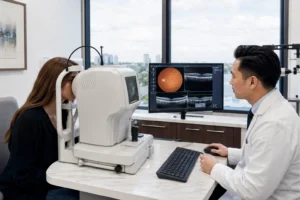
One of the most valuable advances in modern ophthalmology is Optical Coherence Tomography, commonly known as OCT.
This advanced vision testing machine creates detailed cross-sectional images of the retina and optic nerve using light waves. Unlike X-rays or CT scans, OCT does not expose patients to radiation and is completely non-invasive.
OCT is commonly used to detect and monitor:
- Glaucoma
- Macular degeneration
- Diabetic retinopathy
- Retinal swelling
- Macular holes
- Epiretinal membranes
- Optic nerve damage
Patients are often surprised that the scan takes only a few seconds. During the test, you simply look at a target while the machine captures highly detailed images of the back of your eye.
For individuals with diabetes or a family history of retinal disease, OCT imaging provides valuable information that may not be visible during a routine eye examination alone.
Retinal Imaging Systems
Digital retinal photography captures high-resolution images of the retina, blood vessels, and optic nerve.
Unlike traditional examinations that rely solely on the physician’s observations, retinal photographs create a permanent record that can be compared over time. This makes it easier to identify subtle changes that might otherwise go unnoticed.
Retinal imaging is especially beneficial for patients with:
- Diabetes
- High blood pressure
- Glaucoma risk
- Family history of retinal disease
- Macular degeneration
- Unexplained vision changes
For many patients, seeing images of their own retina also improves their understanding of their eye health and why follow-up care may be recommended.
Visual Field Analyzer
Some eye diseases affect peripheral vision long before central vision changes.
A Visual Field Analyzer measures how well you can detect objects outside your direct line of sight. During the test, you’ll look straight ahead while pressing a button each time you notice small lights appearing in different locations.
Although the test requires concentration, it is painless and provides valuable information about how your visual field is functioning.
Visual field testing is commonly recommended for patients being evaluated for:
- Glaucoma
- Optic nerve disorders
- Neurological conditions affecting vision
- Unexplained vision loss
Because glaucoma often progresses silently, combining visual field testing with optic nerve imaging gives ophthalmologists a more complete understanding of disease progression.
Corneal Topography
The cornea is the clear front surface of the eye that helps focus light.
Corneal topography maps the exact shape and curvature of the cornea, creating a detailed three-dimensional image.
This specialized eye testing machine is particularly valuable for patients considering LASIK or other refractive procedures because even small irregularities can influence treatment planning.
Corneal mapping is also useful for diagnosing:
- Keratoconus
- Irregular astigmatism
- Corneal scars
- Contact lens fitting problems
- Corneal surface disorders
Patients who wear contact lenses sometimes develop subtle changes in corneal shape over time. Mapping allows these changes to be identified early before they begin affecting vision or comfort.
Who Should Have Advanced Eye Testing?
Not every patient requires every diagnostic test. Your ophthalmologist recommends additional imaging based on your age, medical history, symptoms, family history, and examination findings.
Advanced diagnostic testing may be appropriate for individuals who:
- Are over the age of 40
- Have diabetes
- Have high blood pressure
- Have a family history of glaucoma
- Notice blurred or distorted vision
- Experience frequent headaches related to vision
- Have previously undergone eye surgery
- Wear contact lenses regularly
- Are considering LASIK or cataract surgery
- Take medications that may affect the eyes
Many patients ask whether these tests are necessary if their vision seems normal. In clinical practice, some of the most serious eye diseases are discovered during routine examinations in people who have no symptoms at all. Early detection often provides more treatment options and may help preserve vision over the long term.
Benefits of Modern Eye Exam Machines
Today’s diagnostic technology has transformed the way ophthalmologists evaluate eye health.
Some of the most significant advantages include:
| Benefit | How It Helps Patients |
|---|---|
| Earlier disease detection | Identifies problems before noticeable vision loss occurs. |
| Greater diagnostic accuracy | Provides objective measurements that support clinical decisions. |
| Personalized treatment planning | Allows care to be tailored to each patient’s individual findings. |
| Monitoring over time | Tracks changes by comparing previous scans with current results. |
| Improved patient education | Images help patients better understand their eye health. |
| Better surgical planning | Supports procedures such as LASIK and cataract surgery with precise measurements. |
Although advanced imaging greatly improves diagnostic accuracy, no single eye exam machine replaces the expertise of an experienced ophthalmologist. Test results are always interpreted alongside your medical history, symptoms, and comprehensive clinical examination.
Are Eye Testing Machines Safe?
One of the most common concerns patients express before an eye examination is whether the machines can harm their eyes.
The answer is reassuring.
Most modern eyesight test machines are completely non-invasive and designed with patient safety in mind. They use harmless light, digital imaging, or gentle optical scanning to collect information about the eyes.
Some tests may require dilating eye drops, which can temporarily blur near vision and increase sensitivity to light for several hours. Your ophthalmologist will explain when dilation is recommended and what to expect afterward.
If additional testing is necessary, you’ll also be informed about the purpose of each examination and how the results may influence your care.
Choosing an Eye Care Provider in Flushing, Queens

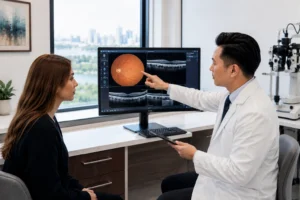
Advanced technology is an important part of modern ophthalmology, but the equipment alone does not diagnose or treat eye disease. Accurate diagnosis depends on how those test results are interpreted and integrated into your overall care.
When selecting an eye care provider, consider factors such as:
- Board certification and clinical experience
- Access to advanced diagnostic technology
- Comprehensive medical eye care services
- Personalized treatment planning
- Clear communication and patient education
- Commitment to evidence-based ophthalmology
- Long-term follow-up for chronic eye conditions
At LeeVision, patients receive comprehensive eye evaluations that combine advanced diagnostic imaging with individualized care. Under the direction of Dr. David H. Lee, MD, each examination focuses on identifying vision concerns, detecting eye disease at its earliest stages when possible, and developing treatment recommendations that prioritize patient safety and long-term vision preservation.
Conclusion
Modern eye examinations are about far more than determining whether you need a new pair of glasses. Every eye exam machine, from digital vision screening systems to advanced retinal imaging devices, contributes valuable information that helps ophthalmologists evaluate both your eyesight and the overall health of your eyes.
These technologies allow many eye conditions—including glaucoma, diabetic eye disease, cataracts, and retinal disorders—to be identified earlier than ever before. While the equipment provides highly detailed diagnostic information, the most important part of the examination remains the expertise of the physician interpreting those findings.
If you’re due for a routine eye examination, experiencing changes in your vision, or have risk factors such as diabetes or a family history of eye disease, a comprehensive evaluation using modern diagnostic technology can provide important insights into your eye health and help guide appropriate care.
Frequently Asked Questions
1. What is an eye exam machine used for?
An eye exam machine is used to evaluate different aspects of eye health, including visual acuity, eye pressure, corneal shape, retinal health, and optic nerve function. Multiple machines are often used during a comprehensive eye examination because each provides different clinical information.
2. Are eye exam machines painful?
No. Most eye testing machines are completely painless and non-invasive. Some tests involve looking at a target, while others use light or digital imaging to collect information. Patients generally experience little to no discomfort.
3. How long does a comprehensive eye examination take?
Most comprehensive eye exams take between 30 and 60 minutes. If additional imaging or pupil dilation is needed, your appointment may take slightly longer.
4. Can an eye testing machine detect glaucoma?
Yes. Modern diagnostic equipment can measure eye pressure, evaluate the optic nerve, perform visual field testing, and capture OCT images that help ophthalmologists detect glaucoma and monitor its progression.
5. Is retinal imaging necessary during every eye exam?
Not always. Your ophthalmologist recommends retinal imaging based on factors such as age, symptoms, medical history, diabetes, family history, or findings during your examination.
6. Can these machines detect cataracts?
Yes. Several diagnostic instruments, particularly the slit lamp biomicroscope, help ophthalmologists identify cataracts and determine how much they affect vision.
7. Should healthy adults have regular eye examinations?
Yes. Even individuals with good vision should have routine comprehensive eye exams because many eye diseases develop without noticeable symptoms in their early stages.
8. Are eye exam machines safe for children and older adults?
Yes. Modern diagnostic equipment is designed for patients of all ages. Your ophthalmologist will recommend age-appropriate testing based on each patient’s needs.
