



Upneeq Eye Drops: Uses, Benefits, Side Effects, Cost, and What to Expect
If you’ve recently heard about upneeq eye drops, you may be wondering whether they’re right for you. Many people notice that one or both upper eyelids begin to droop as they get older. Some feel they constantly look tired, while others find that a low eyelid slightly blocks their upper field of vision. During consultations, one of the most common questions patients ask is whether there is a non-surgical option before considering eyelid surgery.
Upneeq eye drops offer one such option for certain adults with acquired ptosis, commonly called droopy eyelids. Rather than treating dry eyes or improving vision directly, these prescription eye drops temporarily lift the upper eyelid by stimulating a specific muscle responsible for eyelid elevation.
At LeeVision in Flushing, Queens, patients often seek advice because they want to understand whether they are good candidates for upneeq eye drops or whether another treatment would better address their concerns. A careful examination by a board-certified ophthalmologist is important because not every drooping eyelid has the same underlying cause.
What Are Upneeq Eye Drops?
Upneeq eye drops are an FDA-approved prescription medication used for adults with acquired blepharoptosis (acquired ptosis). This condition causes the upper eyelid to sit lower than normal, sometimes making the eyes appear smaller or affecting the upper field of vision.
The active ingredient is oxymetazoline hydrochloride 0.1%, which works by stimulating Müller’s muscle—a small muscle inside the upper eyelid. As the muscle contracts, the eyelid temporarily lifts, giving the eye a more open appearance.
Unlike cosmetic products or over-the-counter eye drops, Upneeq is specifically designed to treat acquired ptosis and should only be used under the guidance of an eye care professional.
How Do Upneeq Eye Drops Work?
Many patients assume the drops somehow “tighten the skin.” In reality, they do not affect the skin at all.
Instead, the medication activates receptors in Müller’s muscle, causing the upper eyelid to elevate temporarily. This can improve both appearance and, in some individuals, the upper field of vision if the drooping eyelid was blocking sight.
The effect generally begins within a few hours and is temporary, which is why the drops are typically used once daily as prescribed.
Who Is a Good Candidate?
Not every patient with droopy eyelids is an ideal candidate.
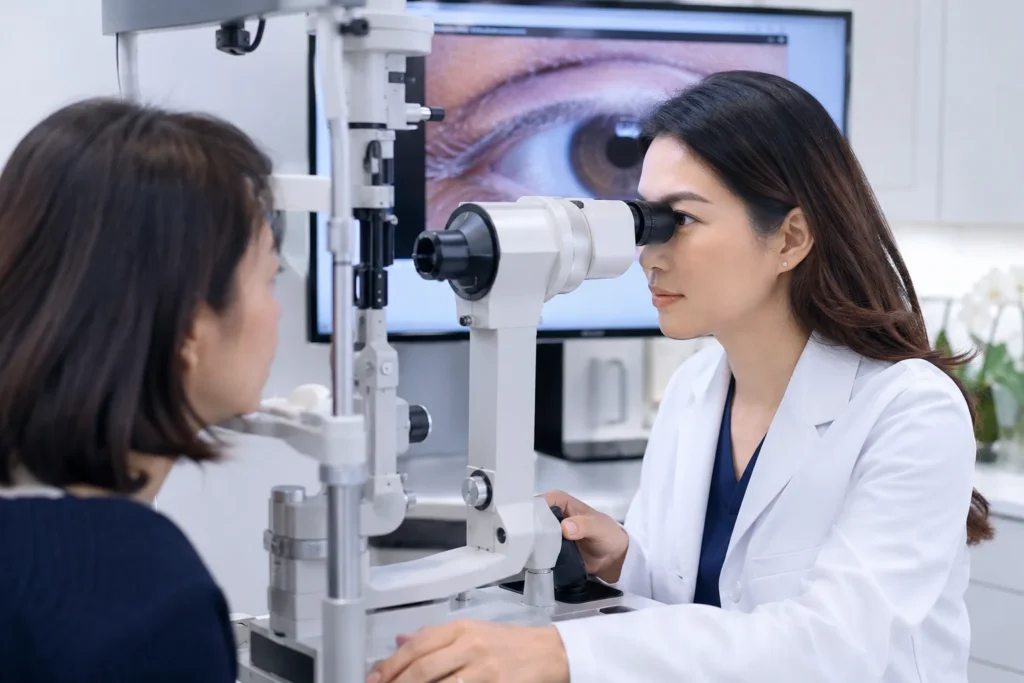
During an eye examination, your ophthalmologist evaluates:
- Eyelid position
- Pupil function
- Eye muscle movement
- Tear production
- Corneal health
- Overall eye health
- Medical history
Patients who often benefit include adults who:
- Have mild to moderate acquired ptosis
- Want a non-surgical treatment option
- Are not ready for eyelid surgery
- Have healthy eyes without contraindications
- Understand that results are temporary
Some people are surprised to learn that droopy eyelids can sometimes be caused by nerve disorders, previous trauma, or other medical conditions. In these situations, identifying the underlying cause is more important than simply lifting the eyelid.
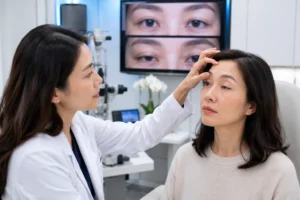
People often seek treatment after noticing changes in everyday activities rather than because of pain.
Common symptoms include:
- Upper eyelids that appear lower than before
- Looking tired even after adequate sleep
- One eye appearing smaller than the other
- Reduced upper peripheral vision
- Frequently raising the eyebrows to see better
- Tilting the head backward while reading
- Difficulty applying eye makeup evenly
During consultations, many patients say family members ask if they are tired or upset, even when they feel perfectly fine. These subtle changes are often what motivate people to seek professional advice.
Benefits of Upneeq Eye Drops
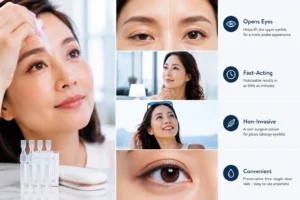
One reason upneeq eye drops have gained attention is that they provide a non-surgical option for eligible patients.
Potential benefits include:
- Temporary lifting of the upper eyelid
- More open, refreshed eye appearance
- Improved upper visual field in some patients
- Quick daily application
- No surgical incision
- No recovery period associated with surgery
It’s important to remember that results vary depending on the cause and severity of the eyelid droop. A comprehensive examination helps determine whether Upneeq is likely to provide meaningful improvement.
What Happens During Your Consultation?
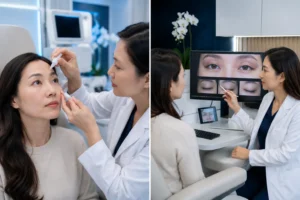
At LeeVision in Flushing, Queens, a consultation involves much more than simply prescribing eye drops.
Your ophthalmologist will review:
- Your medical history
- Current medications
- Previous eye surgeries
- Dry eye symptoms
- Vision concerns
- Eyelid measurements
- Eye muscle function
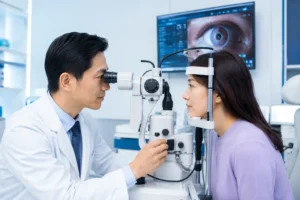
Advanced diagnostic technology allows the provider to assess the health of your eyes and determine whether acquired ptosis is present or if another condition may be responsible for your symptoms.
This personalized evaluation helps ensure that treatment recommendations are based on evidence rather than assumptions.
Upneeq Eye Drops Before and After: What Can You Realistically Expect?
One of the most searched phrases online is upneeq eye drops before and after. Many people want to know how noticeable the results are.
In clinical practice, expectations should remain realistic.
Patients may notice:
- A modest lift of the upper eyelid
- Eyes appearing more open and alert
- Better symmetry if one eyelid droops slightly more than the other
- Improvement in the upper visual field for some individuals
However, Upneeq does not permanently correct ptosis, remove excess eyelid skin, or replace eyelid surgery when structural changes are significant.
Setting realistic expectations is one of the most important parts of the consultation process.
Are Upneeq Eye Drops Used for Dry Eyes?
Patients occasionally ask whether upneeq eye drops can also relieve dry eye symptoms.
The answer is no.
Upneeq is designed to temporarily lift drooping upper eyelids. It is not a treatment for dry eye disease.
If your primary concern is burning, stinging, gritty sensations, or fluctuating vision, your ophthalmologist may instead recommend lubricating drops or other therapies depending on the cause of your dry eye.
This is also why many people ask, “what is the best eye drops for dry eyes?” The answer depends on the underlying cause. Artificial tears, preservative-free lubricating drops, prescription medications, or treatments for meibomian gland dysfunction may be more appropriate than Upneeq for patients with chronic dry eye.
Possible Side Effects
Like all prescription medications, Upneeq may cause side effects in some individuals.
Possible side effects include:
- Eye irritation
- Mild redness
- Dryness
- Temporary blurred vision
- Eye discomfort
- Headache in some individuals
Most side effects are mild, but persistent discomfort, vision changes, or unusual symptoms should be evaluated promptly by an eye care professional.
How to Use Upneeq Eye Drops Correctly
Using upneeq eye drops correctly is important for both effectiveness and safety. Even though the application process is simple, following your ophthalmologist’s instructions helps reduce the risk of contamination and ensures the medication works as intended.
Before applying the drops:
- Wash your hands thoroughly.
- Remove contact lenses if instructed.
- Avoid touching the tip of the single-use container.
- Tilt your head back slightly.
- Place one drop into the affected eye as directed.
- Discard the container after use if it is a single-dose vial.
Many patients ask whether using more than one drop will produce better results. The answer is no. Using extra medication does not necessarily increase the eyelid lift and may increase the chance of irritation or side effects.
How Long Do Upneeq Eye Drops Last?
One of the first questions patients ask during a consultation is how long the effects will remain noticeable.
The response varies slightly from person to person, but Upneeq is designed to provide a temporary lift of the upper eyelid. It is not a permanent treatment for ptosis.
Factors that may influence the results include:
- The severity of eyelid drooping
- Overall eye health
- Individual response to the medication
- Proper application
- Underlying medical conditions
Patients should understand that the drops help manage symptoms rather than permanently correcting the condition.
Safety Considerations
Although upneeq eye drops are FDA-approved for acquired ptosis in adults, they are not appropriate for everyone.
Before prescribing the medication, your ophthalmologist may ask about:
- High blood pressure
- Heart disease
- Thyroid disorders
- Glaucoma
- Diabetes
- Current medications
- Previous eye surgery
These discussions help determine whether the medication is appropriate for your individual health history.
Never begin using prescription eye drops simply because they worked well for someone else. What is appropriate for one patient may not be suitable for another.
Many adults wonder whether prescription drops can replace surgery.
The answer depends on the cause and severity of the eyelid droop.
| Feature | Upneeq Eye Drops | Eyelid Surgery |
|---|---|---|
| Treatment Type | Prescription eye drops | Surgical procedure |
| Goal | Temporary eyelid lift | Long-term correction |
| Recovery | Minimal | Recovery period required |
| Results | Temporary | Longer-lasting |
| Best For | Mild acquired ptosis | Moderate to severe ptosis |
A consultation with a board-certified ophthalmologist helps determine which option is more appropriate for your needs.
What Is the Best Eye Drops for Dry Eyes?

Patients researching upneeq eye drops often ask another common question:
“What is the best eye drops for dry eyes?”
Although these questions frequently appear together online, they involve two different eye conditions.
Upneeq treats acquired ptosis—it does not treat dry eye disease.
For dry eyes, treatment depends on the underlying cause and may include:
- Preservative-free artificial tears
- Lubricating eye drops
- Prescription anti-inflammatory eye drops
- Warm compress therapy
- Eyelid hygiene
- Treatment for meibomian gland dysfunction
There is no single “best” eye drop for everyone. During consultations at LeeVision, patients are often surprised to learn that chronic dry eye has many different causes. Selecting the right treatment begins with identifying why the eyes are dry rather than simply choosing a popular product.
Cost Factors
Another topic patients commonly ask about is cost.
The price of upneeq eye drops may vary depending on:
- Insurance coverage
- Pharmacy pricing
- Manufacturer savings programs
- Prescription quantity
- Geographic location
Rather than focusing only on price, it’s important to consider whether the medication is appropriate for your diagnosis and treatment goals. Your ophthalmologist can discuss available options and explain what to expect before starting therapy.
Why an Accurate Diagnosis Matters
One of the biggest misconceptions surrounding droopy eyelids is that they are always a cosmetic concern.
In reality, a drooping eyelid can sometimes be associated with underlying neurological, muscular, or age-related conditions.
This is why a comprehensive eye examination is essential.
At LeeVision in Flushing, Queens, Dr. David H. Lee, MD, Board-Certified Ophthalmologist, performs detailed evaluations using advanced diagnostic technology to determine the cause of eyelid changes before recommending treatment.
This personalized approach helps ensure that patients receive evidence-based care focused on both eye health and long-term vision preservation.
Frequently Asked Questions
Are Upneeq eye drops available over the counter?
No. Upneeq eye drops are a prescription medication and should only be used under the supervision of an eye care professional. A comprehensive eye examination helps determine whether the medication is appropriate for your condition.
How quickly do Upneeq eye drops start working?
Many patients notice a temporary lift of the upper eyelid within a few hours after applying the medication. The response varies from person to person depending on the severity of ptosis and individual factors.
Can I use Upneeq eye drops every day?
When prescribed by your ophthalmologist, Upneeq eye drops are generally intended for once-daily use. Always follow your provider’s instructions and never use more than the recommended dosage.
Can Upneeq eye drops improve my vision?
Upneeq does not directly improve eyesight or correct refractive errors. However, if a drooping eyelid is blocking part of your upper visual field, temporarily lifting the eyelid may improve your field of vision.
Can I wear contact lenses while using Upneeq?
Some patients may need to remove their contact lenses before applying the medication and wait before reinserting them. Your ophthalmologist will provide instructions based on your specific situation.
Are Upneeq eye drops safe for older adults?
Many older adults with acquired ptosis may be candidates for Upneeq eye drops, but suitability depends on their overall eye health, medical history, and current medications. A personalized examination is the safest way to determine candidacy.
What happens if Upneeq doesn’t work for me?
If the medication does not provide the desired improvement, your ophthalmologist may recommend additional evaluation or discuss other treatment options, including observation or eyelid surgery, depending on the cause of your ptosis.
Should I choose Upneeq eye drops or eyelid surgery?
The right choice depends on the severity of your condition, your treatment goals, and the underlying cause of the drooping eyelid. Mild acquired ptosis may respond well to prescription eye drops, while more significant eyelid changes may require surgical correction.
