





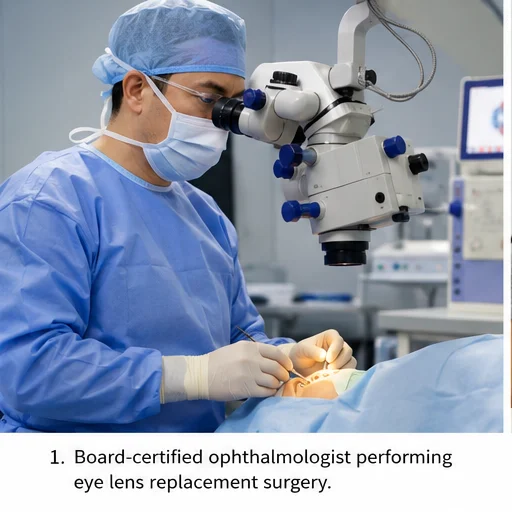
Eye Lens Replacement Surgery: A Comprehensive Guide to Restoring Clear Vision
Vision changes can affect nearly every aspect of daily life, from reading a text message to driving at night or recognizing a familiar face across the room. While prescription glasses and contact lenses help many people achieve clearer vision, they may not be enough for individuals with cataracts, age-related lens changes, or certain refractive errors. In these situations, eye lens replacement surgery may offer a long-term solution.
At Lee Vision, patients in Flushing, Queens, and throughout New York City often ask whether lens replacement surgery is the right alternative to LASIK, how safe the procedure is, and what recovery looks like. These are important questions because every patient’s eyes, lifestyle, and vision goals are different.
As a Board-Certified Ophthalmologist, Dr. David H. Lee, MD believes that successful treatment begins with education. Understanding how the procedure works, who may benefit from it, and what to expect before and after surgery allows patients to make informed decisions about their eye health.
This guide explains everything you need to know about eye lens replacement surgery, including candidacy, benefits, risks, recovery, and how it compares with other vision correction procedures.
What Is Eye Lens Replacement Surgery?
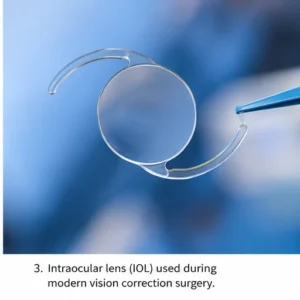
Eye lens replacement surgery, also known as refractive lens exchange (RLE) or clear lens extraction, is a procedure in which the eye’s natural lens is removed and replaced with a clear artificial intraocular lens (IOL).
The procedure is performed using advanced microsurgical techniques through a very small incision in the cornea. Once the natural lens is removed, the new lens is carefully positioned inside the eye, where it remains permanently.
Unlike glasses or contact lenses that correct vision externally, an intraocular lens becomes part of the eye’s optical system. Depending on the type of lens selected, patients may experience improved distance vision, intermediate vision, near vision, or a combination of these.
Although the surgical steps are similar to cataract surgery, refractive lens exchange is often performed before a cataract becomes visually significant, primarily to reduce dependence on glasses.
Why Do People Choose Lens Replacement Surgery?
Many patients who visit our clinic describe similar frustrations.
Some have worn thick glasses for decades and want greater visual freedom. Others have reached their mid-50s or 60s and notice that reading has become increasingly difficult despite updated prescriptions. Some individuals have been told they are no longer ideal candidates for LASIK because of age-related lens changes.
Eye lens replacement surgery may be recommended for people who:
- Have age-related vision changes (presbyopia)
- Have very high levels of nearsightedness or farsightedness
- Have early cataracts affecting visual quality
- Are not suitable candidates for laser vision correction
- Want a long-term solution for multiple refractive errors
- Wish to reduce dependence on glasses after surgery
Because the artificial lens cannot develop a cataract, patients who undergo refractive lens exchange typically will not require future cataract surgery in the treated eye.
Understanding the Different Types of Intraocular Lenses (IOLs)
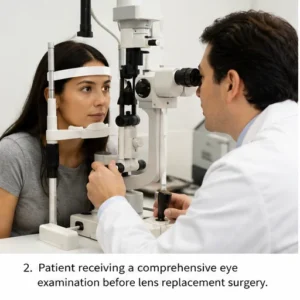
One of the most important decisions during lens replacement surgery is selecting the appropriate intraocular lens.
| Lens Type | Best For | Things to Consider |
|---|---|---|
| Monofocal IOL | Clear vision at one distance | Glasses may still be needed for reading |
| Multifocal IOL | Near and distance vision | Some patients notice halos around lights |
| Extended Depth of Focus (EDOF) IOL | Balanced vision across multiple distances | May reduce dependence on glasses |
| Toric IOL | Patients with astigmatism | Corrects corneal astigmatism during surgery |
Choosing the right lens depends on several factors, including lifestyle, occupation, hobbies, eye health, and expectations. A personalized consultation with a board-certified ophthalmologist is essential to determine which option is most appropriate.
Who Is a Good Candidate for Eye Lens Replacement Surgery?
Not everyone who wants to reduce their dependence on glasses is automatically a candidate for lens replacement surgery.
During a comprehensive eye examination, your ophthalmologist evaluates several factors, including:
- Overall eye health
- Corneal thickness and shape
- Retinal health
- Presence of glaucoma or macular degeneration
- Existing cataracts
- Degree of refractive error
- Dry eye disease
- General medical history
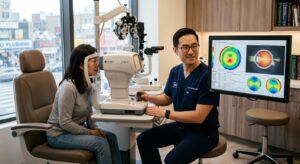
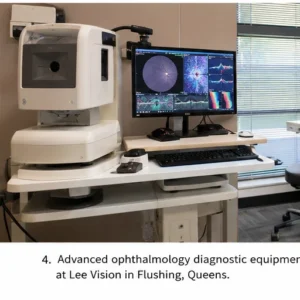
At Lee Vision, advanced diagnostic imaging helps create a personalized treatment plan based on each patient’s unique visual needs rather than a one-size-fits-all approach.
Many patients are surprised to learn that the “best” procedure is not always the newest one. In some cases, LASIK remains the ideal option, while in others, refractive lens exchange provides more stable long-term results.
How Is Eye Lens Replacement Surgery Performed?
Eye lens replacement surgery is typically performed as an outpatient procedure, meaning most patients return home the same day. Thanks to modern microsurgical techniques and advanced technology, the surgery usually takes 15 to 30 minutes per eye.
Before the procedure begins, numbing eye drops are applied to keep you comfortable. In some cases, mild medication may also be provided to help you relax.
During surgery, your ophthalmologist:
- Creates a tiny incision at the edge of the cornea.
- Uses ultrasound technology to gently break apart and remove the natural lens.
- Inserts the selected intraocular lens (IOL) through the same small incision.
- Positions the new lens securely inside the eye.
Because the incision is very small, stitches are often unnecessary. Most patients notice gradual improvement in their vision over the following days, although complete visual stabilization may take several weeks.
What Is Recovery Like?
Recovery varies from person to person, but most individuals are pleasantly surprised by how quickly they can resume everyday activities.
A typical recovery timeline includes:
| Recovery Stage | What to Expect |
|---|---|
| First 24 Hours | Mild blurry vision, light sensitivity, watery eyes, or a scratchy sensation. |
| 2–7 Days | Vision usually becomes clearer as the eye begins to heal. |
| 1–2 Weeks | Most routine daily activities can be resumed, following your surgeon’s instructions. |
| 4–6 Weeks | Healing is generally complete, and vision has stabilized for most patients. |
During recovery, your ophthalmologist may recommend:
- Using prescribed antibiotic and anti-inflammatory eye drops.
- Avoiding rubbing your eyes.
- Wearing a protective shield while sleeping for the first few nights.
- Avoiding swimming pools and hot tubs until cleared.
- Limiting heavy lifting or strenuous exercise for a short period.
Regular follow-up visits are essential to monitor healing and ensure the best possible outcome.
What Are the Benefits of Eye Lens Replacement Surgery?
Many patients choose lens replacement surgery because it can address multiple vision problems at the same time.
Potential benefits include:
- Improved distance, intermediate, and near vision, depending on the selected IOL.
- Reduced dependence on glasses or contact lenses.
- Permanent replacement of the natural lens.
- Elimination of future cataract development in the treated eye.
- Correction of significant refractive errors.
- Long-term vision correction with stable results.
It’s important to remember that outcomes vary. While many patients enjoy excellent visual improvement, no surgical procedure can guarantee perfect vision for everyone.
Are There Any Risks?
Every surgical procedure carries some level of risk, even when performed by an experienced ophthalmologist.
Possible risks include:
- Infection
- Inflammation
- Elevated eye pressure
- Retinal detachment (rare)
- Glare or halos around lights
- Residual refractive error requiring glasses
- Lens displacement (uncommon)
Fortunately, serious complications are uncommon when surgery is performed by a qualified, board-certified ophthalmologist and patients carefully follow their postoperative instructions.
A thorough preoperative evaluation helps identify potential risk factors before surgery.
Is Laser Eye Surgery Safe?
One of the most common questions patients ask is, “Is laser eye surgery safe?”
For appropriately selected candidates, laser vision correction procedures such as LASIK have an excellent safety record and have been performed successfully for millions of patients worldwide. Modern laser systems are highly precise, and ongoing advances in technology have further improved both safety and accuracy.
However, safety depends on several factors, including:
- Whether your prescription has remained stable.
- Corneal thickness and overall corneal health.
- The presence of dry eye disease.
- Your age and overall eye health.
- Realistic expectations about the results.
For some patients—particularly those over 50 with early lens changes—eye lens replacement surgery may be a better long-term option than LASIK. A comprehensive eye examination is the best way to determine which procedure is most appropriate for your individual needs.
Does LASIK Eye Surgery Hurt?
Another concern frequently discussed during consultations is, “Does LASIK eye surgery hurt?”
Most patients report that LASIK is not painful. Numbing eye drops are used before the procedure, so while you may feel gentle pressure or mild discomfort for a few seconds, significant pain is uncommon.
After the procedure, some people experience:
- A burning or gritty sensation.
- Mild tearing.
- Light sensitivity.
- Temporary blurry vision.
These symptoms usually improve within the first day or two as the eyes begin to heal.
Patients often tell us that the anticipation of surgery is far more stressful than the procedure itself.
Eye Lens Replacement Surgery vs. LASIK vs. Cataract Surgery
| Feature | Eye Lens Replacement Surgery | LASIK | Cataract Surgery |
|---|---|---|---|
| Removes Natural Lens | ✔ Yes | ✘ No | ✔ Yes |
| Uses a Laser | Sometimes | ✔ Yes | Sometimes |
| Treats Cataracts | Prevents future cataracts | ✘ No | ✔ Yes |
| Corrects High Prescriptions | ✔ Often | May be limited | ✔ Yes |
| Best for Older Adults | ✔ Often | Limited in some cases | ✔ Yes |
| Recovery | A few weeks | Usually a few days | Several weeks |
The right procedure depends on your age, eye health, prescription, lifestyle, and long-term vision goals. A personalized evaluation is the most reliable way to determine the safest and most effective treatment plan.
Cost Considerations for Eye Lens Replacement Surgery
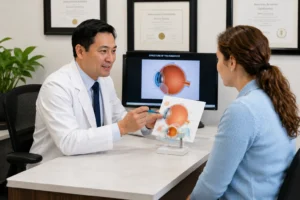
The cost of eye lens replacement surgery can vary depending on several factors, including the type of intraocular lens (IOL), the complexity of your prescription, the technology used during surgery, and whether one or both eyes are treated.
Rather than focusing solely on price, it’s important to consider the overall value of the procedure. Comprehensive preoperative testing, advanced surgical technology, the experience of your ophthalmologist, and high-quality postoperative care all contribute to a safer experience and better long-term visual outcomes.
During your consultation, your ophthalmologist can explain the available lens options, discuss expected costs, and help you choose a treatment plan that aligns with your vision goals and lifestyle.
Choosing the Right Eye Surgeon
Selecting an experienced ophthalmologist is one of the most important decisions you’ll make before undergoing vision correction surgery.
When evaluating a practice, consider whether they offer:
- Comprehensive eye examinations
- Advanced diagnostic imaging
- Personalized treatment recommendations
- Multiple vision correction options
- Clear explanations of risks and benefits
- Ongoing postoperative care
- A patient-first approach to decision-making
At Lee Vision in Flushing, Queens, Dr. David H. Lee, MD, a Board-Certified Ophthalmologist, emphasizes evidence-based care and individualized treatment planning. Every patient undergoes a detailed eye evaluation to determine whether lens replacement surgery, LASIK, cataract surgery, or another treatment is the most appropriate option based on their unique eye health and visual needs.
Why Patients in Flushing, Queens, and New York City Seek Vision Correction
Life in New York City often places significant demands on your eyes. Long work hours, frequent screen use, driving in heavy traffic, reading on digital devices, and navigating bright city lights can all contribute to visual fatigue.
Patients from Flushing and throughout Queens commonly visit our practice with concerns such as:
- Increasing difficulty reading small print
- Nighttime glare while driving
- Frequent prescription changes
- Dependence on multiple pairs of glasses
- Reduced contrast sensitivity
- Age-related vision changes affecting daily activities
While these symptoms are common, they should never be ignored. A comprehensive eye examination can determine whether they are caused by cataracts, refractive changes, dry eye disease, or another underlying eye condition.
When Should You Schedule an Eye Examination?
Consider scheduling a comprehensive eye evaluation if you experience:
- Persistent blurry vision
- Difficulty driving at night
- Increasing dependence on stronger glasses
- Frequent prescription changes
- Glare or halos around lights
- Trouble reading despite updated eyewear
- Early signs of cataracts
- Vision changes that interfere with work or daily activities
Early diagnosis allows your ophthalmologist to recommend the most appropriate treatment before vision loss begins to affect your quality of life.
Frequently Asked Questions
How long does eye lens replacement surgery take?
The procedure typically takes 15–30 minutes per eye, although you should plan to spend several hours at the surgical center for preparation and recovery.
Is eye lens replacement surgery permanent?
Yes. The artificial intraocular lens is designed to remain in the eye permanently and does not develop cataracts.
Will I still need glasses after surgery?
It depends on the type of intraocular lens selected and your individual visual needs. Some patients still use reading glasses or glasses for certain activities.
Is laser eye surgery safer than lens replacement surgery?
Neither procedure is universally safer. The most appropriate treatment depends on your age, prescription, eye health, and overall candidacy. A comprehensive examination helps determine which option is best for you.
Does LASIK hurt more than lens replacement surgery?
Most patients describe both procedures as involving little to no pain. Numbing eye drops are used during surgery, and any postoperative discomfort is generally mild and temporary.
How soon can I return to work?
Many patients return to desk work within a few days, although recovery varies depending on the individual and the type of work performed. Your ophthalmologist will provide personalized guidance based on your healing progress.
Can eye lens replacement surgery prevent cataracts?
Yes. Because the natural lens is replaced with an artificial intraocular lens, cataracts cannot develop in the treated eye.
Final Thoughts
Eye lens replacement surgery has become an effective option for many individuals seeking long-term vision correction or treatment for age-related lens changes. Modern surgical techniques, advanced intraocular lens technology, and careful patient selection have made the procedure safer and more predictable than ever before.
However, no vision correction procedure is one-size-fits-all. The best results begin with a thorough eye examination, an honest discussion about your lifestyle and expectations, and a personalized treatment plan developed by an experienced ophthalmologist.
At Lee Vision, patients throughout Flushing, Queens, and New York City receive comprehensive evaluations using advanced diagnostic technology to determine the most appropriate treatment for their individual eye health and vision goals. Under the care of Dr. David H. Lee, MD, every recommendation is based on evidence, safety, and a commitment to preserving long-term visual health.