



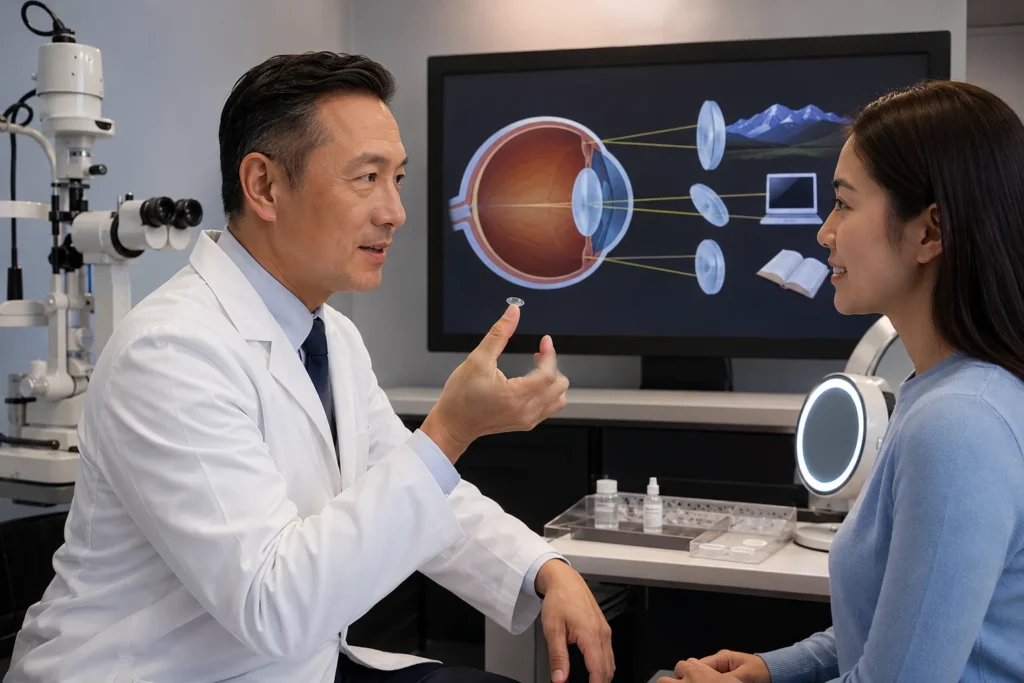
Bifocal Multifocal Contact Lenses: A Smarter Way to See Clearly at Every Distance
If you’re finding it harder to switch focus between your phone, computer, and distant objects, you’re not alone. Many adults begin noticing these changes in their 40s as the eye’s natural focusing ability gradually declines. One of the most common questions patients ask during an eye exam is: “Are there bifocal contact lenses that let me see both near and far without reading glasses?”
The answer is yes. Today’s bifocal multifocal contact lenses are far more advanced than the early designs available years ago. Modern lenses use sophisticated optics that help many people enjoy clearer vision for everyday tasks without constantly reaching for reading glasses.
At LeeVision in Flushing, Queens, NYC, Dr. David H. Lee, MD, a board-certified ophthalmologist, frequently helps patients determine whether multifocal contact lenses are the right solution based on their eye health, lifestyle, and visual needs. Choosing the best lens is not simply about your prescription—it also depends on tear quality, pupil size, work habits, and overall eye health.
In this guide, you’ll learn how do bifocal contact lenses work, who benefits most from them, their advantages and limitations, and what to expect during a professional contact lens fitting.
Why More Adults Need Multifocal Contact Lenses

One of the biggest misconceptions is that needing reading glasses means your eyesight is getting “bad.” In reality, this is usually caused by presbyopia, a normal age-related change.
Inside every eye is a flexible natural lens that changes shape to focus on nearby objects. Over time, this lens becomes less flexible, making close-up activities more difficult.
You may notice:
- Holding books farther away to read comfortably
- Difficulty reading restaurant menus
- Blurred phone screens
- Increased eye fatigue after computer work
- Better distance vision than near vision
- Needing brighter lighting while reading
Many patients in New York City spend hours each day looking at digital screens, making these symptoms even more noticeable.
Rather than switching between multiple pairs of glasses, many people prefer bifocal multifocal contact lenses because they provide vision correction across multiple distances in a single lens.
Are There Bifocal Contact Lenses?
Yes—there are bifocal contact lenses, although today’s eye care professionals often recommend modern multifocal designs because they provide smoother transitions between different viewing distances.
Years ago, bifocal contact lenses were designed with two distinct optical zones:
- Distance vision
- Near vision
Modern multifocal lenses improve on this concept by incorporating several focusing zones that allow your brain to naturally select the sharpest image depending on where you’re looking.
This newer technology offers more natural vision during everyday activities such as:
- Reading text messages
- Working on computers
- Driving
- Shopping
- Watching television
- Cooking
- Looking at dashboard instruments
- Seeing faces across a room
For many patients, multifocal lenses feel much more natural than constantly changing between glasses.
How Do Bifocal Contact Lenses Work?
Many patients ask, “How do bifocal contact lenses work if both prescriptions are inside one tiny lens?”
The answer lies in advanced optical engineering.
Unlike ordinary contact lenses that contain one prescription, multifocal lenses include multiple prescription zones designed for different viewing distances.
When light enters your eye, these different optical zones work together. Your brain gradually learns which image to prioritize depending on where you’re looking.
For example:
| Activity | Lens Zone Primarily Used |
|---|---|
| Driving | Distance vision |
| Computer work | Intermediate vision |
| Reading | Near vision |
| Looking at a phone | Near vision |
| Grocery shopping | Distance and intermediate vision |
| Watching TV | Distance vision |
This adaptation process is why patients often notice gradual improvement during the first few days or weeks after beginning multifocal contact lenses.
Your brain is learning how to process the new visual information more efficiently.
How Modern Multifocal Contact Lens Designs Improve Vision
Not every multifocal lens works exactly the same way.
Different manufacturers use different optical designs depending on the patient’s prescription and visual needs.
Common designs include:
Center-Near Design
The center of the lens provides clear near vision, while surrounding areas gradually transition toward distance vision.
This design is commonly recommended for patients who spend long hours reading or using digital devices.
Center-Distance Design
Distance vision occupies the center of the lens, while outer zones assist with intermediate and near tasks.
This option may benefit patients who prioritize driving or outdoor activities.
Aspheric Multifocal Design
Instead of abrupt changes between prescriptions, the lens gradually transitions between viewing distances.
Many patients report that these lenses provide smoother, more natural vision throughout the day.
Your ophthalmologist selects the design based on several factors rather than using the same lens for every patient.
Who Is a Good Candidate for Bifocal Multifocal Contact Lenses?
Not everyone with presbyopia requires the same treatment.
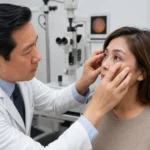
During a comprehensive contact lens evaluation, your ophthalmologist considers much more than your glasses prescription.
You may be an excellent candidate if you:
- Are over age 40
- Have developed presbyopia
- Want greater freedom from reading glasses
- Have healthy eyes
- Produce adequate tears
- Have realistic expectations
- Can attend follow-up fitting appointments
People with dry eye disease, irregular corneas, advanced cataracts, or certain retinal conditions may require additional evaluation before wearing multifocal contacts comfortably.
This is why a professional fitting is essential.
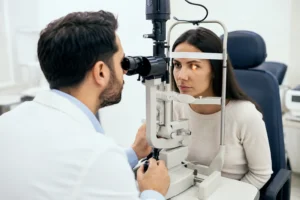
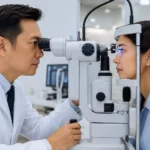
What Happens During a Multifocal Contact Lens Fitting?
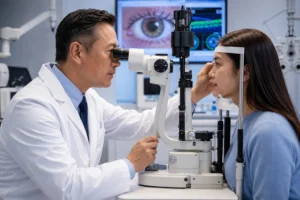
Many first-time patients expect the fitting process to be similar to getting a glasses prescription.
In reality, contact lens fittings involve several additional measurements.
An ophthalmologist may evaluate:
- Corneal curvature
- Tear film quality
- Eye surface health
- Pupil size
- Prescription accuracy
- Binocular vision
- Eye dominance
- Lens movement after blinking
- Comfort during real-world activities
Patients often try trial lenses before receiving their final prescription.
Small adjustments are common and help optimize both comfort and visual clarity.
Benefits Beyond Simply Replacing Reading Glasses

Patients often discover unexpected advantages after successfully adapting to multifocal contact lenses.
Potential benefits include:
- Greater convenience
- Improved cosmetic appearance
- Better peripheral vision than glasses
- Freedom during exercise
- Easier travel
- Less dependence on multiple pairs of glasses
- More natural everyday vision
- Comfortable transition between different viewing distances
However, it’s equally important to understand that no contact lens is perfect for every person.
Some patients notice mild halos around lights at night or require a brief adaptation period before vision feels completely natural.
These experiences are normal topics of discussion during follow-up visits with your ophthalmologist.
Types of Bifocal Multifocal Contact Lenses
One of the first questions patients ask after learning that are there bifocal contact lenses is, “Which type is best for me?” The answer depends on much more than your eyeglass prescription.
Modern bifocal multifocal contact lenses are available in several materials and replacement schedules. Your ophthalmologist will recommend the option that provides the best balance of vision, comfort, and long-term eye health.
The most common choices include:
- Soft multifocal contact lenses
- Rigid gas permeable (RGP) multifocal lenses
- Hybrid multifocal lenses
- Daily disposable multifocal lenses
- Monthly replacement multifocal lenses
Each option has advantages and limitations, making a personalized fitting essential.
Soft Multifocal Contact Lenses
Soft multifocal lenses are the most commonly prescribed option because they are comfortable, flexible, and easy for most patients to adapt to.
Many first-time contact lens wearers adjust to soft lenses within a few days.
They are especially suitable for people who:
- Work on computers
- Read frequently
- Wear contacts all day
- Prefer flexible lenses
- Have active lifestyles
Today’s silicone hydrogel materials allow significantly more oxygen to reach the cornea than older contact lenses, helping maintain healthier eyes during extended daily wear.
Although soft multifocal lenses work well for many patients, vision may occasionally feel slightly less crisp than glasses, especially in dim lighting.
Rigid Gas Permeable (RGP) Multifocal Lenses
Rigid gas permeable lenses are made from durable materials that maintain their shape while allowing oxygen to pass through to the eye.
Although they usually require a longer adaptation period, they often provide sharper vision than soft lenses.
Patients with the following conditions may benefit from RGP multifocal lenses:
- Higher prescriptions
- Mild corneal irregularities
- Astigmatism
- Demanding visual requirements
- Long-term contact lens experience
Because the lens maintains a stable optical surface, many patients notice excellent visual clarity once they become accustomed to wearing them.
Hybrid Multifocal Contact Lenses
Hybrid lenses combine the advantages of both soft and rigid lenses.
They feature:
- A rigid center for crisp vision
- A soft outer skirt for improved comfort
These lenses may be recommended for patients who need sharper vision than soft lenses provide but find traditional RGP lenses uncomfortable.
Although hybrid lenses are not necessary for everyone, they can be an excellent solution for selected patients.
Daily Disposable vs Monthly Multifocal Lenses
Another important decision involves how often your lenses are replaced.
| Daily Disposable Lenses | Monthly Replacement Lenses |
|---|---|
| Fresh lens every day | One pair used for about one month |
| No cleaning required | Daily cleaning required |
| Lower infection risk | Requires proper lens care |
| Convenient for travel | Often more economical over time |
| Ideal for allergy sufferers | Good for regular wearers |
Daily disposable lenses are becoming increasingly popular because they eliminate many cleaning-related problems.
Monthly lenses remain an excellent option for patients who consistently follow proper cleaning and storage instructions.
Your eye doctor will recommend the safest schedule based on your eyes, lifestyle, and budget.
What Vision Can You Realistically Expect?
Patients sometimes expect bifocal multifocal contact lenses to deliver perfect vision at every distance under every lighting condition.
In reality, these lenses are designed to provide functional vision across multiple distances rather than flawless sharpness in every situation.
Most patients experience excellent vision for:
- Reading
- Computer work
- Driving during the day
- Watching television
- Shopping
- Household activities
- Social interactions
Some patients notice mild compromises during nighttime driving or when reading extremely small print.
Fortunately, your brain continues adapting over several weeks, and many patients report gradual improvement with consistent wear.
Common Challenges During the Adjustment Period
It is completely normal to experience an adjustment period when beginning multifocal contact lenses.
Patients commonly mention:
- Slight blur when switching focus
- Mild halos around lights at night
- Temporary reduction in contrast
- Increased awareness of the lenses
- Occasional focusing delay
These changes usually improve as the brain learns to interpret the multiple focusing zones more efficiently.
One of the biggest mistakes new wearers make is giving up after only a day or two.
Unless significant discomfort occurs, most ophthalmologists recommend wearing trial lenses consistently during the adaptation period before deciding whether adjustments are needed.
When Multifocal Contact Lenses May Not Be the Best Choice
Although many people achieve excellent results, bifocal multifocal contact lenses are not ideal for everyone.
An ophthalmologist may recommend another option if you have:
- Advanced dry eye disease
- Significant cataracts
- Severe corneal disease
- Certain retinal disorders
- Uncontrolled glaucoma affecting vision
- Active eye infections
- Poor tear production
- Difficulty handling contact lenses
In some cases, glasses, monovision contact lenses, refractive surgery, or cataract surgery with premium intraocular lenses may provide better long-term results.
The goal is always to choose the safest and most effective solution—not simply the newest technology.
Tips for Success with Multifocal Contact Lenses
Patients who enjoy the best results often follow a few simple habits.
These include:
- Wear your lenses consistently during the adaptation period.
- Follow the recommended replacement schedule.
- Never sleep in lenses unless specifically approved.
- Wash and dry your hands before handling lenses.
- Replace your contact lens case regularly if using reusable lenses.
- Attend follow-up appointments so small prescription adjustments can be made.
- Use preservative-free artificial tears if recommended by your ophthalmologist.
- Take regular screen breaks to reduce digital eye strain and encourage normal blinking.
These steps help improve comfort while supporting long-term eye health.
Why Professional Fitting Makes a Difference

Many people assume that ordering contact lenses online after entering a glasses prescription is enough.
However, how do bifocal contact lenses work depends not only on the prescription but also on precise fitting measurements.
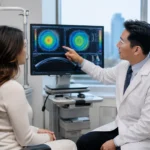
During a comprehensive evaluation, a board-certified ophthalmologist assesses factors such as corneal shape, tear quality, pupil size, eye dominance, and overall eye health. These details influence how well bifocal multifocal contact lenses perform and whether they remain comfortable throughout the day.
At LeeVision in Flushing, Queens, New York City, Dr. David H. Lee, MD, uses advanced diagnostic technology to customize contact lens recommendations for each patient. This individualized approach helps maximize vision while prioritizing comfort, safety, and long-term eye health rather than relying on a one-size-fits-all solution.
Are Bifocal Multifocal Contact Lenses Safe?
When prescribed correctly and worn as directed, bifocal multifocal contact lenses are considered a safe and effective option for correcting presbyopia. Millions of people successfully wear multifocal contacts every day.
However, safety depends on more than simply having the correct prescription. Healthy contact lens wear requires good hygiene, regular eye examinations, and replacing lenses on schedule.
Patients should remember that contact lenses are medical devices, not cosmetic accessories. Wearing them longer than recommended or skipping follow-up appointments can increase the risk of eye problems.
Possible Risks and Limitations
Like any vision correction option, multifocal contact lenses have limitations. Understanding them helps set realistic expectations and allows patients to make informed decisions.
Possible challenges include:
- Mild glare or halos around lights, especially at night
- Slightly reduced contrast in dim lighting
- Temporary blurred vision during the adaptation period
- Dryness after long hours of screen use
- Lens discomfort if tear quality is poor
- Eye infections when proper hygiene is not followed
- Protein or debris buildup on reusable lenses
Most of these issues can be minimized with a proper fitting, regular follow-up visits, and careful lens care.
How to Care for Multifocal Contact Lenses
Good lens care is one of the most important steps in protecting your vision.
Whether you are wearing daily disposable or reusable bifocal multifocal contact lenses, follow these recommendations:
- Always wash and dry your hands before handling lenses.
- Never rinse lenses with tap water.
- Use only the cleaning solution recommended by your eye doctor.
- Replace your contact lens case every three months.
- Never wear damaged or torn lenses.
- Remove lenses before swimming or using a hot tub unless advised otherwise.
- Replace lenses according to the prescribed schedule.
- Do not share contact lenses with anyone.
These simple habits significantly reduce the risk of infection and help maintain comfortable vision.
When Should You Contact an Eye Doctor?
Although minor adjustment symptoms are common, some signs should never be ignored.
Schedule an eye examination immediately if you experience:
- Severe eye pain
- Sudden vision loss
- Persistent redness
- Light sensitivity that worsens
- Thick eye discharge
- A lens that becomes difficult to remove
- Blurred vision that does not improve after removing the lenses
Prompt evaluation allows eye problems to be treated before they become more serious.
Alternatives to Multifocal Contact Lenses
Even though many patients love the convenience of bifocal multifocal contact lenses, they are not the only option for treating presbyopia.
Depending on your eye health and lifestyle, your ophthalmologist may recommend:
| Option | Best For |
|---|---|
| Reading glasses | Occasional near work |
| Progressive eyeglasses | Daily wear with simple maintenance |
| Monovision contact lenses | Patients comfortable with one eye focused for distance and the other for near tasks |
| Refractive surgery | Carefully selected candidates seeking reduced dependence on glasses |
| Premium intraocular lenses (IOLs) | Patients having cataract surgery who want a wider range of vision |
Each solution has its own benefits and trade-offs. A comprehensive eye examination is the best way to determine which option fits your visual goals.
Why Regular Eye Exams Matter
Your vision changes over time, and so do your contact lens needs.
Even if your lenses feel comfortable, routine eye examinations help monitor:
- Prescription changes
- Corneal health
- Tear film quality
- Early cataracts
- Glaucoma
- Retinal disease
- Overall eye health
Many serious eye diseases develop gradually and may not cause noticeable symptoms in the early stages. Regular visits allow these conditions to be detected and managed before they affect vision.
For adults in Flushing, Queens, and throughout New York City, regular comprehensive eye exams are especially important because screen-heavy work, seasonal allergies, and aging can all influence eye comfort and visual performance.
Final Thoughts
Modern bifocal multifocal contact lenses have transformed the way people with presbyopia manage their vision. They allow many adults to read, work, drive, and enjoy everyday activities with greater convenience and less dependence on multiple pairs of glasses.
If you’ve ever wondered how do bifocal contact lenses work, are there bifocal contact lenses, or do they make bifocal contact lenses that actually fit your lifestyle, the answer is yes—but the best results come from a personalized fitting rather than choosing lenses based only on an online prescription.
At LeeVision in Flushing, Queens, New York City, Dr. David H. Lee, MD, a board-certified ophthalmologist, uses advanced diagnostic technology and evidence-based care to help patients find the safest and most effective vision correction option for their individual needs. A customized approach can make a significant difference in both comfort and long-term visual satisfaction.
Frequently Asked Questions
Are there bifocal contact lenses for people over 40?
Yes. Are there bifocal contact lenses designed specifically for adults over 40? Absolutely. Most are actually modern multifocal contact lenses created to correct presbyopia while improving distance, intermediate, and near vision.
How do bifocal contact lenses work?
If you’re wondering how do bifocal contact lenses work, they contain multiple optical zones with different prescriptions. Your brain naturally learns to use the appropriate zone depending on whether you’re reading, using a computer, or looking into the distance.
Do they make bifocal contact lenses for astigmatism?
Yes. Do they make bifocal contact lenses for people with astigmatism? Many manufacturers now produce toric multifocal lenses that correct both astigmatism and presbyopia.
Are bifocal multifocal contact lenses difficult to adjust to?
Most patients adapt within several days to a few weeks. During this time, your brain learns to interpret the different focusing zones more efficiently.
Can I drive while wearing bifocal multifocal contact lenses?
Yes. Most patients drive comfortably during the day. Some people notice mild halos around headlights at night, particularly during the early adaptation period.
Can I use a computer with multifocal contact lenses?
Yes. Modern bifocal multifocal contact lenses are designed to improve intermediate vision, making computer work much more comfortable for many users.
Are daily disposable multifocal lenses better?
Daily disposable lenses reduce cleaning requirements and may lower the risk of certain infections. They are often recommended for patients with allergies or busy lifestyles.
Can dry eyes affect multifocal contact lens comfort?
Yes. Dry eye disease is one of the most common reasons patients experience discomfort with contact lenses. Treating dry eyes often improves lens performance.
Can I sleep in multifocal contact lenses?
Only if your ophthalmologist prescribes lenses approved for overnight wear. Otherwise, sleeping in contact lenses increases the risk of infection.
How long do multifocal contact lenses last?
Daily disposable lenses are discarded after one use, while monthly lenses are replaced approximately every 30 days according to your doctor’s instructions.
Do bifocal multifocal contact lenses eliminate the need for reading glasses?
Many patients become much less dependent on reading glasses, but some may still prefer glasses for very small print or prolonged reading.
Are multifocal contact lenses better than progressive glasses?
Neither option is universally better. The right choice depends on your prescription, lifestyle, eye health, and personal preferences.
Can I order multifocal contact lenses online?
A valid prescription is required, but a professional fitting remains essential because lens design, fit, and eye health all affect visual performance.
How often should I have my eyes examined while wearing contact lenses?
Most adults should schedule comprehensive eye exams annually, although your ophthalmologist may recommend more frequent visits depending on your eye health.
Who is the best candidate for bifocal multifocal contact lenses?
Adults with presbyopia, healthy eyes, good tear production, and realistic expectations are often excellent candidates for bifocal multifocal contact lenses after a comprehensive evaluation