




Wrinkles Under Eyes Treatment: How to Reduce Under Eye Wrinkles Safely in 2026
The skin beneath the eyes is often one of the first areas to show visible aging. Fine lines may appear only when smiling at first, then gradually remain noticeable even when the face is relaxed. For many patients, this leads to one important question: Which wrinkles under eyes treatment actually works?
The answer depends on what is causing the wrinkles.
Under-eye lines can develop from thinning skin, collagen loss, repeated facial movement, sun exposure, dryness, or structural changes around the lower eyelids. Some patients also have tear trough hollowing or lower eyelid bags that make wrinkles appear deeper.
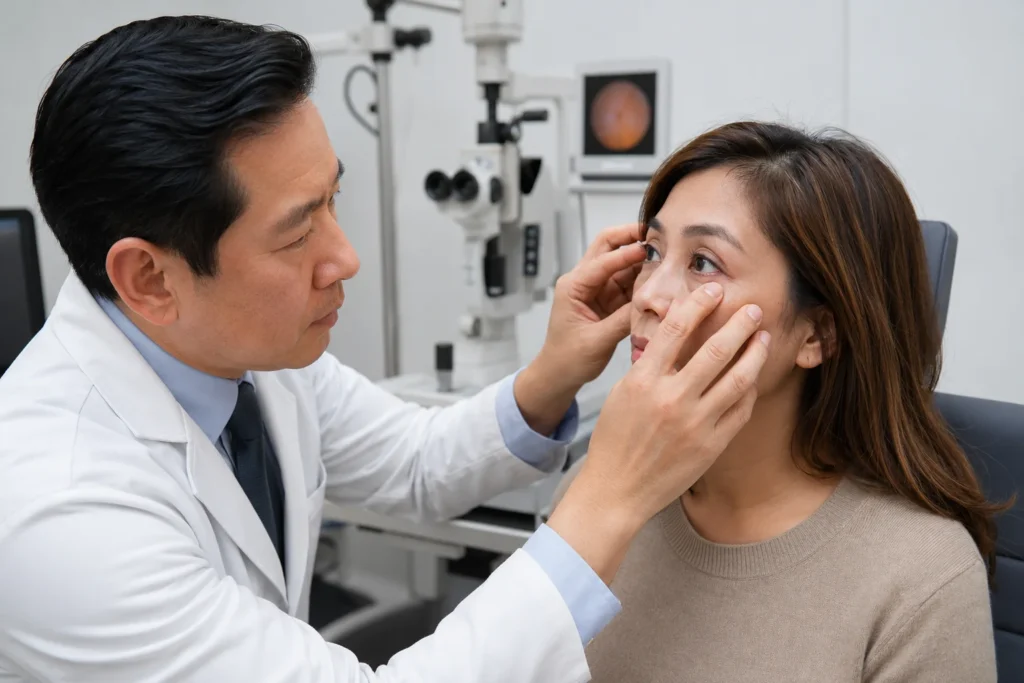
At LeeVision in Flushing, Queens, Dr. David H. Lee, MD, a board-certified ophthalmologist, evaluates the eye area with attention to eyelid anatomy and ocular health. This distinction matters because the skin surrounding the eyes is delicate, and not every popular cosmetic treatment is suitable for every patient.
If you are researching how to reduce under eye wrinkles, the first step is understanding the type of change you are seeing.
Why Do Wrinkles Develop Under the Eyes?
Under-eye skin is naturally thin and has less structural support than many other areas of the face. As collagen and elastin gradually change with age, the skin may become less firm and slower to return to a smooth position after facial movement.
The tissues beneath the lower eyelids also change. Fat may become more prominent, the upper cheek can lose volume, and a hollow tear trough may develop. These changes can create shadows that make fine lines look more noticeable.
Repeated Smiling and Squinting
Every smile or squint temporarily folds the skin around the eyes. In younger skin, these lines usually soften when the muscles relax.
Over time, repeated movement combined with reduced skin elasticity may cause some lines to remain visible at rest. This is why patients often notice early wrinkles in photographs before seeing them clearly in the mirror.
Collagen Loss and Crepey Under-Eye Skin
Patients frequently describe their under-eye skin as “thin,” “crinkled,” or “crepey.”
This appearance is often related to changes in skin quality rather than volume loss alone. Makeup may settle into tiny lines, and the skin can look more textured under bright lighting.
For these patients, adding volume without addressing skin quality may not provide the improvement they expect.
Sun Exposure and NYC Lifestyles
Ultraviolet exposure contributes to premature skin aging and collagen changes. In New York City, cumulative sun exposure can occur during daily commuting, walking, driving, or sitting near windows.
Screen-heavy lifestyles may also contribute indirectly. Long periods of digital work can increase eye discomfort in some people, leading to frequent squinting or rubbing.
Seasonal allergies are another common concern in Queens. Persistent itching and repeated eye rubbing can irritate the delicate eyelid area.
Dryness Can Make Fine Lines More Visible
Dry or dehydrated skin can exaggerate superficial wrinkles.
Patients who spend long hours in air-conditioned offices, heated apartments, or dry indoor environments may notice that their under-eye lines appear worse at certain times of the day.
Dry eye symptoms should also be discussed during an eye-focused consultation. Burning, grittiness, excessive tearing, redness, and frequent eye rubbing may indicate an ocular surface concern that deserves separate evaluation.
Under-Eye Wrinkles vs. Crow’s Feet: What Is the Difference?
Under-eye wrinkles and crow’s feet are often discussed as though they are the same condition. They are not.
Crow’s feet develop primarily at the outer corners of the eyes and are strongly influenced by repeated muscle movement.
Under-eye wrinkles appear beneath the lower eyelids and may involve skin thinning, collagen loss, dryness, volume changes, or eyelid anatomy.
| Concern | Typical Appearance | Common Factor |
|---|---|---|
| Fine under-eye lines | Small shallow creases | Early skin changes |
| Crepey skin | Thin, crinkled texture | Collagen and elasticity changes |
| Crow’s feet | Lines beside the eyes | Facial movement |
| Tear trough hollowing | Shadow beneath the eye | Volume loss |
| Lower eyelid bags | Fullness or bulging | Eyelid anatomy |
Identifying the correct concern is important because these problems may require different treatment approaches.
How to Reduce Under Eye Wrinkles: Start With the Cause
Patients often arrive at a consultation already asking about a specific procedure. Some want laser treatment after seeing results online. Others ask about injectables because a friend recommended them.
The better question is: What is actually causing my under-eye appearance?
Four Questions That Help Identify the Problem
Before choosing a wrinkles under eyes treatment, consider:
- Are the wrinkles visible only when smiling?
- Does the skin appear thin or crepey?
- Is there a hollow shadow beneath the lower eyelid?
- Are there noticeable bags or loose skin?
Movement-related lines are different from skin texture concerns. A tear trough is different from an eyelid bag. Significant loose skin is different from mild dehydration lines.
Treatments should not be considered interchangeable.
What Is the Best Treatment for Wrinkles Under the Eyes?
There is no single best treatment for every patient.
Depending on the cause, treatment planning may involve professional skin care, topical products, laser skin resurfacing, selected injectable approaches, or eyelid surgery for more significant structural changes.
| Treatment Approach | May Be Considered For |
| Medical-grade skin care | Early fine lines and skin maintenance |
| Laser resurfacing | Texture changes and selected wrinkles |
| Neuromodulator treatment | Certain movement-related lines |
| Volume correction | Carefully selected hollowing concerns |
| Eyelid surgery | Significant excess skin or structural changes |
The appropriate option depends on skin quality, eyelid anatomy, wrinkle depth, medical history, and realistic expectations.
Can Eye Creams Reduce Under-Eye Wrinkles?
Eye creams can help, but their limitations should be understood.
Hydrating ingredients may temporarily soften the appearance of superficial fine lines. Evidence-based skin care may also support skin quality over time.
However, a cream cannot remove significant excess eyelid skin, reposition lower eyelid fat, or fully correct a deep tear trough.
What About Retinol and Retinoids?
Retinoid-based products are commonly discussed when patients ask how to reduce under eye wrinkles. These vitamin A derivatives may support skin renewal and collagen-related processes.
The eyelid area, however, is sensitive.
Using an aggressive product too close to the eyes may cause irritation. Patients with dry eye symptoms or sensitive periocular skin may require additional caution.
Stronger treatment does not automatically mean better treatment.
When Is Laser Resurfacing Considered for Under-Eye Wrinkles?
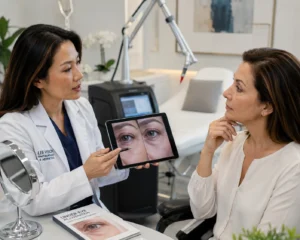
Laser skin resurfacing may be considered for selected patients with fine wrinkles, crepey texture, or visible photoaging around the eyes.
The goal is to create a controlled treatment response that supports skin remodeling. Depending on the technology and treatment depth, laser resurfacing may improve texture and soften visible lines.
Ablative vs. Non-Ablative Laser Treatment
Ablative laser resurfacing is generally more intensive and removes controlled portions of the skin surface. Recovery may involve redness, swelling, peeling, and greater skin sensitivity.
Non-ablative laser treatment delivers energy with less surface disruption. Recovery may be easier for some patients, although improvement can be more gradual and multiple sessions may be considered.
For busy patients in Flushing, Queens, and throughout NYC, downtime is often an important part of the treatment discussion.
The lower eyelid requires particular precision because the eye must be protected and eyelid anatomy must be considered. Skin type, pigmentation risk, prior procedures, dry eye symptoms, and expected sun exposure can all influence treatment planning.
Can Under-Eye Wrinkles Be Removed Permanently?
No treatment should be presented as a permanent way to erase every under-eye wrinkle.
Laser treatment, skin care, and other procedures may improve selected concerns, but natural aging continues. Collagen changes, facial movement, and environmental exposure continue to affect the skin.
The goal of evidence-based eye rejuvenation is realistic improvement while preserving patient safety and respecting the anatomy around the eyes.
In many cases, the best wrinkles under eyes treatment is not the most aggressive option. It is the treatment—or carefully planned combination of treatments—that addresses the actual cause of the patient’s concern.
Can Botox Help With Wrinkles Around the Eyes?
Botox and other neuromodulators are commonly discussed for wrinkles around the eyes, but they do not treat every type of under-eye line.
These treatments temporarily reduce selected muscle activity and are generally more relevant to dynamic wrinkles—lines that become visible with smiling or squinting.
Botox for Crow’s Feet vs. Under-Eye Wrinkles
Crow’s feet develop mainly at the outer corners of the eyes. Wrinkles directly beneath the lower eyelid may involve thin skin, collagen loss, or structural changes.
Because the muscles around the eyes support blinking and eyelid movement, treatment near the lower eyelid requires careful planning.
Patients with crepey skin, tear trough hollowing, or loose eyelid tissue may need a different wrinkles under eyes treatment rather than neuromodulator injections alone.
Are Tear Trough Hollows Under-Eye Wrinkles?
A tear trough is a depression between the lower eyelid and upper cheek. It can create a shadow that makes the eyes appear tired and may exaggerate nearby fine lines.
This is different from a true skin wrinkle.
Patients often describe both concerns as “under-eye wrinkles,” which can lead to choosing the wrong treatment.
Signs of Tear Trough Hollowing
A tear trough may appear as:
- a curved depression beneath the eye
- a dark shadow that changes with lighting
- a tired appearance despite adequate sleep
- a noticeable lower eyelid-to-cheek transition
Some patients have hollowing and wrinkled skin at the same time. A detailed examination helps determine which concern is more prominent.
Can Under-Eye Filler Improve Fine Lines?
Dermal filler may be considered for carefully selected patients with volume-related hollowing. Its primary role is to improve contour rather than resurface the skin.
Correcting a pronounced hollow may make the under-eye area appear smoother. However, filler does not directly remove crepey skin or significant loose eyelid tissue.
Why Under-Eye Filler Requires Careful Assessment
The tissues beneath the eyes are anatomically complex. Injectable treatment may cause swelling, puffiness, contour irregularities, or discoloration. Rare vascular complications can also be medically serious.
Before considering filler, a physician may evaluate:
- lower eyelid anatomy
- existing eye bags
- skin thickness
- tendency toward swelling
- previous filler treatments
- facial volume distribution
More volume does not always create a better result. In patients with prominent lower eyelid bags, additional filler may make fullness more noticeable.
When Are Lower Eyelid Bags a Structural Concern?
Lower eyelid bags may develop as tissues supporting the eyelids change with age. Fat around the eye can become more prominent, creating visible fullness beneath the lower eyelid.
Patients sometimes spend years trying creams because they assume the problem is wrinkled skin.
In reality, skin wrinkles, tear troughs, and eyelid bags are different concerns.
| Concern | Main Appearance | Treatment Focus |
|---|---|---|
| Fine lines | Small creases | Skin quality |
| Crepey skin | Thin, crinkled texture | Skin remodeling |
| Tear trough | Hollow shadow | Volume and contour |
| Eyelid bags | Visible fullness | Eyelid anatomy |
| Loose skin | Skin folds | Structural correction |
A patient may have several of these changes simultaneously, which is why personalized treatment planning matters.
When Is Lower Eyelid Surgery Considered?
Lower blepharoplasty is a surgical procedure that may be considered when structural changes are the primary concern.
Depending on the patient’s anatomy, surgery may address prominent lower eyelid fat or selected excess skin. It should not be viewed simply as a treatment that “removes wrinkles.”
Who May Need a Surgical Evaluation?
An evaluation may be appropriate for patients with persistent eyelid bags, significant loose skin, or structural changes unlikely to improve adequately with topical products.
Candidacy depends on eyelid position, ocular health, medical history, and realistic expectations.
At LeeVision in Flushing, Queens, Dr. David H. Lee, MD, a board-certified ophthalmologist, evaluates cosmetic eyelid concerns with attention to eye health and functional anatomy.
Laser vs. Filler vs. Lower Eyelid Surgery
Patients researching how to reduce under eye wrinkles frequently compare laser treatment, filler, and surgery. These options address different problems.
| Treatment | Main Goal | Often Considered For |
| Laser resurfacing | Improve skin texture | Fine lines and crepey skin |
| Dermal filler | Improve contour | Selected tear trough hollowing |
| Lower blepharoplasty | Address structural changes | Bags or excess skin |
The least invasive option is not automatically the most appropriate.
For example, filler may not be suitable when lower eyelid bags are the main concern. Surgery may be unnecessary when a patient primarily has early skin texture changes.
How Is Under-Eye Aging Evaluated?

An eye-focused consultation looks beyond the visible wrinkle.
Eyelid position, skin quality, tear film symptoms, facial symmetry, and the relationship between the lower eyelid and cheek may all be considered.
Patients should also discuss previous Botox, filler, laser treatments, or eyelid surgery.
Questions Patients Commonly Ask During Consultation
Patients often want to know:
- Are these wrinkles or tear troughs?
- Will a cream make a meaningful difference?
- Is laser treatment appropriate for my skin?
- Do I need filler or surgery?
- How much downtime should I expect?
- Will treatment affect my eyes or eyelid movement?
These questions are important because the patient’s main concern should guide treatment planning.
For busy professionals and commuters in Flushing, Queens, and NYC, recovery time can also influence which treatment is practical.
Common Mistakes When Treating Under-Eye Wrinkles
One common mistake is using aggressive acids or retinoids too close to the eyelids. Irritation may make the skin appear dry, red, and more textured.
Another is assuming every hollow requires filler. Shadows beneath the eyes can result from several anatomical changes.
Patients may also ignore persistent itching or dry eye symptoms. Frequent rubbing can irritate the eyelid area and should not be overlooked.
Finally, treatment should not be selected only from social media photographs. Before-and-after images cannot show a patient’s complete anatomy, medical history, or ocular health.
Why Personalized Treatment Matters
Under-eye aging is rarely caused by one factor.
Skin texture, facial movement, volume loss, and eyelid anatomy may all contribute to the appearance of wrinkles.
The most appropriate wrinkles under eyes treatment should focus on the dominant concern rather than trying to correct every feature with one procedure.
A careful evaluation can help patients understand how to reduce under eye wrinkles while considering benefits, limitations, recovery expectations, and eye safety.
For some patients, conservative skin care is appropriate. Others may benefit from laser treatment, selected volume correction, or surgical evaluation.
The goal is not to choose the most aggressive procedure. It is to select an evidence-based approach that matches the patient’s anatomy and long-term needs.
How to Reduce Under Eye Wrinkles With Long-Term Care
Patients asking how to reduce under eye wrinkles often expect one treatment to solve every concern. In reality, long-term improvement depends on skin protection, appropriate treatment selection, and understanding how the eye area changes with age.
Daily care cannot correct every structural problem, but it may help protect skin quality and reduce factors that make fine lines more noticeable.
Protect the Eye Area From Sun Exposure
Ultraviolet exposure contributes to collagen changes and photoaging. Daily sun protection is particularly important for the thin skin around the eyes.
In New York City, sun exposure occurs during walking, driving, and daily commutes—not only during summer vacations. Sunglasses may also help reduce frequent squinting in bright conditions.
Avoid Frequent Eye Rubbing
Patients with allergies or dry eye symptoms may repeatedly rub their eyes because of itching or irritation.
This can irritate the delicate eyelid skin. Persistent burning, grittiness, redness, or excessive tearing should be evaluated rather than treated only as a cosmetic concern.
Keep Skin Care Gentle and Consistent
Patients frequently switch products when they do not see immediate changes.
Hydration and appropriately selected active ingredients may support skin quality, but the eyelid area is sensitive. Stronger products can cause irritation when used incorrectly.
When learning how to reduce under eye wrinkles, remember that redness and peeling do not necessarily mean a product is working better.
How to Choose the Right Wrinkles Under Eyes Treatment
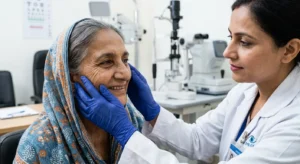
Treatment should match the main cause of the visible change.
| Main Concern | Treatment Goal | Possible Approach |
|---|---|---|
| Fine lines | Support skin quality | Skin care |
| Crepey texture | Improve skin remodeling | Selected laser treatment |
| Movement lines | Address muscle activity | Neuromodulator treatment |
| Tear trough | Improve contour | Selected volume correction |
| Eyelid bags | Address anatomy | Surgical evaluation |
A patient with thin, crinkled skin needs a different discussion from someone with prominent lower eyelid bags.
This is why personalized treatment planning is more useful than choosing a procedure based on popularity.
Why Eye Health Matters Before Under-Eye Treatment
Cosmetic concerns around the eyelids should not always be separated from eye health.
A patient may be worried about wrinkles while also experiencing dry eye symptoms, fluctuating vision, or frequent irritation.
Dry Eye Symptoms May Affect Treatment Planning
The tear film protects the surface of the eye. When it becomes unstable, patients may experience burning, grittiness, redness, or excessive tearing.
Some patients squeeze or rub their eyes more frequently because of discomfort.
Before an elective treatment around the eyelids, these symptoms should be discussed. Advanced diagnostic technology may be used when clinically appropriate to better evaluate ocular health.
At LeeVision in Flushing, Queens, Dr. David H. Lee, MD, a board-certified ophthalmologist, considers eyelid anatomy, eye health, and individual goals when developing a personalized treatment plan.
What Results Should Patients Expect?
A successful wrinkles under eyes treatment does not necessarily create completely wrinkle-free skin.
Natural facial movement remains, and the aging process continues.
Depending on the concern and treatment, realistic goals may include:
- softer fine lines
- improved skin texture
- a smoother under-eye contour
- less noticeable movement-related wrinkles
- improvement in selected eyelid concerns
Results differ because skin thickness, facial anatomy, pigmentation tendency, previous treatments, and individual healing responses vary.
No responsible medical treatment should guarantee a specific cosmetic outcome.
When Should You See a Specialist?
A professional evaluation may be useful when skin care has not addressed your concern or when you are unsure whether you have wrinkles, tear trough hollowing, or lower eyelid bags.
Evaluation is also important before laser treatment, injectable procedures, or eyelid surgery.
Patients searching for wrinkles under eyes treatment in Flushing, Queens, or NYC should consider the clinician’s understanding of both eyelid anatomy and ocular health.
Patient safety should remain central to any elective treatment around the eyes.
Frequently Asked Questions About Under-Eye Wrinkles
What is the best wrinkles under eyes treatment?
The best wrinkles under eyes treatment depends on whether the main concern is fine lines, crepey skin, tear trough hollowing, muscle movement, or lower eyelid bags. Laser resurfacing, skin care, injectables, and eyelid surgery address different problems.
How to reduce under eye wrinkles without surgery?
Patients researching how to reduce under eye wrinkles without surgery may consider consistent skin care, sun protection, selected laser procedures, neuromodulators, or carefully planned volume correction. Treatment should match the cause of the lines.
Can eye creams help with wrinkles under the eyes?
Eye creams may hydrate the skin and soften superficial lines. However, topical products are limited when deeper wrinkles, prominent bags, or significant loose skin are present.
How to reduce under eye wrinkles naturally at home?
If you want to know how to reduce under eye wrinkles naturally, start with daily sun protection, gentle moisturization, adequate sleep, and avoiding frequent eye rubbing. Home care may support skin quality but cannot correct major structural changes.
Does retinol help under-eye wrinkles?
Retinol may support skin renewal and improve the appearance of selected fine lines over time. Because lower eyelid skin is sensitive, aggressive use may cause dryness, redness, or irritation.
Is laser a good wrinkles under eyes treatment?
Laser resurfacing may be a useful wrinkles under eyes treatment for selected patients with fine lines, crepey texture, or photoaging. Skin type, pigmentation risk, eye health, and expected downtime should be considered.
Can Botox reduce wrinkles beneath the eyes?
Botox and similar neuromodulators may improve selected movement-related lines. They do not directly correct tear trough hollowing, prominent eyelid bags, or significant excess skin.
How to reduce under eye wrinkles caused by dry skin?
For patients asking how to reduce under eye wrinkles related to dryness, gentle hydration and avoiding irritating products may help superficial lines appear softer. Persistent eye irritation or dry eye symptoms should also be evaluated.
Is under-eye filler better than laser treatment?
Neither option is universally better. Filler primarily addresses selected volume loss, while laser treatment focuses more on skin texture. The right wrinkles under eyes treatment depends on the patient’s anatomy and main cosmetic concern.
Can under-eye wrinkles be permanently removed?
No treatment permanently stops aging. Procedures may soften lines or improve skin texture, but collagen changes, facial movement, and environmental exposure continue over time.
At what age should I consider under-eye treatment?
There is no specific age. Some patients develop fine lines earlier because of genetics, sun exposure, skin type, or facial movement. Treatment should be based on the concern rather than age alone.
How to reduce under eye wrinkles caused by sun damage?
Daily broad-spectrum sun protection is important. Selected skin care or laser treatment may also be considered depending on the degree of photoaging and skin texture changes.
Can lower eyelid surgery treat under-eye wrinkles?
Lower blepharoplasty may address prominent bags or excess skin. It is not designed to erase every fine line, so the appropriate wrinkles under eyes treatment may involve a different or combined approach.
Why do my under-eye wrinkles look worse when I smile?
Smiling activates muscles around the eyes and temporarily folds the skin. With reduced elasticity, these movement-related lines may become more noticeable.
How long does wrinkles under eyes treatment take to work?
The timeline depends on the treatment. Skin care produces gradual changes, laser resurfacing involves healing and remodeling, while injectables and surgery have different recovery and improvement timelines.
How to reduce under eye wrinkles if I also have dry eyes?
Patients researching how to reduce under eye wrinkles while experiencing burning, grittiness, or irritation should mention these symptoms during consultation. Eye health may influence treatment planning around the eyelids.
Are under-eye wrinkle treatments safe for darker skin tones?
Several treatments may be appropriate, but pigmentation risk must be considered. Laser technology, treatment intensity, and skin characteristics should be carefully evaluated.
How do I choose the right wrinkles under eyes treatment?
Choosing a wrinkles under eyes treatment begins with identifying whether the main problem is skin texture, muscle movement, volume loss, eyelid bags, or loose skin. A personalized assessment can help avoid unnecessary procedures.
When should I see an ophthalmologist about under-eye aging?
An ophthalmic evaluation may be useful when cosmetic concerns occur alongside dry eye symptoms, eyelid changes, irritation, or previous eye procedures. Eye and eyelid anatomy should be considered before certain treatments.
Where can I discuss wrinkles under eyes treatment in Flushing, Queens?
Patients in Flushing, Queens, and NYC can seek an evaluation from a physician experienced in eye and eyelid anatomy. At LeeVision, Dr. David H. Lee, MD, a board-certified ophthalmologist, considers ocular health, eyelid structure, and individual goals when discussing treatment options
