


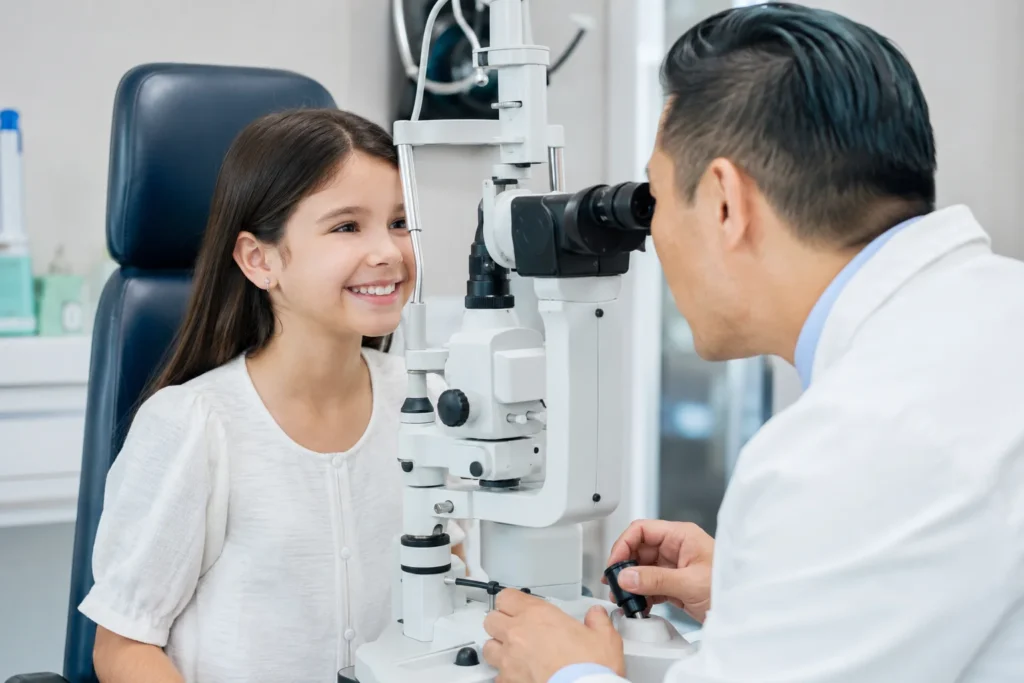
Pediatric Eye Doctor Near Me: When Should Your Child See an Eye Specialist?
Parents often notice obvious problems like squinting or frequent eye rubbing, but many childhood vision issues develop quietly. A child may perform well at home yet struggle to see the classroom board, read comfortably, or keep up with schoolwork because of an undiagnosed eye condition.
If you have been searching for a pediatric eye doctor near me, you are likely looking for more than a routine vision screening. You want an experienced eye specialist who understands how children’s eyes grow, how vision develops at different ages, and how to identify problems before they affect learning or long-term eye health.
At LeeVision in Flushing, Queens, New York City, Dr. David H. Lee, MD, a Board-Certified Ophthalmologist, believes early diagnosis plays one of the biggest roles in protecting a child’s lifelong vision. Modern diagnostic technology allows many eye conditions to be detected long before children can explain that something is wrong.
Why Children’s Eyes Need Specialized Eye Care
Children are not simply small adults when it comes to eye health. Their visual system continues developing throughout infancy and early childhood. During these years, the brain learns how to process images received from both eyes.
Even a minor vision problem can interfere with this development if left untreated.
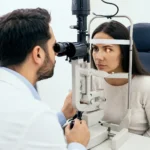
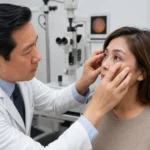
A pediatric eye examination evaluates much more than whether a child can read letters on a chart. It helps assess:
- Visual development
- Eye alignment
- Depth perception
- Colour vision
- Eye muscle coordination
- Focusing ability
- Overall eye health
Many parents are surprised to learn that children can have significant vision problems without ever complaining because they assume everyone sees the world the same way.
Signs Your Child May Need a Pediatric Eye Doctor
Some symptoms are easy to recognise, while others are subtle and mistaken for behavioural or learning difficulties.
Common Warning Signs
Watch for signs such as:
- Frequent eye rubbing
- Sitting too close to the television
- Holding books very close
- Squinting frequently
- Covering one eye while reading
- Headaches after school
- Poor concentration
- Tilting the head to see clearly
- Complaints of blurry vision
- Difficulty catching balls or judging distances
Sometimes teachers notice these issues before parents do because children spend many hours reading and focusing on classroom materials.
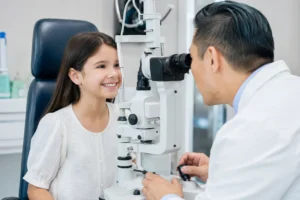
What Happens During a Pediatric Eye Exam?
Parents often worry that their child may be nervous during an eye examination. Fortunately, modern pediatric eye exams are designed to be comfortable, interactive, and age-appropriate.
Depending on your child’s age, the examination may include:
Vision Testing
Age-appropriate vision charts help determine how clearly each eye sees.
Eye Alignment Evaluation
The ophthalmologist checks whether both eyes work together properly and looks for signs of crossed eyes or lazy eye (amblyopia).
Refraction Testing
This measures whether glasses are needed for nearsightedness, farsightedness, or astigmatism.
Eye Health Examination
Using specialised equipment, the doctor examines the cornea, lens, retina, optic nerve, and other important structures to detect disease or developmental abnormalities.
These tests are painless and are adjusted to match each child’s age and level of cooperation.
When Should Children Have Their First Comprehensive Eye Exam?
Many parents assume children only need an eye exam once they start school. In reality, professional eye examinations should begin much earlier.
General recommendations include:
| Child’s Age | Recommended Eye Evaluation |
|---|---|
| Birth to 12 months | Basic eye health screening |
| Around 6–12 months (if risk factors exist) | Comprehensive eye examination |
| 3–5 years | Detailed preschool eye exam |
| Before starting school | Comprehensive vision assessment |
| School-age children | Regular exams based on individual needs and ophthalmologist recommendations |
Children with a family history of eye disease, premature birth, developmental delays, or previous eye injuries may require earlier or more frequent evaluations.
Can Children Wear Contact Lenses?
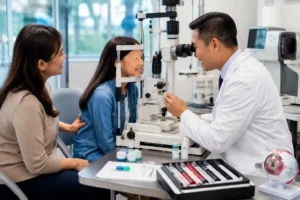
Many parents searching for a cheapest contact lens exam near me wonder whether contact lenses are appropriate for children.
The answer depends less on age and more on maturity, eye health, and the ability to care for lenses properly.
A contact lens examination is different from a standard eye exam because it also evaluates:
- Corneal shape
- Tear film quality
- Lens fitting
- Comfort
- Safe lens handling
- Follow-up care
While affordability matters, choosing an experienced eye care provider is equally important. Poorly fitted contact lenses can increase the risk of eye irritation, infection, or corneal complications if proper hygiene is not followed.
Are There Progressive Contact Lenses for Children and Adults?
One question patients frequently ask is, “Are there progressive contact lenses?“
Yes, progressive contact lenses—also called multifocal contact lenses—are available for many patients.
These lenses are designed to provide clear vision at multiple distances without the visible lines found in traditional bifocal glasses.
Depending on individual needs, progressive contact lenses may help:
- Read comfortably
- Use computers
- Drive more clearly
- Reduce dependence on reading glasses
- Improve everyday convenience
For some children with specific focusing conditions and for many adults experiencing age-related near vision changes (presbyopia), these lenses may be an appropriate option after a comprehensive eye examination and professional fitting.
Not every patient is an ideal candidate, which is why personalised evaluation remains essential before selecting any type of contact lens.
Common Childhood Eye Conditions a Pediatric Eye Doctor Diagnoses
Many childhood eye problems develop gradually, making them difficult for parents to notice. During a comprehensive examination, a pediatric eye doctor looks beyond visual clarity to evaluate how both eyes work together and whether vision is developing normally. Early diagnosis often allows treatment to begin before permanent vision loss or learning difficulties occur.
Refractive Errors
Refractive errors occur when light does not focus correctly on the retina, resulting in blurred vision. These conditions are among the most common reasons children need glasses.
Common refractive errors include:
- Nearsightedness (Myopia)
- Farsightedness (Hyperopia)
- Astigmatism
Children may not realise their vision is blurry because they have never experienced clear vision. Instead, they may avoid reading, lose interest in schoolwork, or complain of tired eyes after focusing on close tasks.
Amblyopia (Lazy Eye)
Amblyopia, often called lazy eye, develops when one eye does not send clear visual information to the brain. Over time, the brain begins relying more on the stronger eye.
This condition usually causes no pain, making regular eye examinations especially important. When detected early, treatment may include prescription glasses, patching therapy, specialised vision exercises, or other evidence-based management recommended by an ophthalmologist.
Strabismus (Crossed or Misaligned Eyes)
Strabismus occurs when the eyes do not point in the same direction. One eye may turn inward, outward, upward, or downward while the other focuses normally.
Parents sometimes notice the misalignment only in photographs or when the child is tired. Because persistent eye misalignment can interfere with normal visual development, timely evaluation is important.
Treatment varies depending on the cause and may involve:
- Prescription glasses
- Eye muscle exercises
- Prism lenses
- Monitoring
- Eye muscle surgery in selected cases
The most appropriate treatment depends on the child’s age, vision development, and overall eye health.
Digital Screens and Children’s Eye Health
Today’s children spend more time using tablets, smartphones, computers, and gaming devices than previous generations. While digital screens do not permanently damage healthy eyes, prolonged close-up work can contribute to symptoms of digital eye strain.
Children may experience:
- Blurry vision after screen use
- Dry or watery eyes
- Eye fatigue
- Headaches
- Difficulty refocusing on distant objects
- Neck and shoulder discomfort from poor posture
Families living in busy urban areas such as Flushing, Queens, and New York City often balance schoolwork with recreational screen time, making healthy visual habits increasingly important.
Simple strategies that support comfortable vision include:
- Encouraging regular outdoor play
- Taking short visual breaks during extended screen use
- Maintaining proper viewing distance
- Using appropriate room lighting
- Scheduling routine comprehensive eye examinations
These habits help reduce eye strain while supporting healthy visual development.
How a Comprehensive Eye Exam Differs From a School Vision Screening
Many parents believe a passed school vision screening means their child’s eyes are healthy. In reality, school screenings are designed to identify only certain vision problems and should not replace a comprehensive eye examination.
| School Vision Screening | Comprehensive Pediatric Eye Exam |
|---|---|
| Basic vision check | Complete evaluation of eye health and vision |
| Limited testing | Detailed assessment of focusing, alignment, and eye coordination |
| Usually performed at school | Performed by a board-certified ophthalmologist or eye care professional |
| May miss hidden eye conditions | Can detect early eye diseases and developmental vision disorders |
| Indicates whether further testing may be needed | Provides diagnosis, treatment recommendations, and long-term monitoring |
A comprehensive examination evaluates the entire visual system, including structures inside the eye that cannot be assessed during routine school screenings.
What Parents Should Bring to a Pediatric Eye Appointment
Preparing for your child’s appointment helps the examination run smoothly and allows the ophthalmologist to make informed decisions.
Consider bringing:
- Current glasses or contact lenses, if worn
- A list of medications
- Previous eye examination records, if available
- Information about family history of eye disease
- Questions about vision, school performance, or eye symptoms
Parents should also mention any concerns they have noticed, even if they seem minor. Small behavioural changes, such as sitting closer to the television or avoiding reading, can provide valuable clues during the evaluation.
Choosing the Right Pediatric Eye Doctor Near You
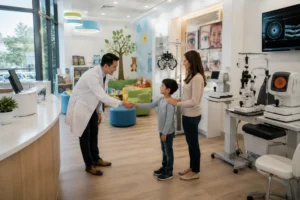
When searching for a pediatric eye doctor near me, experience and comprehensive care matter just as much as convenience. A thorough eye examination should focus not only on correcting vision but also on protecting long-term eye health as your child grows.
At LeeVision in Flushing, Queens, New York City, Dr. David H. Lee, MD, Board-Certified Ophthalmologist, provides evidence-based pediatric eye care using advanced diagnostic technology and a personalised approach. Every recommendation is tailored to the child’s age, visual needs, eye health, and overall development, helping families make informed decisions with confidence rather than uncertainty.
Frequently Asked Questions
How do I choose the best pediatric eye doctor near me?
When searching for the best pediatric eye doctor near me, look for a board-certified ophthalmologist with experience treating children of all ages. A comprehensive eye exam should include vision testing, eye alignment, eye health evaluation, and personalized treatment recommendations. Choosing an experienced specialist helps detect vision problems early and supports healthy visual development.
Is it worth searching for the cheapest contact lens exam near me?
Many parents search for the cheapest contact lens exam near me, but the lowest price should not be the only factor. A quality contact lens exam includes corneal measurements, tear film evaluation, proper lens fitting, and follow-up care. A well-fitted contact lens reduces the risk of discomfort, infections, and long-term eye complications.
Are there progressive contact lenses for everyday use?
Yes. Patients often ask, are there progressive contact lenses that can replace reading glasses. Progressive or multifocal contact lenses allow many people to see clearly at near, intermediate, and distance ranges. An ophthalmologist can determine whether these lenses are suitable based on your prescription, eye health, and daily activities.
When should I schedule an appointment with a pediatric eye doctor near me?
You should schedule an appointment with a pediatric eye doctor near me if your child squints, complains of blurry vision, rubs their eyes frequently, struggles at school, or has a family history of eye disease. Early evaluation allows many childhood vision problems to be treated before they affect learning or long-term eyesight.
Can a pediatric eye doctor near me prescribe contact lenses for teenagers?
Yes. A pediatric eye doctor near me can determine whether a teenager is ready for contact lenses after evaluating eye health, prescription stability, and the ability to care for lenses properly. Safe contact lens wear begins with a professional fitting and regular follow-up examinations.
Are there progressive contact lenses for people over 40?
Absolutely. If you’re wondering are there progressive contact lenses, many adults over 40 benefit from multifocal lenses designed to correct presbyopia. These lenses provide smooth vision at different distances without switching between multiple pairs of glasses.
Does a cheapest contact lens exam near me include a regular eye exam?
Not always. Some clinics separate a routine eye examination from a contact lens fitting. Before booking the cheapest contact lens exam near me, ask whether the price includes your eye health evaluation, lens fitting, prescription update, and follow-up visit so there are no unexpected costs.
Why is a pediatric eye doctor near me better than a school vision screening?
A school vision screening only identifies some vision problems, while a pediatric eye doctor near me performs a comprehensive examination of eye health, focusing ability, eye coordination, depth perception, and visual development. Many childhood eye conditions cannot be detected through school screenings alone