


Femtosecond Laser Cataract Surgery: A Modern Approach to Safer, More Precise Vision Restoration
Cataracts are one of the most common causes of blurred vision, especially as we get older. Many patients first notice difficulty reading road signs at night, increased glare from headlights, faded colors, or the feeling that their eyeglass prescription keeps changing. These changes can happen gradually, making it easy to assume they are simply part of aging.
Today, advances in ophthalmology have transformed how cataracts are treated. One of the most significant innovations is femtosecond laser cataract surgery, a technology-assisted procedure that adds precision to several important steps of cataract surgery. While the laser does not replace the surgeon, it can improve accuracy during carefully selected parts of the operation.
At LeeVision in Flushing, Queens, New York City, Board-Certified Ophthalmologist Dr. David H. Lee, MD evaluates every patient individually using advanced diagnostic technology to determine whether laser-assisted cataract surgery or traditional cataract surgery is the most appropriate option. The goal is always the same—safe surgery, personalized treatment planning, and long-term vision preservation.
What Is Femtosecond Laser Cataract Surgery?
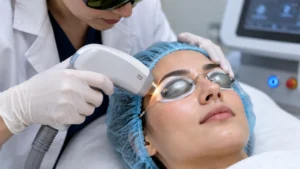
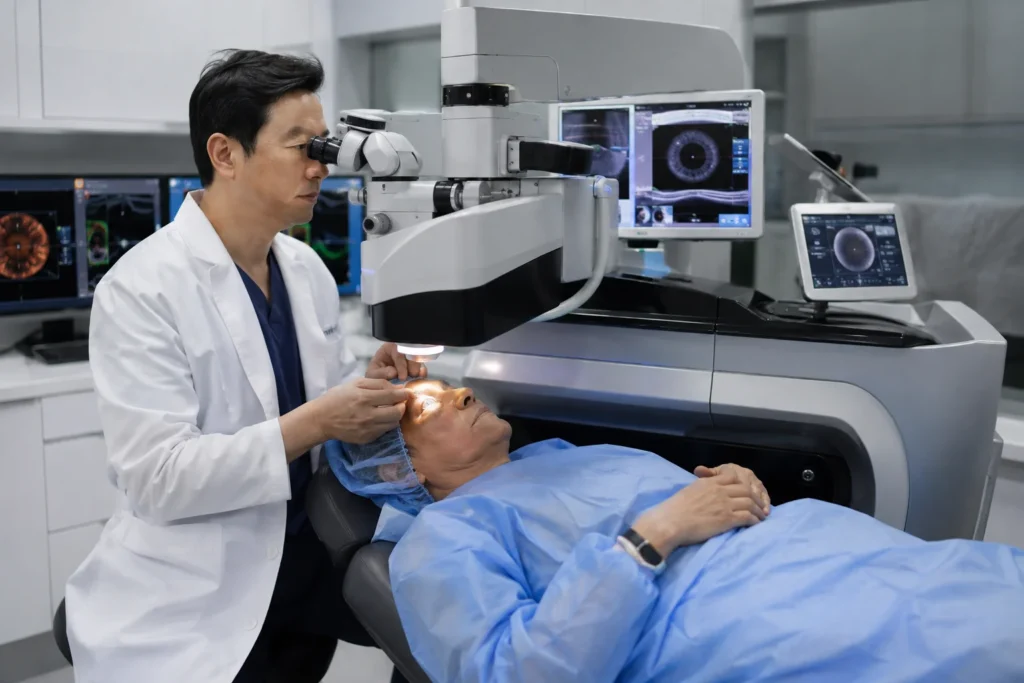
Femtosecond laser cataract surgery is an advanced form of cataract surgery that uses an ultra-fast computer-guided laser to perform several delicate steps before the cataract is removed. The laser creates highly precise incisions, opens the front portion of the natural lens capsule, and softens the cloudy lens into smaller pieces before the surgeon removes it.
The actual cataract is still removed by the ophthalmologist, and an artificial intraocular lens (IOL) is placed inside the eye to restore clear vision.
Think of the laser as a highly accurate assistant that helps improve consistency during specific parts of the procedure, while the surgeon remains responsible for every important surgical decision.
How Does the Procedure Work?
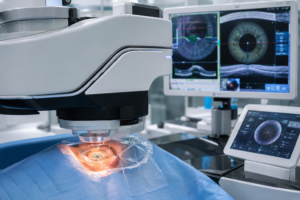
Many patients expect the laser to complete the entire surgery, but that is a common misconception. Instead, the procedure combines advanced imaging technology, laser precision, and the expertise of an experienced cataract surgeon.
Detailed Eye Mapping Before the Laser Begins
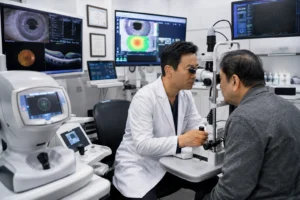
Before treatment starts, the laser system creates a detailed three-dimensional map of your eye. This imaging allows the surgeon to customize the treatment based on your eye’s unique anatomy rather than using a one-size-fits-all approach.
This personalized planning is particularly helpful because every cataract develops differently.
Laser-Assisted Surgical Steps
During the laser portion of the procedure, the technology may perform several important tasks:
- Creates precise corneal incisions
- Opens the lens capsule with high accuracy
- Softens the cloudy cataract into smaller fragments
- May correct mild astigmatism in selected patients
Because the cataract has already been softened, less ultrasound energy may be needed during removal. Depending on the individual eye, this may reduce stress on surrounding tissues.
Lens Replacement
Once the cataract has been removed, the cloudy natural lens is replaced with a clear artificial intraocular lens. The selected lens depends on your lifestyle, vision goals, eye health, and overall examination findings.
Choosing the right lens is often just as important as the surgery itself.
Why Some Patients Choose Laser Cataract Surgery
Patients often ask whether femtosecond laser cataract surgery provides “better” results than traditional cataract surgery. The answer is not always straightforward.
The laser offers additional precision during specific surgical steps, but successful outcomes still depend on several factors, including:
- Overall eye health
- Severity of the cataract
- Presence of glaucoma, macular degeneration, or diabetic eye disease
- Accurate measurements before surgery
- Surgical experience
- Appropriate lens selection
This is why experienced ophthalmologists focus on individualized treatment planning rather than recommending the same procedure for every patient.
Potential Benefits of Femtosecond Laser Cataract Surgery
When used in the right candidates, laser-assisted cataract surgery may offer several advantages.
Greater Surgical Precision
The laser can create highly consistent incisions and a precisely centered opening in the lens capsule, helping improve surgical accuracy.
Reduced Ultrasound Energy
Because the laser softens the cataract before removal, the surgeon may need less ultrasound energy to break apart the lens during surgery. This can be especially helpful in patients with dense cataracts.
Improved Astigmatism Management
Some patients have astigmatism, which causes blurred or distorted vision. During femtosecond laser cataract surgery, carefully planned corneal incisions may reduce mild astigmatism, although additional treatments or specialized lenses may still be recommended.
Personalized Surgical Planning
Advanced imaging allows every procedure to be tailored to the patient’s eye rather than relying solely on standard measurements.
Is Laser Cataract Surgery Right for Everyone?
Not necessarily.
One of the most common questions patients ask during consultation is whether they automatically qualify for femtosecond laser cataract surgery simply because it is newer technology.
In reality, candidacy depends on a comprehensive eye examination.
Your ophthalmologist evaluates several factors, including:
- Cataract severity
- Corneal health
- Pupil size
- Retinal condition
- History of previous eye surgery
- Presence of glaucoma or other eye diseases
- Overall visual goals
For some patients, traditional cataract surgery remains an excellent option and can achieve outstanding visual outcomes. The best procedure is the one that matches your individual eye health—not simply the newest technology.
Understanding Your Vision Goals After Surgery
Before cataract surgery, many patients also ask about reducing their dependence on glasses after the procedure. This conversation naturally leads to questions such as “are there progressive contact lenses“ or “do they make progressive contact lenses“ when exploring vision correction options.
While progressive contact lenses—also known as multifocal contact lenses—are available for certain people with presbyopia, cataract surgery offers a different solution. Instead of wearing contact lenses every day, many patients may choose advanced intraocular lens options designed to improve vision at multiple distances. However, no lens guarantees complete freedom from glasses, and the most appropriate choice depends on your daily activities, eye health, and realistic expectations.
Understanding the Risks and Limitations of Femtosecond Laser Cataract Surgery
Every surgical procedure has benefits as well as limitations, and femtosecond laser cataract surgery is no exception. During consultations, one of the most reassuring conversations patients have is not about what the technology can do—but about what it cannot do.
A board-certified ophthalmologist will explain both sides so you can make an informed decision with realistic expectations.
Possible Risks to Understand
Laser-assisted cataract surgery has an excellent safety profile when performed by an experienced surgeon, but it still carries the same general risks associated with cataract surgery.
Potential risks may include:
- Infection (rare)
- Bleeding inside the eye
- Temporary inflammation
- Swelling of the cornea
- Increased eye pressure
- Retinal complications in susceptible patients
- Posterior capsule tear during surgery
- Need for additional treatment if healing does not go as expected
Fortunately, serious complications are uncommon, especially when patients follow post-operative instructions and attend scheduled follow-up visits.
Common Myths About Laser Cataract Surgery
The internet contains a lot of confusing information, and many patients arrive with misconceptions that deserve clarification.
Myth: The Laser Performs the Entire Surgery
This is one of the most common misunderstandings.
The laser performs selected preparation steps, but your ophthalmologist still removes the cataract, implants the new intraocular lens, and manages every critical part of the procedure.
Myth: Laser Surgery Guarantees Perfect Vision
No cataract procedure can promise perfect eyesight.
Vision after surgery depends on many factors, including:
- The health of the retina
- The optic nerve
- Existing glaucoma
- Diabetic eye disease
- Dry eye disease
- The type of intraocular lens selected
Most patients notice significant improvement, but individual results vary.
Myth: Recovery Is Instant
Many people experience clearer vision within a day or two, but complete healing takes longer.
Your vision may continue to stabilize over several weeks as the eye recovers.
Recovery After Femtosecond Laser Cataract Surgery
One of the questions patients in Flushing, Queens, New York City ask most frequently is, “When can I get back to my normal routine?”
Recovery is usually smooth, but every eye heals differently.
What You May Notice During the First Few Days
It is normal to experience:
- Mild blurry vision
- Light sensitivity
- Scratchy sensation
- Slight tearing
- Mild redness
These symptoms generally improve as healing progresses.
Activities During Recovery
Your ophthalmologist may recommend:
- Using prescribed eye drops exactly as directed
- Avoiding rubbing your eyes
- Wearing the protective eye shield while sleeping
- Avoiding swimming until cleared
- Limiting heavy lifting for several days
- Wearing sunglasses outdoors
Following these instructions helps reduce the risk of complications and supports proper healing.
Choosing the Right Intraocular Lens
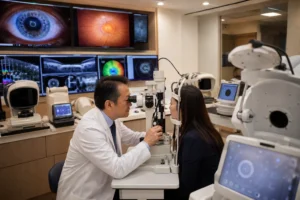
Removing the cataract is only one part of restoring vision. Selecting the appropriate intraocular lens (IOL) is equally important because it influences how well you see after surgery.
Common Lens Options
| Lens Type | Best For | Glasses After Surgery |
|---|---|---|
| Monofocal Lens | Clear distance or near vision | Usually needed for one distance |
| Toric Lens | Patients with astigmatism | May reduce dependence on glasses |
| Multifocal Lens | Multiple viewing distances | May reduce the need for glasses |
| Extended Depth of Focus (EDOF) Lens | Distance and intermediate vision | Reading glasses may still be needed |
During your consultation, your ophthalmologist considers your lifestyle, hobbies, occupation, and eye health before recommending a lens.
Can Cataract Surgery Reduce the Need for Contact Lenses?
Patients often search online for “are there progressive contact lenses“ or “do they make progressive contact lenses“ because they are looking for greater visual freedom.
The answer is yes—progressive (multifocal) contact lenses do exist and can help many people with age-related near vision changes (presbyopia). However, after successful cataract surgery, some patients may rely less on contact lenses altogether, depending on the intraocular lens they choose.
For example:
- A monofocal lens may still require reading glasses.
- A multifocal or EDOF lens may reduce dependence on both glasses and contact lenses for many daily activities.
- Some patients with complex eye conditions may still achieve their best vision using glasses or contact lenses after surgery.
This is why personalized treatment planning is so important. There is no single lens that is ideal for every patient.
Questions Patients Commonly Ask During Consultation
Experienced ophthalmologists often hear many of the same concerns before surgery.
Patients frequently ask:
Will I Be Awake During Surgery?
Yes. Most cataract procedures are performed using local anesthesia with mild sedation, allowing you to remain comfortable while avoiding general anesthesia.
Will I Feel Pain?
Most patients report little to no pain during the procedure. You may notice pressure or bright lights, but significant discomfort is uncommon.
How Long Does the Surgery Take?
The procedure itself often takes less than 30 minutes, although your total time at the surgical center will be longer due to preparation and recovery.
Can Both Eyes Be Treated on the Same Day?
In many cases, each eye is treated on separate days to allow proper healing and to evaluate the results before operating on the second eye.
Why a Comprehensive Eye Examination Matters
Not every blurry vision problem is caused by cataracts. Conditions such as glaucoma, retinal disease, corneal disorders, dry eye disease, or macular degeneration can also affect vision.
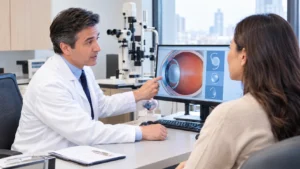
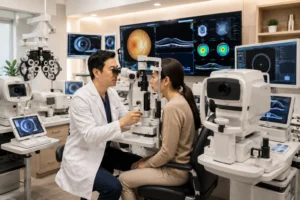
At LeeVision, Dr. David H. Lee, MD uses advanced diagnostic technology to evaluate the entire eye—not just the cataract. This comprehensive approach helps identify other eye conditions that could influence surgical planning or visual outcomes.
Making the correct diagnosis before surgery is one of the most important steps in achieving the safest and most appropriate treatment plan.
Frequently Asked Questions About Femtosecond Laser Cataract Surgery
Is femtosecond laser cataract surgery better than traditional cataract surgery?
Not necessarily. Femtosecond laser cataract surgery offers greater precision during certain surgical steps, but both laser-assisted and traditional cataract surgery can produce excellent outcomes. The best choice depends on your eye health, cataract severity, and the recommendation of your ophthalmologist.
Who is a good candidate for femtosecond laser cataract surgery?
Patients with age-related cataracts who want a highly personalized surgical approach may be good candidates. A comprehensive eye examination is necessary to determine if laser-assisted surgery is appropriate for your individual eyes.
Is femtosecond laser cataract surgery safe?
Yes. When performed by an experienced board-certified ophthalmologist using FDA-approved technology, the procedure has an excellent safety record. Like all surgeries, however, it carries potential risks that should be discussed during your consultation.
Does the laser remove the cataract completely?
No. The laser performs selected preparation steps, such as creating precise incisions and softening the cataract. Your ophthalmologist still removes the cataract and implants the intraocular lens.
How long does recovery take?
Many patients notice improved vision within one to three days, while complete healing generally continues over several weeks. Recovery varies from person to person.
Will I still need glasses after cataract surgery?
It depends on the type of intraocular lens chosen, your eye health, and your visual goals. Some patients continue to use reading glasses or glasses for certain activities even after surgery.
Does femtosecond laser cataract surgery hurt?
Most patients experience little or no pain. Numbing eye drops and mild sedation help keep the procedure comfortable.
How long does the surgery take?
The surgical procedure itself usually takes about 15–30 minutes, although you should expect to spend additional time at the surgical center for preparation and recovery.
Can cataracts come back after surgery?
No. Once a cataract is removed, it does not grow back. Some patients may later develop a cloudy posterior capsule, which can usually be treated quickly with a YAG laser procedure.
Is laser cataract surgery covered by insurance?
Standard cataract surgery is often covered by insurance or Medicare if medically necessary. The laser-assisted portion and premium lens options may involve additional out-of-pocket costs. Coverage varies by insurance plan.
Are there progressive contact lenses?
Yes. Are there progressive contact lenses? Absolutely. They are commonly called multifocal contact lenses and are designed to help people with presbyopia see at more than one distance. They may be an option for individuals who are not ready for cataract surgery or who wish to continue wearing contact lenses.
Do they make progressive contact lenses?
Yes, do they make progressive contact lenses? Modern multifocal contact lenses are available in both soft and rigid gas-permeable designs. An eye examination is necessary to determine whether they are suitable for your prescription and eye health.
Are progressive contact lenses the same as progressive eyeglasses?
No. Progressive eyeglasses use different lens zones, while multifocal contact lenses use advanced optical designs to provide vision at multiple distances. Adaptation may take some time with either option.
Can cataract surgery eliminate the need for progressive contact lenses?
For some patients, yes. Depending on the intraocular lens selected, cataract surgery may reduce dependence on both glasses and contact lenses. However, some people may still prefer glasses or contact lenses for certain activities.
When should I schedule a cataract evaluation?
If you’re experiencing blurry vision, increased glare, difficulty driving at night, faded colors, or frequent prescription changes, it’s time for a comprehensive eye examination. Early evaluation helps determine whether cataracts or another eye condition is affecting your vision.