




Retinal Specialists Near Me: How to Choose the Right Retina Expert for Diabetes and Vision Protection
Vision changes can happen gradually or appear without warning. Many people search for retinal specialists near me after noticing blurred vision, floaters, flashes of light, or after being told they have diabetes. While a general eye exam is important, some eye conditions require evaluation by a retina specialist with advanced diagnostic technology and experience treating diseases affecting the back of the eye.
The retina is responsible for capturing light and sending visual signals to your brain. Even small problems involving the retina can lead to permanent vision loss if they are ignored. The good news is that many retinal conditions can be diagnosed early and treated successfully when patients seek care promptly.
For people living in Flushing, Queens, NYC, and New York City, routine retinal examinations are especially important because diabetes, aging, high blood pressure, and busy screen-focused lifestyles all increase the risk of retinal disease.
Why You May Need a Retinal Specialist Instead of a General Eye Doctor
A comprehensive eye exam checks your overall eye health, but retinal specialists receive additional training focused on diseases affecting the retina, macula, and vitreous.
Patients commonly search for a retinal specialist near me after experiencing symptoms such as:
- Sudden blurry vision
- New floaters
- Flashes of light
- Distorted straight lines
- Loss of side vision
- Dark or empty spots in central vision
- Vision changes caused by diabetes
Some retinal diseases develop silently before symptoms appear. This is why regular eye examinations remain one of the best ways to protect long-term vision.
What Does the Retina Actually Do?
The retina is a thin layer of light-sensitive tissue lining the inside back wall of the eye.
Think of it as the camera sensor of your eye.
When light enters your eye, the retina converts it into electrical signals that travel through the optic nerve to the brain, allowing you to see images clearly.
If the retina becomes damaged from diabetes, aging, injury, or poor circulation, vision may become permanently affected unless treated in time.
Common Conditions Treated by Retinal Specialists
Retinal specialists diagnose and manage many complex eye diseases, including:
Diabetic Retinopathy
Diabetes can damage tiny blood vessels inside the retina. Over time, these damaged vessels may leak fluid, bleed, or cause abnormal new blood vessels to grow.
Without proper treatment, diabetic retinopathy can threaten eyesight.
People often search for an eye doctor for diabetes near me after being diagnosed with diabetes because regular retinal monitoring plays an important role in preventing avoidable vision loss.
Diabetic Macular Edema (DME)
The macula is the part of the retina responsible for sharp central vision.
When diabetes causes fluid to collect in this area, reading, driving, and recognizing faces become more difficult.
Early treatment often helps preserve useful vision.
Retinal Tears and Retinal Detachment
A retinal tear may occur as the gel inside the eye naturally changes with age.
Warning signs include:
- Sudden flashes
- A shower of floaters
- A shadow or curtain across vision
Retinal detachment is considered an eye emergency because permanent vision loss can occur if treatment is delayed.
Age-Related Macular Degeneration (AMD)
Macular degeneration affects central vision and becomes more common with age.
Patients often notice:
- Difficulty reading
- Blurred central vision
- Distorted straight lines
- Trouble recognizing faces
Although AMD cannot always be cured, modern treatment options may help slow progression and preserve vision.
Retinal Vein Occlusion
Sometimes a retinal vein becomes blocked, reducing blood flow and causing swelling or bleeding inside the eye.
Symptoms often include sudden blurred vision in one eye.
Treatment depends on the severity and may involve medication, laser therapy, or careful monitoring.
Diabetes and Your Eyes: Why Regular Retina Exams Matter
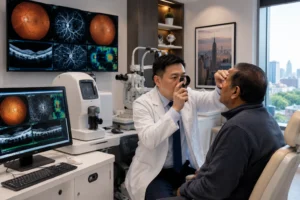
Many patients are surprised to learn that diabetic eye disease can develop long before vision becomes blurry.
In fact, early diabetic retinopathy often causes no noticeable symptoms.
That is why individuals living with:
- Type 1 diabetes
- Type 2 diabetes
- Gestational diabetes
should have regular dilated retinal examinations as recommended by their eye care provider.
Searching for an eye doctor for diabetes near me should not only happen after vision changes occur. Preventive retinal care is one of the most effective ways to reduce the risk of severe diabetic eye disease.
When Is Diabetic Eye Disease Laser Treatment Recommended?
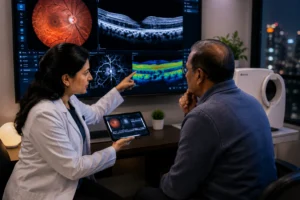
Many patients worry when they hear the word “laser.”
One of the most common questions during retina consultations is whether diabetic eye disease laser treatment is painful or whether it will restore perfect vision.
The answer depends on the stage of diabetic retinopathy.
Laser treatment is typically recommended when abnormal blood vessels develop or when areas of the retina need treatment to reduce further damage.
Its goal is generally to:
- Slow disease progression
- Reduce the risk of severe vision loss
- Treat leaking blood vessels
- Lower the chance of retinal complications
Laser therapy is not appropriate for every patient. Some individuals may benefit more from medication injections, observation, or a combination of treatments based on retinal imaging and clinical findings.
Advanced Testing Used by Retinal Specialists
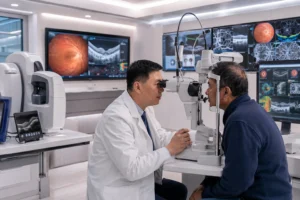
Modern retina care relies on sophisticated imaging that allows doctors to detect disease earlier than a standard vision test alone.
Common diagnostic tools include:
| Test | Purpose |
|---|---|
| Optical Coherence Tomography (OCT) | Creates detailed cross-sectional images of the retina to detect swelling and structural changes. |
| Digital Retinal Photography | Documents retinal health for ongoing comparison. |
| Fluorescein Angiography | Evaluates retinal blood flow and identifies leaking blood vessels when needed. |
| Dilated Retinal Examination | Allows a detailed assessment of the retina, macula, and optic nerve. |
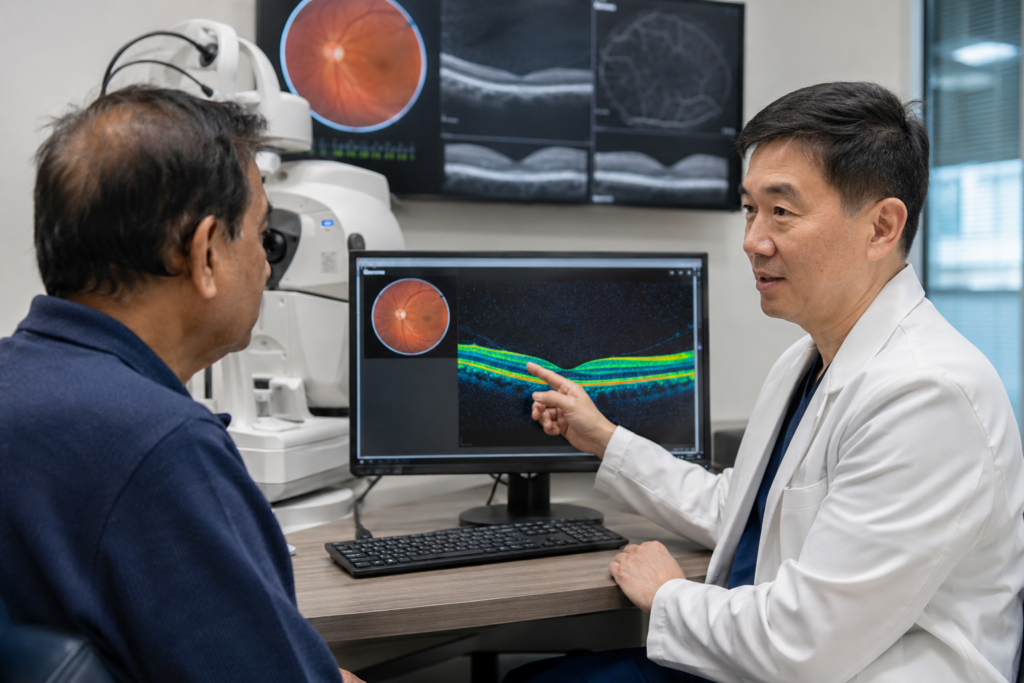
Practices such as LeeVision in Flushing, Queens, New York City, led by Dr. David H. Lee, MD, a board-certified ophthalmologist, emphasize evidence-based evaluation and personalized treatment planning using advanced diagnostic technology. The goal is not simply to diagnose retinal disease, but to identify problems early enough to help preserve long-term vision.
How Retinal Specialists Diagnose Eye Diseases
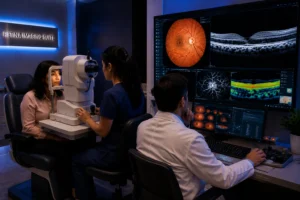
Finding the cause of vision changes involves much more than reading letters on an eye chart. A retinal specialist evaluates the health of the retina using a combination of advanced imaging, a detailed medical history, and a comprehensive eye examination.
If you search for a retinal specialists near me, you can expect your appointment to include questions about:
- When your vision changes started
- Whether symptoms affect one or both eyes
- Your diabetes history
- Blood pressure and cholesterol control
- Previous eye surgery or eye injuries
- Family history of retinal disease
After your pupils are dilated, the retina can be examined in detail. Imaging tests such as Optical Coherence Tomography (OCT) and retinal photography help identify problems that may not yet be affecting your vision.
Signs That You Should See a Retina Specialist Immediately
Some eye symptoms should never be ignored because early treatment may protect your eyesight.
Seek prompt medical evaluation if you experience:
- A sudden increase in floaters
- Bright flashes of light
- A curtain or shadow moving across your vision
- Sudden loss of vision
- Distorted or wavy central vision
- Blurred vision that develops quickly
- Vision changes after an eye injury
These symptoms do not always indicate a serious retinal condition, but they require timely examination to rule out emergencies such as a retinal tear or retinal detachment.
Diabetic Eye Disease Laser Treatment: How It Works
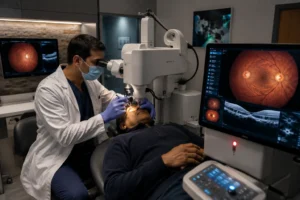
Many patients become anxious when laser treatment is recommended because they imagine traditional surgery. In reality, diabetic eye disease laser treatment is a carefully targeted procedure designed to protect the retina rather than replace it.
The laser delivers small, precise spots of light energy to specific areas of the retina where abnormal blood vessels or damaged tissue are causing problems.
Depending on the condition, laser treatment may help:
- Reduce leakage from damaged blood vessels
- Slow the growth of abnormal new blood vessels
- Lower the risk of severe bleeding inside the eye
- Reduce future retinal complications
The treatment is usually performed in an outpatient setting, allowing most patients to return home the same day.
Laser Treatment vs Eye Injections for Diabetic Retinopathy
Modern diabetic eye care often involves more than one treatment option. Your retinal specialist will recommend the most appropriate approach based on the severity and location of retinal damage.
| Treatment | Best Used For | Goal |
|---|---|---|
| Laser Therapy | Certain stages of diabetic retinopathy | Reduce abnormal blood vessel growth and preserve vision |
| Anti-VEGF Eye Injections | Diabetic macular edema and some forms of diabetic retinopathy | Reduce swelling and improve or stabilize vision |
| Observation | Mild disease without vision-threatening changes | Monitor for progression with regular retinal exams |
| Combined Treatment | Advanced or complex cases | Manage multiple retinal problems more effectively |
There is no one-size-fits-all treatment. Some patients benefit from laser therapy alone, while others may require injections, close monitoring, or a combination of treatments.
Is Diabetic Eye Disease Laser Treatment Painful?
This is one of the most common questions retinal specialists hear.
Most patients describe the procedure as uncomfortable rather than painful. Numbing eye drops are used before treatment, and many people notice only brief flashes of light or mild pressure during the procedure.
After treatment, some individuals experience:
- Mild irritation
- Temporary blurred vision
- Light sensitivity
- Minor discomfort for a short period
These symptoms usually improve as the eye recovers, although every patient heals differently.
Recovery After Retinal Laser Treatment
Recovery is generally straightforward, but following your ophthalmologist’s instructions is essential.
Most patients can return to normal daily activities within a short period, although vision may remain blurry temporarily.
Your doctor may recommend:
- Attending all follow-up appointments
- Monitoring your vision for new symptoms
- Managing blood sugar carefully
- Controlling blood pressure
- Reporting sudden vision changes immediately
Because diabetes is an ongoing condition, treatment is often focused on preserving vision over time rather than providing a permanent cure.
Can Diabetic Eye Disease Be Prevented?
While diabetes cannot always be prevented, many vision-threatening complications can be reduced through consistent eye care and healthy lifestyle habits.
Helpful steps include:
- Keeping blood sugar within your target range
- Managing blood pressure and cholesterol
- Scheduling regular dilated retinal examinations
- Following your primary care physician’s diabetes management plan
- Avoiding smoking
- Staying physically active
- Eating a balanced diet rich in leafy vegetables and healthy proteins
Prevention remains one of the most effective strategies for protecting long-term retinal health.
Choosing the Right Retinal Specialist
If you’re searching for retinal specialists near me, choosing a provider involves more than finding the closest office.
Consider factors such as:
- Board certification and clinical experience
- Access to advanced retinal imaging technology
- Comprehensive diabetic eye care
- Personalized treatment planning
- Clear communication about benefits, risks, and alternatives
- Ongoing follow-up for chronic retinal conditions
Patients should feel comfortable asking questions and participating in shared decision-making regarding their treatment options.
For individuals in Flushing, Queens, NYC, and New York City, practices like LeeVision, led by Dr. David H. Lee, MD, a Board-Certified Ophthalmologist, emphasize evidence-based ophthalmology, advanced diagnostic technology, and individualized care plans designed to support long-term vision preservation.
Common Myths About Retinal Disease
“If my vision is clear, my retina must be healthy.”
Not always. Early diabetic retinopathy and several retinal conditions may develop without noticeable symptoms.
“Only older adults develop retinal disease.”
Although aging increases risk, diabetes, high blood pressure, inherited conditions, and eye injuries can affect adults of many ages.
“Laser treatment restores vision to perfect.”
Laser treatment is primarily intended to slow disease progression and preserve remaining vision. The results depend on the severity of the retinal damage before treatment begins.
“I only need an eye exam when my vision changes.”
Routine retinal examinations are often recommended before symptoms develop because many retinal diseases are easier to manage when detected early.
Protecting Your Vision for the Future
Your retina plays a vital role in everything you see. Whether you have diabetes, notice new vision changes, or simply want to protect your eyesight as you age, regular retinal evaluations are one of the best investments you can make in your long-term eye health.
If you’re looking for an eye doctor for diabetes near me or researching diabetic eye disease laser treatment, early evaluation by an experienced ophthalmologist can help identify problems before they become vision-threatening.
Modern retinal care combines advanced imaging, evidence-based treatment options, and personalized follow-up to help preserve vision and support lifelong eye health.
Frequently Asked Questions
Can retinal specialists near me treat diabetic eye disease?
Yes. Most retinal specialists near me diagnose and treat diabetic retinopathy, diabetic macular edema, retinal tears, and other retina conditions. Early diagnosis and treatment can help protect your vision and reduce the risk of permanent vision loss.
How do I find the best eye doctor for diabetes near me?
Look for an eye doctor for diabetes near me who provides comprehensive dilated eye exams, advanced retinal imaging such as OCT, and personalized treatment plans. A board-certified ophthalmologist with experience managing diabetic eye disease is often the best choice.
When is diabetic eye disease laser treatment necessary?
Diabetic eye disease laser treatment may be recommended when diabetes damages the retinal blood vessels or abnormal blood vessels begin to grow. Your retinal specialist will determine whether laser treatment, injections, or observation is the most appropriate option.
Can retinal specialists near me diagnose diabetic retinopathy early?
Yes. Retinal specialists near me use advanced diagnostic technology, including Optical Coherence Tomography (OCT) and dilated retinal examinations, to detect diabetic retinopathy before noticeable vision changes occur.
Should I see an eye doctor for diabetes near me every year?
Yes. Even if your vision seems normal, visiting an eye doctor for diabetes near me for a yearly dilated eye exam is one of the best ways to detect diabetic eye disease early and protect your long-term vision.
Is diabetic eye disease laser treatment safe?
In many cases, diabetic eye disease laser treatment is a safe and well-established procedure when performed by an experienced ophthalmologist. Like any medical treatment, it has benefits and potential risks, which your doctor will discuss before recommending treatment.
How long does it take to recover from diabetic eye disease laser treatment?
Most patients recover quickly after diabetic eye disease laser treatment and can return to normal activities within a day or two. Your retinal specialist will provide personalized recovery instructions based on your condition.
Why should I search for retinal specialists near me instead of waiting for symptoms?
Many retinal diseases develop without noticeable symptoms in their early stages. Seeing retinal specialists near me before vision problems occur allows for early diagnosis, timely treatment, and better long-term vision preservation.
