



A drooping upper eyelid can be easy to dismiss as a cosmetic change, especially when it develops gradually with age. But for some people, a low upper eyelid can interfere with the upper part of their vision, cause eye fatigue, or lead to constantly raising the eyebrows just to see clearly.
If you’ve been researching eyelid ptosis eye drops , you’re probably trying to answer one question: can medication actually lift a drooping eyelid, or is surgery eventually unavoidable? For selected adults with acquired ptosis, prescription drops can offer real, temporary improvement without an operation. But they aren’t the right fit for every type of eyelid drooping — and knowing the difference matters more than ever, since more people are now discovering this option through social media and self-diagnosing without an exam.
This guide walks through how the medication works, who’s a good candidate, how it compares to surgery, and when it’s time to see a specialist.
Understanding Eyelid Ptosis
Eyelid ptosis, also known as blepharoptosis, occurs when the upper eyelid sits lower than its normal position. It may affect one or both eyes and can range from mild asymmetry to drooping that partially blocks the upper field of vision.
In adults, acquired ptosis can develop with age as the levator muscle or its supporting tendon becomes stretched or weakened. Congenital ptosis, which is present from childhood, has different causes and may require a different approach to evaluation and treatment.
Understanding the underlying cause is especially important when considering eyelid ptosis eye drops. Prescription drops such as oxymetazoline may temporarily improve eyelid elevation in selected adults with acquired ptosis, but they are not designed to treat congenital ptosis, excess eyelid skin, or every cause of a drooping eyelid.

What Causes a Drooping Upper Eyelid
Age-related changes. The tissue connecting the eyelid-lifting muscle to the eyelid can stretch or become less effective over time — the most common cause in adults.
Muscle or nerve problems. Certain neurologic or muscular conditions can affect eyelid elevation and require appropriate diagnosis, since treating the eyelid alone may not address the underlying issue.
Trauma or previous surgery. An injury or a prior eye procedure can alter the structures responsible for eyelid position.
Excess eyelid skin or brow descent. Sometimes the eyelid isn’t truly drooping — excess skin or a lower eyebrow can create a heavy appearance around the upper eye, a look that’s often confused with true ptosis.
An ophthalmologist can distinguish between these during an exam, which helps determine whether medication is likely to help or whether another treatment is more appropriate.
How the Medication Works
For appropriate adults with acquired blepharoptosis, prescription oxymetazoline hydrochloride ophthalmic solution 0.1% — sold under the brand UPNEEQ — remains the only FDA-approved option in this category.
Oxymetazoline is an alpha-adrenergic medication that stimulates Müller’s muscle, a small muscle within the upper eyelid that contributes to elevation. Increasing this muscle’s activity can temporarily raise the lid.
This mechanism differs entirely from surgery: the medication doesn’t tighten a stretched tendon or repair damaged tissue. It simply activates an existing eyelid-elevating pathway, which is why results vary so much between patients — the outcome depends heavily on how much natural muscle function remains.
Can Eyelid Ptosis Eye Drops Really Help?
Yes, for selected adults with acquired ptosis. Clinical studies of oxymetazoline have shown measurable improvements in upper-eyelid position and superior visual field, and real-world use since the drug’s approval has generally supported those findings.
That said, it shouldn’t be treated as a universal fix. It tends to be less useful when the primary problem is substantial excess skin, significant mechanical weight on the lid, or severe loss of muscle function — situations where a structural approach is more appropriate.
Who May Be a Good Candidate
Whether an eye drop for droopy eyelids may be appropriate depends on the underlying cause of the ptosis, not simply how the eyelid looks. Prescription oxymetazoline may be considered for certain adults with acquired ptosis when enough eyelid muscle function remains.
Factors that may support treatment include:
- Adult-onset acquired ptosis
- Mild to moderate eyelid drooping
- Adequate remaining levator muscle function
- A preference for a non-surgical treatment option
- No untreated condition requiring a different approach
- A medical history that does not create an unacceptable risk from the medication
A person with a neurologic or muscular cause of ptosis may need additional evaluation before prescription drops are considered. Because different causes of droopy eyelids require different treatments, an eye drop for droopy eyelids should not be used without first having the condition properly evaluated by an eye specialist.
Why an Exam Comes First
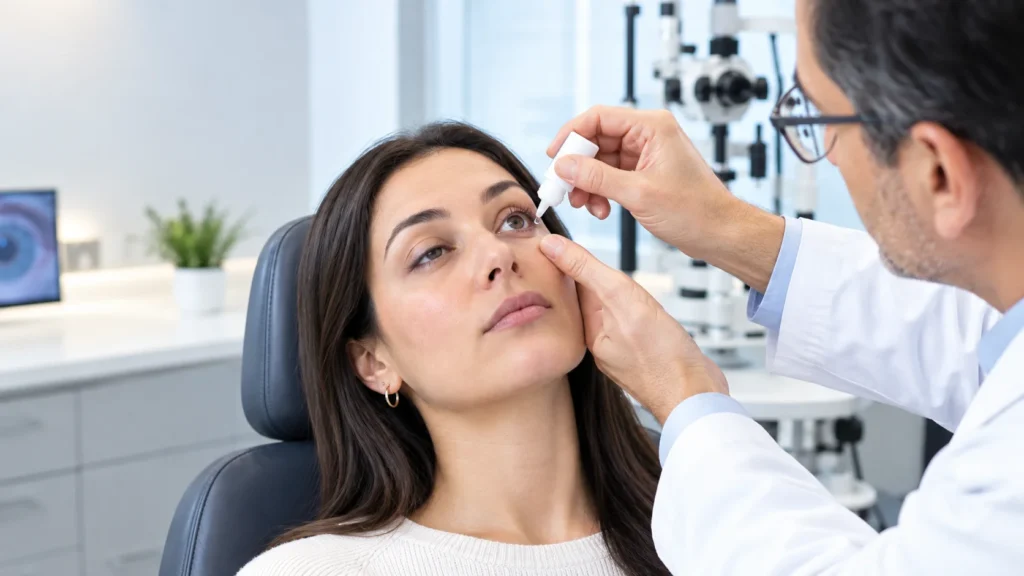
A comprehensive eye exam helps determine whether the problem is true ptosis and how severe it is. An ophthalmologist may evaluate upper-eyelid position and symmetry, levator muscle function, pupil size and reaction, eye movements, visual field, brow position, excess skin, and relevant medical history.
A new droopy eyelid deserves particular attention if it appears suddenly or comes with double vision, unequal pupils, weakness, severe headache, or other neurologic symptoms — in these cases, diagnosis takes priority over treating the appearance with medication or anything else.
How Long Do the Effects Last?
The effect is temporary. Oxymetazoline can improve eyelid elevation for several hours after application, though response varies between individuals, and the lid generally returns toward its previous position once it wears off.
Some patients like this — it’s a non-surgical option they can use as needed, for a big meeting or event. Others, especially those with persistent visual obstruction, find repeated daily use inconvenient and eventually prefer a more lasting correction.
Possible Side Effects
Generally well tolerated, but reported ocular side effects include dry eye, irritation, blurred vision, conjunctival redness, instillation-site discomfort, and punctate keratitis. Headache can also occur.
Because oxymetazoline has adrenergic activity, certain conditions require extra caution — prescribing information includes warnings about cardiovascular conditions and the risk of angle-closure glaucoma in patients with untreated narrow-angle glaucoma. Tell your eye doctor about existing conditions and medications before starting, and if you wear contacts, follow the product instructions on removal and reinsertion.
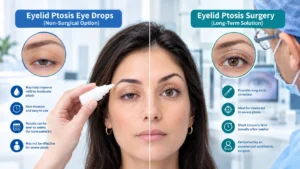
Eyelid Ptosis Eye Drops vs. Surgery: A Quick Comparison
| Option | Main benefit | Main limitation |
|---|---|---|
| Prescription drops | Non-surgical, no downtime | Requires continued use |
| Surgical lift | More durable, structural correction | Requires a procedure and recovery |
| Observation | Avoids treatment | Drooping remains unchanged |
There’s no universal answer — the right choice depends on eyelid measurements, muscle function, visual symptoms, overall eye health, and personal goals.
When Is Surgery the Better Option?
Surgical correction of ptosis may be recommended when drooping is significant, affects the visual field, or is unlikely to respond adequately to medication — or simply when a patient wants a longer-lasting result rather than daily drops.
The surgical approach depends on anatomy and levator muscle strength: some techniques tighten or advance the lid-elevating structures, while others are used when muscle function is more limited. Good planning also weighs symmetry, eyelid closure, corneal protection, and brow position — not just how high the lid sits.
What the Procedure Involves
Before surgery, measurements and eyelid-movement testing help guide the plan. It’s commonly done as an outpatient procedure, with the anesthesia approach depending on the individual case.
Afterward, temporary swelling, bruising, or changes in eyelid position are normal, and the lid may continue to settle during recovery. As with any surgery, possible complications include asymmetry, under- or overcorrection, difficulty closing the eye, dry-eye symptoms, infection, and bleeding — a thorough consultation should walk through these risks beforehand.
Can Eye Drops Replace Surgery?
Sometimes — for patients with an appropriate form of acquired ptosis who respond well to medication. For others, especially when the lid is substantially low, vision is affected, or a durable fix is the priority, surgery tends to be the more realistic route.
The answer really comes down to the individual eyelid rather than age or how the drooping looks in a photo or on a video call.
Droopy Eyelids and Daily Life
Some people compensate for a low eyelid by repeatedly raising their eyebrows or tilting their head; others notice trouble seeing objects above eye level. Long hours in front of screens can make eyelid heaviness more noticeable when tired — though digital eye strain alone shouldn’t be assumed to be the cause of true ptosis. Allergies, too, can make eyelids look swollen, but persistent asymmetry still deserves a proper look.
In a busy environment like NYC, the right treatment also has to fit realistically into a packed schedule of work, commuting, and family life — which is one reason this option has become a popular starting point before committing to a procedure.
When to See an Ophthalmologist
Book an exam when drooping is persistent, progressively worsening, or affecting vision. Seek prompt care if it appears suddenly alongside double vision, unequal pupils, severe headache, new weakness, difficulty moving the eye, significant pain, or sudden vision changes — these can point to something that needs urgent evaluation. Even gradual ptosis shouldn’t automatically be self-treated without first determining the cause.
Getting Evaluated in Flushing, Queens
Patients across Flushing and the wider NYC area have access to care that addresses both the functional and medical sides of eyelid problems. At LeeVision, Dr. David H. Lee, MD, a board-certified ophthalmologist with over two decades of experience, evaluates each patient based on their anatomy, symptoms, visual needs, and overall eye health — because two people with similar-looking eyelids can have very different underlying causes.
Frequently Asked Questions
Do eyelid ptosis eye drops actually lift the eyelid?
Yes. Prescription eyelid ptosis eye drops containing oxymetazoline may temporarily raise the upper eyelid in some adults with acquired ptosis. How well they work depends on the underlying cause and remaining eyelid muscle function.
Are eyelid ptosis eye drops available without a prescription?
No. Prescription eye drops used to treat acquired ptosis should be used under the guidance of an eye specialist. An examination can help determine whether the medication is appropriate for your type of eyelid drooping.
How long do the effects of eyelid ptosis eye drops last?
The effect is temporary and does not permanently correct the underlying cause of ptosis. The duration can vary between individuals, so your ophthalmologist can explain what to expect based on your condition and treatment plan.
Is surgery better than eyelid ptosis eye drops?
Drops and surgery work differently. Eye drops may provide temporary eyelid elevation for selected patients, while ptosis surgery is intended to address the mechanical or structural cause of persistent eyelid drooping. The appropriate option depends on the cause and severity of the ptosis.
Can eyelid ptosis eye drops remove excess eyelid skin?
No. Eyelid ptosis eye drops are intended to improve eyelid elevation and do not remove excess skin. If excess upper eyelid skin is contributing to a droopy appearance or visual obstruction, a different treatment may be considered after an examination.
Does everyone with ptosis need surgery?
No. Some adults with acquired ptosis may be candidates for prescription eye drops, while others may benefit from surgery or treatment of an underlying condition. A proper ophthalmic evaluation is important before deciding which approach is appropriate.
The Bottom Line
Eyelid ptosis eye drops offer a genuinely useful non-surgical option for selected adults with acquired droopy eyelids — temporarily stimulating an eyelid-elevating muscle to improve position and upper visual field. But the medication doesn’t permanently repair ptosis or address every cause of drooping.
If you’re weighing this option against a surgical lift, start with a professional evaluation rather than choosing based on appearance alone — identifying the actual cause is what lets your ophthalmologist recommend the right approach for you.
