



If you are looking for treatment for MGD, the most important first step is identifying what is causing your meibomian glands to malfunction. Treatment may include warm compresses and eyelid hygiene for mild disease, lubricating or prescription eye drops when appropriate, and in-office therapies such as IPL for selected patients. Because MGD can vary significantly from person to person, an ophthalmologist should determine which combination of treatments fits your eye health and symptoms.
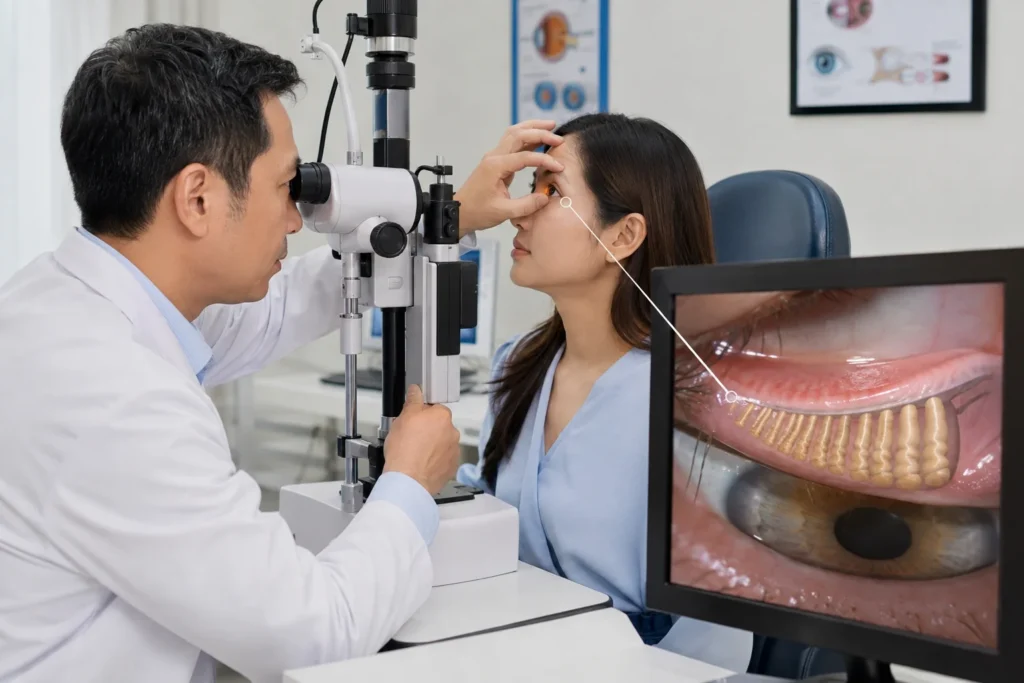
Meibomian gland dysfunction (MGD) is one of the most common causes of evaporative dry eye. The meibomian glands are small oil-producing glands located within the eyelids. Their oils form part of the tear film and help prevent tears from evaporating too quickly. When these glands become blocked, inflamed, or produce abnormal oil, the tear film can become unstable.
For patients in Flushing, Queens, this can be particularly frustrating when symptoms interfere with computer work, reading, contact lens wear, commuting, or everyday activities. At LeeVision, Dr. David H. Lee, MD, a board-certified ophthalmologist, evaluates the underlying cause of dry eye symptoms before recommending treatment.
What Is Meibomian Gland Dysfunction?
Meibomian gland dysfunction occurs when the oil-producing glands in the eyelids do not function normally.
The glands release an oily substance called meibum onto the surface of the tears. This oily layer helps slow evaporation and contributes to tear-film stability.
With MGD, the gland openings can become blocked, the meibum can become thicker than normal, or the glands can gradually lose function. The result may be increased tear evaporation and irritation of the ocular surface.
MGD does not always feel like simple “dry eyes.” Some patients experience excessive watering, fluctuating vision, burning, redness, or a gritty sensation instead.
The American Academy of Ophthalmology’s EyeWiki notes that MGD can involve duct obstruction, changes in meibum quality or quantity, inflammation, and changes in the ocular surface.
What Are the Symptoms of MGD?
MGD symptoms can range from occasional irritation to persistent discomfort.
Common symptoms include:
- Burning or stinging
- Gritty or sandy sensation
- Redness around the eyelids
- Watery eyes
- Blurred or fluctuating vision
- Eye fatigue
- Sensitivity to light
- Contact lens discomfort
- A feeling of dryness despite frequent tearing
- Symptoms that become worse during prolonged screen use
One pattern I often consider during an eye evaluation is whether vision briefly becomes clearer after blinking. When the tear film is unstable, each blink temporarily redistributes the tear film across the cornea. That pattern does not prove MGD by itself, but it can be an important clue when combined with other examination findings.
Why Does MGD Develop?
MGD has multiple possible contributing factors rather than one single cause.
Aging
Meibomian gland structure and function can change with age. Some people gradually develop reduced gland output or gland loss.
Reduced Blinking
Long periods of computer, phone, or tablet use can reduce blinking frequency. For patients working in offices or spending much of the day on screens, this can contribute to tear-film instability.
Eyelid Inflammation
Inflammation around the eyelid margins can interfere with normal gland function and may occur alongside conditions such as blepharitis or ocular rosacea.
Environmental Exposure
Wind, dry indoor air, air conditioning, and other environmental factors can increase tear evaporation.
Contact Lens Use
Some contact lens wearers experience worsening dryness or discomfort when the tear film is already unstable.
Certain Medications and Medical Factors
Some medications and systemic or ocular conditions may contribute to dry eye or altered meibomian gland function. A complete medical and medication history is therefore important when evaluating persistent symptoms.
How Is MGD Diagnosed?

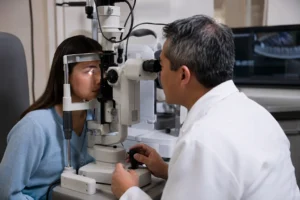
There is no single test that determines every case of MGD.
A comprehensive evaluation may include an assessment of your symptoms, tear film, eyelid margins, meibomian gland openings, meibum quality, and ocular surface.
Depending on the clinical situation, an ophthalmologist may evaluate:
- Tear-film stability
- Tear quantity
- Ocular surface staining
- Eyelid margins
- Meibum quality and expressibility
- Meibomian gland structure
- Signs of inflammation
- Other potential causes of dry eye
Meibography may also be used to visualize the meibomian glands and identify gland loss or structural changes. EyeWiki describes meibography and assessment of gland expressibility as useful components of MGD evaluation.
This distinction matters because not every patient with dry eye has the same underlying problem. Someone with predominantly aqueous tear deficiency may need a different treatment approach from someone whose main problem is meibomian gland obstruction.
What Is the Best Treatment for MGD?
There is no single best treatment for every patient with MGD.
Treatment is generally selected according to the severity of gland dysfunction, tear-film findings, inflammation, gland structure, symptoms, and response to previous treatments.
Common approaches include:
Warm Compresses and Eyelid Hygiene
For mild MGD, consistent eyelid care can be an important part of treatment.
Warmth can help soften thickened meibum, while gentle eyelid hygiene can help keep the lid margins cleaner.
A typical home-care plan may include:
- Applying a comfortably warm compress
- Following it with gentle eyelid massage when advised
- Keeping the eyelid margins clean
- Taking regular breaks during prolonged screen use
- Blinking deliberately when concentrating on a screen
The goal is consistency rather than using excessive heat or pressure.
Artificial Tears
Artificial tears can help relieve dryness and irritation by supplementing the tear film.
They may be particularly useful when symptoms are mild or when used alongside other MGD treatments. However, artificial tears do not necessarily correct the underlying meibomian gland dysfunction.
This is an important distinction for patients who say, “I use eye drops several times a day, but my eyes still feel dry.”
If the underlying issue is excessive tear evaporation caused by poor meibomian gland function, simply adding more lubrication may not address the whole problem.
Eye Drops for MGD
There is no single eye drop that is appropriate for everyone with MGD.
Depending on the cause of symptoms, an ophthalmologist may recommend lubricating drops or prescription treatment designed to address inflammation or another component of dry eye disease.
The appropriate choice depends on the patient’s examination findings.
Patients should also be careful about assuming that redness-relieving drops are a treatment for MGD. Reducing visible redness does not necessarily restore meibomian gland function or improve tear-film stability.
Meibomian Gland Expression

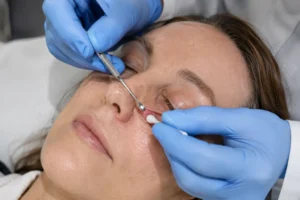
When meibomian glands are obstructed, an eye-care professional may perform meibomian gland expression.
This involves applying controlled pressure to the eyelid to help release thickened meibum from the gland openings.
Expression may be performed as part of an in-office treatment plan when appropriate. It should not be confused with forcefully squeezing the eyelids at home.
The goal is to improve gland drainage while avoiding unnecessary irritation or trauma to the eyelid.
IPL for MGD
IPL for MGD is an in-office treatment option for selected patients, particularly when MGD is associated with evaporative dry eye and eyelid inflammation.
IPL stands for intense pulsed light. During treatment, controlled light pulses are applied to the skin around the eyes rather than directly into the eyeball. Appropriate eye protection is used during the procedure.
The exact biological mechanisms are still being studied, but research suggests IPL may improve meibomian gland function, tear-film stability, and dry eye symptoms in selected patients.
A systematic review and meta-analysis found that IPL combined with meibomian gland expression may be effective for MGD, while also noting that IPL does not improve every symptom and that treatment protocols vary.
That is why IPL should not be presented as a universal cure for MGD.
Prescription Treatment for Inflammation
Inflammation can be an important component of chronic dry eye and MGD.
When inflammation is significant, an ophthalmologist may consider prescription therapy as part of a broader treatment plan.
The specific medication depends on the patient’s diagnosis, ocular surface findings, medical history, and treatment goals.
Lifestyle and Screen Habits
Treatment for MGD does not always begin with an in-office procedure.
For patients who spend many hours looking at computer screens, phones, or tablets, practical changes can make a meaningful difference in daily comfort.
Consider:
- Taking regular screen breaks
- Blinking fully and frequently
- Avoiding direct airflow from fans or air conditioners
- Using a humidifier when indoor air is very dry
- Wearing protective eyewear outdoors when wind is a problem
- Following the eyelid-care routine recommended by your eye doctor
These measures are supportive rather than substitutes for professional treatment when significant MGD is present.
How Does IPL MGD Treatment Work?

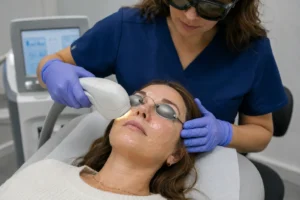
The purpose of IPL MGD treatment is not simply to make the eyes feel temporarily lubricated. The treatment is designed to address factors associated with dysfunctional meibomian glands and the surrounding eyelid tissue.
At LeeVision, IPL for dry eye is described as a targeted treatment for meibomian gland dysfunction, with treatment directed around the eyelids rather than directly into the eyes.
Depending on the patient’s condition, treatment may be combined with other therapies rather than used alone.
Published research supports this individualized approach. Studies have examined IPL alone as well as IPL combined with meibomian gland expression, and results indicate that the combination can be useful in selected patients.
What Happens During an IPL Treatment for MGD?
The exact protocol depends on the device, clinic, and patient’s condition, but treatment generally involves several steps.
1. Eye and Eyelid Evaluation
Your ophthalmologist first determines whether MGD is actually contributing to your symptoms and whether IPL is appropriate.
2. Eye Protection
Appropriate protective measures are used during the procedure.
3. Light Treatment
Controlled pulses of light are applied to the treatment area around the eyelids.
4. Additional Gland Treatment When Appropriate
In selected cases, meibomian gland expression or another supportive therapy may be incorporated into the treatment plan.
5. Follow-Up
Your response is evaluated over time rather than assuming that one session will solve a chronic condition.
LeeVision’s current IPL information describes treatment as a series of sessions, with the number determined by individual needs.
Is IPL for MGD Better Than Eye Drops?
These treatments should not necessarily be viewed as competing choices.
Eye drops can lubricate the ocular surface or address specific components of dry eye.
IPL is an in-office treatment aimed at factors associated with meibomian gland dysfunction and eyelid inflammation.
For some patients, the most appropriate plan may involve both.
| Treatment | Main Role | When It May Be Considered |
|---|---|---|
| Artificial tears | Lubricate the eye surface | Dryness and irritation |
| Warm compresses | Soften meibum | Mild or supportive MGD care |
| Eyelid hygiene | Improve lid-margin cleanliness | Ongoing MGD management |
| Meibomian gland expression | Help release obstructed meibum | Selected obstructive MGD |
| Prescription eye drops | Address specific inflammatory or tear-film problems | Based on examination |
| IPL for MGD | In-office treatment for selected MGD-related dry eye | Persistent symptoms and appropriate clinical findings |
The right treatment depends on the underlying cause, not simply how severe the symptoms feel on a particular day.
How Many IPL Treatments for MGD Are Needed?
There is no universal number of sessions.
LeeVision’s IPL information notes that treatment is typically provided as a series of sessions spaced several weeks apart, with the exact number depending on the patient’s condition and response.
Published studies also use different treatment schedules. For example, research has evaluated three or four sessions spaced several weeks apart, demonstrating why a patient’s treatment plan should be individualized rather than copied from another patient.
MGD is often chronic, so treatment may focus on long-term management rather than a one-time procedure.
What Are the Benefits and Limitations of MGD Treatment?
Effective MGD management may help reduce:
- Burning and irritation
- Foreign-body sensation
- Tear evaporation
- Fluctuating vision related to tear-film instability
- Eyelid inflammation
- Contact lens discomfort in appropriate patients
However, treatment has limitations.
MGD can involve gland obstruction, inflammation, gland loss, altered meibum, or combinations of these problems. Treatment may improve gland function or symptoms but cannot necessarily restore glands that have already been permanently lost.
This is one reason early evaluation can be valuable.
Research on IPL is encouraging, but studies have used different devices, protocols, patient populations, and treatment combinations. A 2024 review reported potential improvements in tear-film stability, meibomian gland function, and dry eye symptoms while noting the evolving nature of the evidence.
Is Treatment for MGD Safe?
Most MGD treatments are designed to be conservative, but “safe” does not mean that every treatment is appropriate for every patient.
For IPL, proper patient selection, correct treatment settings, and appropriate eye protection are especially important.
Potential temporary effects may include skin redness, warmth, or mild discomfort. Your ophthalmologist should review potential risks based on your skin type, eye health, medications, and the specific device being used.
If you have significant eye pain, sudden vision changes, pronounced light sensitivity, or persistent redness, do not assume the symptoms are simply MGD. A comprehensive eye examination is appropriate.
When Should You See an Ophthalmologist for MGD?
Consider a professional evaluation if:
- Dryness continues despite regular artificial tears
- Your eyes frequently burn or feel gritty
- Your vision fluctuates during the day
- Contact lenses have become uncomfortable
- Your eyelids remain red or irritated
- You need eye drops repeatedly throughout the day
- Symptoms interfere with computer work or reading
- You have recurrent eyelid problems
Patients in Flushing, Queens, and throughout New York City often have demanding screen-heavy work schedules. Persistent symptoms should not automatically be attributed to screen time alone. MGD, blepharitis, allergies, aqueous tear deficiency, and other ocular-surface conditions can produce overlapping symptoms.
How LeeVision Approaches MGD Treatment
At LeeVision in Flushing, Queens, the goal is to determine why your eyes are uncomfortable before choosing a treatment.
Dr. David H. Lee, MD, a board-certified ophthalmologist, evaluates the ocular surface and underlying factors contributing to dry eye symptoms. LeeVision offers IPL for dry eye as one of its ophthalmic treatment options.
For appropriate patients, treatment may involve IPL alongside supportive measures such as eyelid hygiene, warm compresses, artificial tears, or other therapies.
This individualized approach matters because two patients can have the same complaint—”my eyes are dry”—while having very different causes.
Frequently Asked Questions About Treatment for MGD
What is the most effective treatment for MGD?
There is no single treatment that works best for everyone. Management may include eyelid hygiene, warm compresses, artificial tears, prescription treatment, gland expression, IPL, or combinations of these approaches depending on the cause and severity of MGD.
Can eye drops treat MGD?
Eye drops can relieve dryness and may address certain components of ocular-surface inflammation, but they do not necessarily correct blocked or dysfunctional meibomian glands. Your ophthalmologist can determine whether drops should be part of your treatment plan.
Does IPL help meibomian gland dysfunction?
Research suggests IPL can improve some measures of meibomian gland function, tear-film stability, and dry eye symptoms in selected patients. It is generally considered one component of MGD management rather than a guaranteed cure.
How long does IPL for MGD take to work?
Response varies between patients. Some people notice changes during a treatment series, while others require more time or additional therapies. The number and timing of sessions should be determined based on your clinical response.
Can MGD be permanently cured?
MGD is often a chronic condition. Treatment can improve symptoms and gland function in appropriate patients, but established gland loss may not be reversible. Long-term eyelid care and follow-up may therefore remain important.
Is meibomian gland expression painful?
Expression can cause pressure or discomfort, particularly when glands are significantly blocked or inflamed. A trained eye-care professional can determine whether expression is appropriate and perform it carefully.
When should I consider IPL instead of only using eye drops?
IPL may be considered when MGD-related dry eye persists despite conservative measures and the clinical findings suggest that an in-office treatment may be appropriate. An eye examination should come before deciding that IPL is the right option.
