









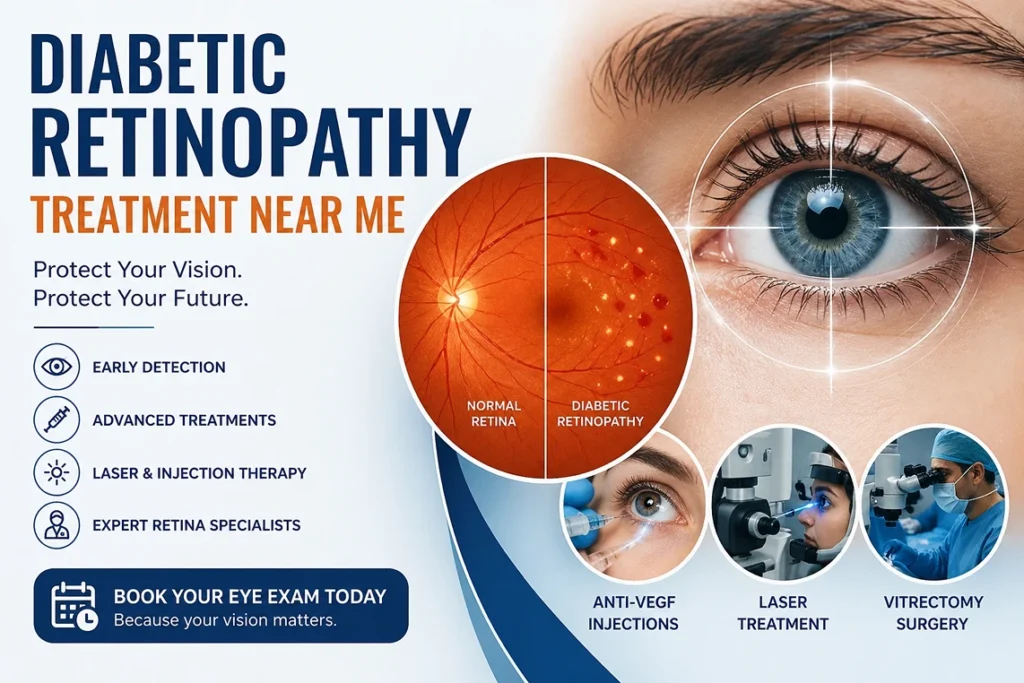
Diabetic Retinopathy Treatment Near Me – Protect Your Vision Before It’s Too Late
If you’re searching for diabetic retinopathy treatment near me, chances are you’re already worried about your vision—or trying to avoid losing it. Diabetes doesn’t just affect your blood sugar; it silently damages the tiny blood vessels in your eyes. Many patients don’t notice symptoms until it’s too late.
The good news? With early detection, expert care, and advanced treatments, vision loss from diabetes is largely preventable. In this guide, you’ll learn everything—from early warning signs to the most effective treatment options—so you can act before permanent damage occurs.
What Is Diabetic Retinopathy?
Diabetic retinopathy is a serious diabetic eye disease treatment concern that affects the retina—the light-sensitive tissue at the back of your eye.
When blood sugar levels remain high over time, they damage small blood vessels, causing them to leak, swell, or close off completely.
There are two main stages:
- Non-proliferative diabetic retinopathy (NPDR) – early stage
- Proliferative diabetic retinopathy (PDR) – advanced stage with abnormal blood vessel growth
Without proper care, this condition can lead to blurred vision, dark spots, and even permanent blindness.
Early Signs You Should Not Ignore
One of the biggest dangers? Symptoms often appear late. That’s why regular diabetic eye screening is critical.
Watch for these early signs:
- Blurred or fluctuating vision
- Dark spots or floaters
- Difficulty seeing at night
- Colors appearing faded
- Sudden vision loss
Even if you feel fine, damage could already be happening. Many patients say:
“I didn’t feel anything until my vision started fading.”
Causes of Diabetic Eye Damage
Understanding the cause helps you prevent it.
Diabetic retinopathy develops due to:
- High blood sugar levels damaging blood vessels
- Long duration of diabetes
- High blood pressure
- High cholesterol
- Smoking
- Pregnancy (in diabetic patients)
Over time, these factors weaken retinal blood vessels, leading to leakage, swelling, and abnormal growth.
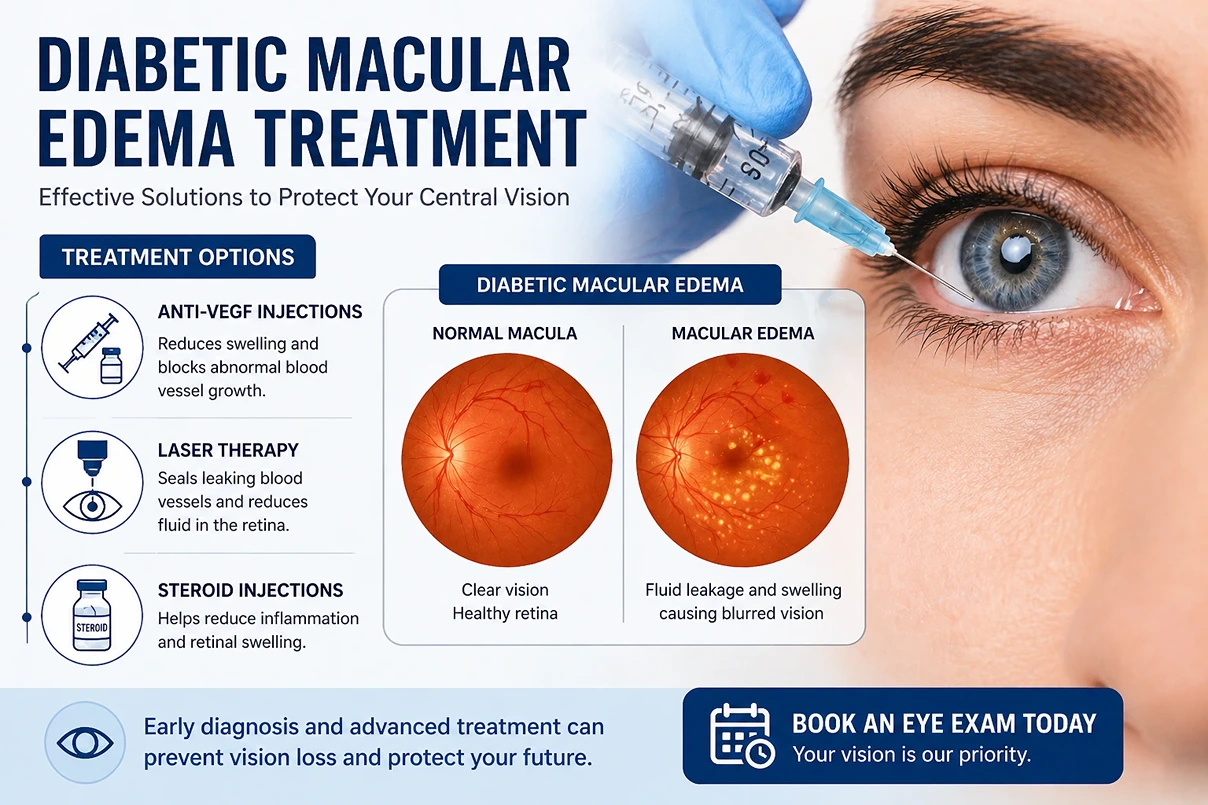
diabetic macular edema treatment
One of the most common complications of diabetic retinopathy is macular edema, where fluid builds up in the macula—the part of the retina responsible for sharp vision.
Why it matters:
Macular edema is the leading cause of vision loss in diabetic patients.
Symptoms:
- Blurry central vision
- Difficulty reading
- Distorted images
Treatment Options:
1. Anti-VEGF Injections
- Blocks abnormal blood vessel growth
- Reduces swelling
- Improves vision in many patients
2. Steroid Injections
- Helps control inflammation
- Used when anti-VEGF is not enough
3. Laser Therapy
- Seals leaking blood vessels
- Stabilizes vision
Modern anti VEGF injections for retina have transformed outcomes, allowing patients to regain and maintain vision effectively.
proliferative diabetic retinopathy treatment
This is the advanced stage, where abnormal blood vessels grow on the retina.
These vessels are fragile and can:
- Bleed into the eye (vitreous hemorrhage)
- Cause scar tissue
- Lead to retinal detachment
Treatment Options:
1. Panretinal Laser Photocoagulation
- Shrinks abnormal vessels
- Prevents further bleeding
2. Vitrectomy Surgery
- Removes blood from the eye
- Repairs retinal damage
3. Injection Therapy
- Controls abnormal vessel growth
This stage requires urgent care from a retina specialist near me, as delays can lead to irreversible vision loss.
Best diabetic retinopathy treatment near me – What to Expect
Choosing the right clinic matters more than you think.
A top-tier eye care clinic offers:
- Advanced retinal imaging (OCT, fundus photography)
- Personalized treatment plans
- Experienced eye doctor for diabetes
- Modern laser and injection therapies
When you visit a trusted clinic, here’s what happens:
- Detailed eye examination
- Retina scan to assess damage
- Discussion of treatment options
- Immediate treatment if required
Looking for a trusted provider? Start with an experienced eye doctor near me who specializes in diabetic eye care.
Treatment Options Available
Here’s a complete breakdown of available treatments:
Laser Treatment for Diabetic Retinopathy
- Stops leakage
- Reduces risk of vision loss
- Quick outpatient procedure
Anti-VEGF Injections
- Most effective for swelling and abnormal vessels
- Requires multiple sessions
Vitrectomy Surgery
- Used in severe cases
- Restores vision by removing blood/scar tissue
Combination Therapy
Many patients need a mix of treatments for the best results.
Working with a skilled retina specialist ensures the right approach for your condition.
How to Prevent Vision Loss from Diabetes
Prevention is always better—and easier—than treatment.
Follow these steps:
- Keep blood sugar under control
- Maintain healthy blood pressure
- Get regular eye exams (once a year minimum)
- Quit smoking
- Eat a balanced diet
- Exercise regularly
Most importantly: Don’t skip eye checkups—even if your vision seems fine.
When Should You See a Retina Specialist?
You should visit a specialist immediately if you:
- Have diabetes (even without symptoms)
- Notice blurred or distorted vision
- See floaters or dark spots
- Experience sudden vision loss
Delaying care is the biggest mistake patients make.
Early treatment = better vision outcomes + lower costs + less stress
Learn More from Trusted Medical Sources
For further reading, you can explore:
- American Academy of Ophthalmology: American Academy of Ophthalmology
- CDC Diabetes Eye Health: Centers For disease Control
These provide reliable, medically reviewed information about diabetic eye disease.
Book Your Eye Exam Today
Your vision is too valuable to risk.
If you’ve been searching for diabetic retinopathy treatment near me, don’t wait until symptoms worsen.
Early detection can save your vision
Modern treatments are highly effective
Expert care makes all the difference
Schedule your comprehensive eye exam today and protect your sight for the future.
FAQs
1. Can diabetic retinopathy be cured?
It cannot be fully cured, but it can be effectively managed with early treatment.
2. Is laser treatment painful?
No, it’s a quick and generally painless outpatient procedure.
3. How often should diabetics get eye exams?
At least once a year, or more frequently if recommended.
4. Are injections safe for the eye?
Yes, anti-VEGF injections are widely used and considered safe when performed by specialists.
5. Can vision be restored after damage?
In many cases, treatment can improve or stabilize vision, especially if started early.