




Glaucoma Surgery Cost: What Patients in Flushing, Queens Should Know Before Treatment
If you’re researching glaucoma surgery cost, you’re probably wondering how much treatment may cost, whether surgery is necessary, and what recovery will be like. These are some of the most common questions patients ask during their first glaucoma consultation.
Glaucoma is often called the “silent thief of sight” because it can damage vision gradually without causing noticeable symptoms in its early stages. Understanding glaucoma surgery cost is important, but the decision to have surgery should always be based on protecting your long-term vision rather than price alone.
As a board-certified ophthalmologist, one of the conversations I have most often with patients is reassuring them that glaucoma treatment is not the same for everyone. Some people can successfully manage glaucoma with prescription eye drops for years, while others eventually require laser eye surgery for glaucoma or traditional glaucoma surgery to protect their remaining vision. Because every eye is different, glaucoma surgery cost also varies depending on the recommended procedure and the patient’s individual condition.
The primary goal of glaucoma treatment is not to restore vision that has already been lost. Instead, it is to lower pressure inside the eye and preserve healthy vision for the future. The earlier glaucoma is diagnosed, the greater the opportunity to slow or prevent additional optic nerve damage.
For patients in Flushing, Queens, and throughout New York City, early diagnosis is especially important. Busy work schedules, long hours on digital devices, and delaying routine eye examinations often mean glaucoma is discovered only after permanent damage has begun.
At LeeVision, under the care of Dr. David H. Lee, MD, a Board-Certified Ophthalmologist, treatment recommendations are based on comprehensive diagnostic testing, evidence-based ophthalmology, and each patient’s unique eye health rather than a one-size-fits-all approach. During every consultation, patients receive personalized guidance about glaucoma surgery cost, available treatment options, expected outcomes, and long-term vision preservation.
Understanding Glaucoma
Glaucoma is a group of eye diseases that gradually damages the optic nerve—the structure responsible for sending visual information from the eye to the brain.
In many patients, this damage occurs because the pressure inside the eye (intraocular pressure) becomes too high. However, some individuals develop glaucoma even when eye pressure appears to be within the normal range.
The most common forms include:
- Primary Open-Angle Glaucoma
- Angle-Closure Glaucoma
- Normal-Tension Glaucoma
- Secondary Glaucoma
Each type behaves differently, which is why accurate diagnosis is essential before discussing treatment options or surgery.
One misconception I frequently hear from patients is:
“If my vision seems fine, I probably don’t have glaucoma.”
Unfortunately, glaucoma often progresses without pain or obvious vision changes until significant optic nerve damage has already occurred.
Why Does Eye Pressure Increase?
Inside the eye, a clear fluid called aqueous humor is continuously produced and drained through tiny drainage channels.
When these channels become less efficient, fluid builds up inside the eye.
That increased pressure places stress on the optic nerve.
Over time, untreated pressure can permanently damage the nerve fibers responsible for vision.
This process usually develops slowly over many years, making regular comprehensive eye examinations extremely important, particularly after age 40 or for individuals with additional risk factors.
Who Is Most at Risk?
Although glaucoma can affect almost anyone, several factors significantly increase risk.
These include:
- Age over 40
- Family history of glaucoma
- Diabetes
- High blood pressure
- Severe nearsightedness
- Previous eye injury
- Long-term steroid medication use
- African American, Hispanic, or Asian ancestry depending on glaucoma type
In a diverse community such as Queens, physicians frequently evaluate patients from many different backgrounds, making individualized risk assessment especially valuable.
Symptoms Patients Often Notice
One challenge with glaucoma is that early symptoms are often absent.
Many patients are surprised when glaucoma is discovered during a routine eye examination despite having no noticeable complaints.
As glaucoma progresses, symptoms may include:
- Gradual loss of peripheral vision
- Difficulty seeing in dim lighting
- Blurred vision
- Halos around lights
- Reduced contrast sensitivity
Acute angle-closure glaucoma is different.
It is considered a medical emergency and may cause:
- Severe eye pain
- Sudden blurred vision
- Headache
- Nausea
- Vomiting
- Red eye
- Seeing rainbow-colored halos
Anyone experiencing these symptoms should seek emergency ophthalmic care immediately.
How Glaucoma Is Diagnosed
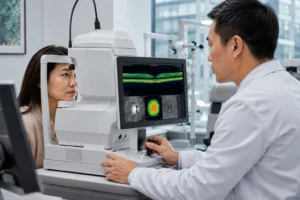
One of the biggest improvements in modern ophthalmology has been advanced imaging technology that allows doctors to detect optic nerve damage much earlier than in previous decades.
At comprehensive eye practices such as LeeVision, diagnosis often includes multiple tests rather than relying on eye pressure alone.
Common diagnostic tests include:
Comprehensive Eye Examination
A complete examination evaluates overall eye health while looking for early signs of glaucoma.
Tonometry
Measures intraocular pressure.
Although elevated pressure is an important risk factor, glaucoma cannot be diagnosed using pressure measurements alone.
Optic Nerve Evaluation
The optic nerve is carefully examined for structural changes associated with glaucoma.
OCT Imaging
Optical Coherence Tomography (OCT) creates highly detailed cross-sectional images of the optic nerve and retinal nerve fiber layer.
This technology often detects damage before noticeable vision loss occurs.
Visual Field Testing
Visual field testing identifies areas of peripheral vision loss that patients may not recognize in everyday life.
Repeated testing over time helps physicians monitor disease progression.
Corneal Thickness Measurement
Central corneal thickness can influence eye pressure readings and plays an important role when developing an individualized treatment plan.
When Is Surgery Recommended?
One question patients frequently ask is:
“Can I skip surgery if I use my eye drops?”
Sometimes yes.
Sometimes no.
Treatment depends on how well eye pressure is controlled and whether glaucoma continues progressing.
Surgery may be recommended when:
- Eye drops no longer lower pressure adequately.
- Multiple medications are required.
- Laser treatment has become less effective.
- Progressive optic nerve damage continues.
- Medication side effects become difficult to tolerate.
- Patients struggle with consistently using prescribed drops.
The decision is based on protecting long-term vision rather than reaching surgery as quickly as possible.
Treatment Options Before Surgery
Not every glaucoma patient requires an operation.
Most treatment plans begin with the least invasive options.
Prescription Eye Drops
Medication is often the first treatment recommended.
These drops either reduce fluid production inside the eye or improve drainage.
Many patients successfully control glaucoma with medication for years.
Laser Eye Surgery for Glaucoma
One of the most common questions we hear is whether laser eye surgery for glaucoma can replace traditional surgery.
For many patients, the answer is yes—but it depends on the type and severity of glaucoma.
Laser procedures are generally performed in an outpatient setting and usually require little downtime.
Depending on the diagnosis, laser treatment may:
- Improve fluid drainage
- Lower intraocular pressure
- Delay the need for more invasive surgery
- Reduce dependence on multiple medications
Because laser treatment is less invasive than traditional glaucoma surgery, it is often considered before operating room procedures whenever clinically appropriate.
However, laser treatment is not suitable for every patient, and its effectiveness varies depending on the stage and type of glaucoma.
Common Types of Laser Eye Surgery for Glaucoma
Several FDA-approved laser procedures are available, each designed for specific glaucoma conditions.
These include:
| Laser Procedure | Common Purpose | Typical Candidates |
|---|---|---|
| Selective Laser Trabeculoplasty (SLT) | Improves natural drainage | Open-angle glaucoma |
| Laser Peripheral Iridotomy (LPI) | Creates a small opening in the iris | Angle-closure glaucoma |
| Laser Cyclophotocoagulation | Reduces fluid production | Advanced glaucoma cases |
The most appropriate procedure depends on a detailed examination, diagnostic imaging, and the patient’s overall eye health.
Glaucoma Surgery Cost: What Affects the Price?
One of the first questions many patients ask after learning they may need surgery is, “How much will glaucoma surgery cost?” It’s a reasonable concern, but there is no single price that applies to every patient.
The total cost depends on the type of glaucoma, the recommended procedure, the complexity of the case, insurance coverage, and whether additional treatments are needed. During consultations, I encourage patients to focus on receiving the treatment that offers the best chance of preserving their vision rather than choosing a procedure based on price alone.
At LeeVision, treatment recommendations are based on clinical findings, advanced diagnostic testing, and long-term eye health—not on a one-size-fits-all approach.
Factors That Influence Glaucoma Surgery Cost
Several factors can affect the overall expense of glaucoma treatment.
Type of Procedure
Different procedures involve different equipment, surgical techniques, and levels of complexity.
Examples include:
- Laser procedures
- Minimally Invasive Glaucoma Surgery (MIGS)
- Trabeculectomy
- Glaucoma drainage implant surgery
More advanced procedures generally require additional surgical resources and postoperative care.
Severity of Glaucoma
Patients diagnosed in the early stages may be candidates for laser treatment or minimally invasive procedures.
Advanced glaucoma often requires more complex surgery and closer follow-up, which can increase overall treatment costs.
Insurance Coverage
Many health insurance plans—including Medicare for eligible patients—cover medically necessary glaucoma surgery. However, out-of-pocket expenses vary depending on:
- Deductibles
- Copayments
- Coinsurance
- Network participation
- Individual insurance benefits
Patients should verify coverage with both their insurance provider and the surgical practice before scheduling treatment.
Diagnostic Testing
Comprehensive glaucoma care often includes specialized testing before surgery, such as:
- OCT imaging
- Visual field testing
- Optic nerve photography
- Gonioscopy
- Corneal thickness measurement
These evaluations help determine the safest and most effective treatment plan.
Surgical Facility
Costs may differ depending on whether surgery is performed in:
- An outpatient surgery center
- A hospital setting
- An office-based procedure room (for certain laser treatments)
The appropriate setting depends on the procedure and the patient’s medical needs.
Is Laser Eye Surgery for Glaucoma Less Expensive?
In many cases, laser eye surgery for glaucoma costs less than traditional incisional surgery because it is typically performed as an outpatient procedure and does not require a hospital operating room.
However, cost should never be the primary deciding factor.
Some patients achieve excellent pressure control with laser treatment, while others eventually require traditional surgery if glaucoma continues to progress.
The best option is the one that offers the greatest likelihood of preserving vision based on your specific condition.
Traditional Surgery vs. Minimally Invasive Glaucoma Surgery (MIGS)
Advances in ophthalmology have introduced procedures that are less invasive than traditional glaucoma surgery.
| Feature | MIGS | Traditional Glaucoma Surgery |
|---|---|---|
| Surgical Incision | Very small | Larger |
| Recovery Time | Usually shorter | Usually longer |
| Pressure Reduction | Moderate | Greater for advanced disease |
| Best For | Mild to moderate glaucoma | Moderate to severe glaucoma |
| Risk Profile | Generally lower | Higher because surgery is more extensive |
MIGS is not appropriate for every patient, and traditional surgery remains the preferred option for many advanced cases.
What Happens During Glaucoma Surgery?
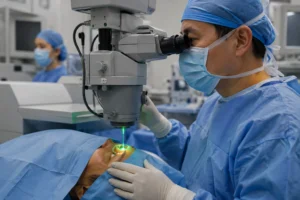
After discussing glaucoma surgery cost, many patients want to know exactly what happens during the procedure. Understanding the surgical process can help reduce anxiety and set realistic expectations before treatment.
Although the exact steps vary depending on the type of glaucoma and the recommended procedure, most glaucoma surgery follows a similar process. Before surgery, your ophthalmologist performs a detailed eye examination and reviews your overall eye health to determine the safest treatment plan.
On the day of the procedure, the eye is numbed using local anesthesia, so patients are usually awake but comfortable. The surgeon then creates or improves a drainage pathway that allows excess fluid to leave the eye more effectively, helping lower intraocular pressure. In some cases, tiny medical implants may be used to improve long-term fluid drainage.
Most procedures are completed on an outpatient basis, meaning patients can return home the same day. While glaucoma surgery cost varies depending on the type of procedure, the goal remains the same: to preserve vision by slowing or preventing further optic nerve damage rather than restoring vision that has already been lost.
Glaucoma Surgery Recovery: What to Expect
One of the biggest misconceptions is that recovery is complete within a few days.
While many patients resume light daily activities relatively quickly, complete healing often takes several weeks and sometimes longer, depending on the type of surgery.
Recovery varies from person to person.
The First 24–48 Hours
Patients may notice:
- Mild discomfort
- Blurry vision
- Redness
- Light sensitivity
- A sensation that something is in the eye
These symptoms are often temporary and improve as healing progresses.
How Successful Is Glaucoma Surgery?
An important point discussed during consultations is that glaucoma surgery is designed to preserve vision—not restore vision that has already been lost.
Most successful procedures achieve one or more of the following:
- Lower eye pressure
- Slow disease progression
- Reduce the need for medications
- Protect remaining optic nerve function
Some patients continue using glaucoma medications after surgery, although often in reduced amounts.
The outcome depends on:
- Disease severity
- Type of glaucoma
- Overall eye health
- Adherence to follow-up care
Possible Risks and Limitations
Every surgical procedure involves potential risks.
Although modern glaucoma surgery has an excellent safety profile, possible complications include:
- Infection
- Bleeding
- Temporary vision changes
- Low eye pressure
- Elevated eye pressure
- Cataract progression
- Scar tissue formation
- Need for additional treatment
These risks are carefully discussed before surgery so patients can make informed decisions.
Can Glaucoma Come Back After Surgery?
This is another common question during consultations.
Surgery lowers eye pressure, but it does not cure glaucoma.
Glaucoma is a lifelong condition that requires ongoing monitoring.
Some patients maintain stable eye pressure for many years after surgery, while others eventually need:
- Additional laser treatment
- Medication adjustments
- Repeat surgery
- Routine monitoring
Regular eye examinations remain essential even after successful treatment.
Protecting Your Vision for the Long Term
Long-term glaucoma management involves more than surgery alone.
Patients can help protect their vision by:
- Attending scheduled follow-up appointments
- Using prescribed medications exactly as directed
- Reporting sudden vision changes immediately
- Managing diabetes and blood pressure
- Wearing protective eyewear during high-risk activities
- Maintaining regular comprehensive eye examinations
For many people living in Flushing, Queens, and across New York City, busy schedules make it tempting to postpone routine eye care. However, glaucoma often progresses without warning, making consistent follow-up one of the most important steps in preserving vision.
Frequently Asked Questions About Glaucoma Surgery Cost
How much does glaucoma surgery cost?
Glaucoma surgery cost varies depending on the type of procedure, the severity of glaucoma, the surgeon’s recommendation, insurance coverage, and the surgical facility. During your consultation, your ophthalmologist will provide a personalized treatment plan and discuss the expected costs based on your individual needs.
Is laser eye surgery for glaucoma less expensive than traditional surgery?
In many cases, laser eye surgery for glaucoma costs less than traditional incisional surgery because it is usually performed as an outpatient procedure. However, the best treatment is determined by your eye condition rather than cost alone, as some patients require more advanced surgical options to effectively control glaucoma.
How long is glaucoma surgery recovery?
Glaucoma surgery recovery depends on the type of procedure performed. Many patients resume light daily activities within a few days, while complete healing may take several weeks. Your ophthalmologist will monitor your recovery through follow-up visits to ensure your eye pressure remains stable.
Will I still need eye drops after glaucoma surgery?
Some patients can reduce their use of glaucoma medications after surgery, while others may still need prescription eye drops to maintain healthy eye pressure. The goal of glaucoma treatment is long-term vision preservation rather than eliminating medications completely.
Can glaucoma surgery improve my vision?
Glaucoma surgery is designed to lower eye pressure and slow or prevent additional optic nerve damage. It does not restore vision that has already been lost due to glaucoma, which is why early diagnosis and timely treatment are so important.
Is glaucoma surgery worth the cost?
For many patients, glaucoma surgery cost represents an investment in protecting long-term vision. Untreated glaucoma can lead to permanent vision loss, so timely treatment may help reduce the risk of further optic nerve damage and preserve remaining eyesight.
How soon can I drive after glaucoma surgery recovery?
Most patients should wait until their ophthalmologist confirms that their vision is stable before driving. The timeline varies depending on the type of surgery and the progress of glaucoma surgery recovery.
What factors affect glaucoma surgery cost?
Several factors influence glaucoma surgery cost, including the type of glaucoma, whether laser eye surgery for glaucoma or traditional surgery is recommended, diagnostic testing, insurance coverage, the surgical facility, and postoperative care.
Is laser eye surgery for glaucoma painful?
Most laser eye surgery for glaucoma procedures are performed with anesthetic eye drops, making the treatment relatively comfortable. Patients may notice mild irritation or blurred vision for a short time after the procedure, but serious discomfort is uncommon.
How can I reduce my glaucoma surgery cost?
Depending on your insurance plan, medically necessary glaucoma surgery may be partially or fully covered. Speaking with your insurance provider and ophthalmology practice before treatment can help you understand your expected glaucoma surgery cost and any out-of-pocket expenses.
Choosing the Right Glaucoma Specialist in Flushing, Queens
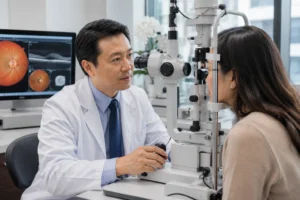
Selecting an ophthalmologist involves more than finding someone who performs surgery. Patients should look for a physician who focuses on long-term disease management, careful monitoring, and individualized treatment planning.
When evaluating an eye care provider, consider whether the practice offers:
- Comprehensive glaucoma evaluations
- Advanced diagnostic technology such as OCT imaging and visual field testing
- Evidence-based treatment recommendations
- Access to both laser and surgical treatment options
- Personalized follow-up care
- Clear communication about benefits, risks, and expected outcomes
At LeeVision in Flushing, Queens, Dr. David H. Lee, MD, a Board-Certified Ophthalmologist, emphasizes individualized glaucoma management based on each patient’s eye health, lifestyle, and long-term vision goals. Treatment recommendations are guided by current clinical evidence, patient safety, and a commitment to preserving vision whenever possible.
Why Early Treatment Matters
One of the most difficult conversations ophthalmologists have is explaining that vision already lost from glaucoma cannot usually be recovered.
Fortunately, modern glaucoma care has advanced significantly over the past two decades. Earlier diagnosis, sophisticated imaging technology, FDA-approved laser procedures, minimally invasive surgical techniques, and improved medications have all expanded the options available to patients.
The most important step is seeking evaluation before noticeable vision loss occurs.
For adults over age 40—especially those with a family history of glaucoma, diabetes, high blood pressure, or other risk factors—regular comprehensive eye examinations remain one of the most effective ways to protect long-term vision.
Final Thoughts
Understanding glaucoma surgery cost involves more than comparing prices. Every patient’s treatment plan is influenced by the type of glaucoma, the stage of the disease, overall eye health, recommended procedure, insurance coverage, and long-term vision goals.
Whether treatment involves prescription medications, laser eye surgery for glaucoma, minimally invasive procedures, or traditional surgery, the objective remains the same: lowering intraocular pressure to reduce the risk of further optic nerve damage.
Patients should never delay an eye examination because they are uncertain about surgery or concerned about cost. A comprehensive evaluation can determine whether surgery is necessary, identify the most appropriate treatment options, and help preserve vision before irreversible damage occurs.
For individuals in Flushing, Queens, New York City, partnering with an experienced ophthalmologist and maintaining regular follow-up care are among the most important investments in lifelong eye health.
