


Is Laser Eye Surgery Safe? What Every Patient Should Know Before Treatment
Laser eye surgery has helped millions of people reduce or eliminate their dependence on glasses and contact lenses. Yet one of the first questions patients ask during a consultation is, “Is laser eye surgery safe?“ That concern is completely understandable. Your eyesight is precious, and choosing an elective procedure deserves careful thought.
The reassuring news is that laser eye surgery is considered one of the safest and most successful elective medical procedures when performed on carefully selected candidates by an experienced board-certified ophthalmologist using modern FDA-approved technology. However, safety does not simply depend on the laser itself. It depends on accurate testing, proper patient selection, surgical expertise, and realistic expectations.
At practices such as LeeVision in Flushing, Queens, New York City, Dr. David H. Lee, MD, believes that patient education is just as important as the procedure itself. Understanding both the benefits and the limitations allows patients to make confident, informed decisions about their vision.
Understanding Laser Eye Surgery

Laser eye surgery refers to several vision correction procedures designed to reshape the cornea—the clear front surface of the eye—so that light focuses more accurately on the retina. When light is properly focused, vision becomes clearer without relying heavily on glasses or contact lenses.
These procedures are commonly performed to correct:
- Nearsightedness (Myopia)
- Farsightedness (Hyperopia)
- Astigmatism
- Certain mild age-related vision issues in selected patients
Many people assume every laser eye procedure is identical, but different techniques are recommended based on your eye health, prescription, corneal thickness, lifestyle, and long-term vision goals.
Is Laser Eye Surgery Safe?
The short answer is yes—for the right candidate.
Modern laser eye surgery has an excellent safety record after decades of clinical research and technological improvements. Today’s laser systems are significantly more precise than earlier generations, allowing surgeons to customise treatment for each patient’s unique eye measurements.
However, one of the biggest misconceptions is believing everyone is automatically a suitable candidate.
An experienced ophthalmologist evaluates several important factors before recommending surgery, including:
- Corneal thickness
- Stability of your glasses prescription
- Tear film quality
- Overall eye health
- Age
- Medical history
- Lifestyle and occupation
If any of these factors suggest that surgery may carry unnecessary risk, a responsible surgeon may recommend delaying treatment or choosing another vision correction option instead.
Ironically, one of the safest decisions a surgeon can make is advising a patient not to have laser eye surgery.
Why Patients Often Worry Before LASIK

During consultations, many patients share similar concerns.
Some ask:
- “What if I blink during surgery?”
- “Can the laser damage my eye?”
- “Will I go blind?”
- “Is the procedure painful?”
- “What if my vision gets worse?”
These concerns are normal, especially for people considering eye surgery for the first time.
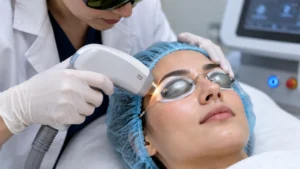
Modern laser systems include sophisticated eye-tracking technology that continuously follows even tiny eye movements throughout the procedure. If movement exceeds safe limits, the laser automatically pauses until proper alignment is restored.
The treatment itself usually lasts only a few minutes per eye, and numbing eye drops help keep patients comfortable throughout the procedure.
What Makes Laser Eye Surgery Safe?

Safety is not determined by the laser alone. Instead, several factors work together to minimise risk and maximise successful outcomes.
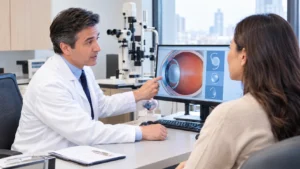
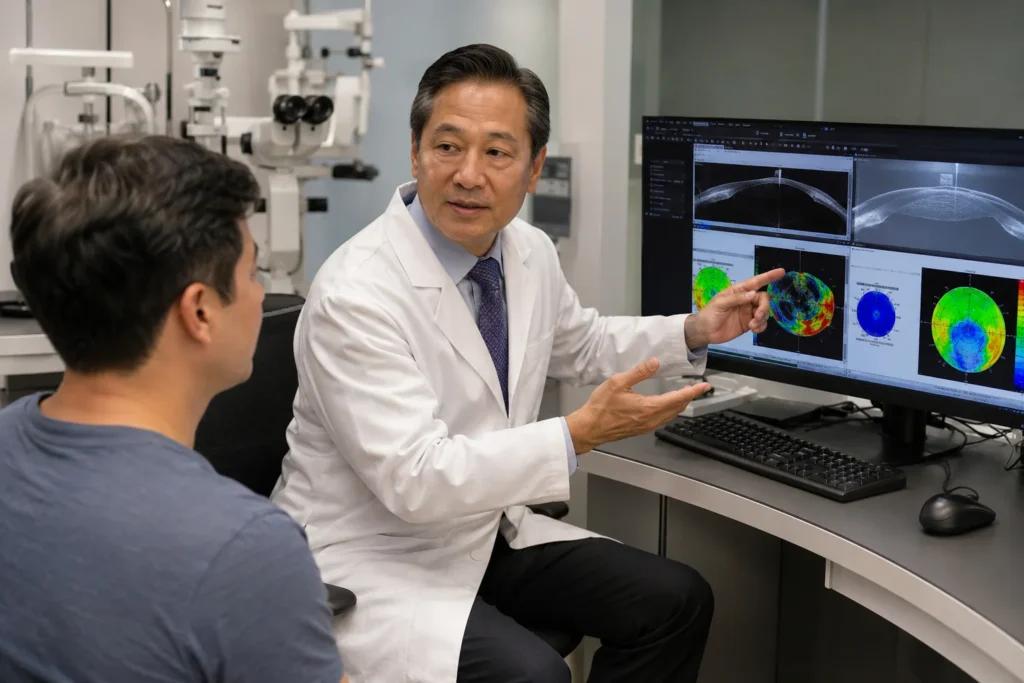
Comprehensive Pre-Surgery Eye Examination
A detailed eye examination is the foundation of safe treatment.
Your ophthalmologist carefully measures:
- Corneal thickness
- Corneal shape
- Pupil size
- Prescription stability
- Eye pressure
- Tear production
- Retinal health
These advanced diagnostic tests help identify patients who are excellent candidates and those who may benefit from alternative treatments.
Experienced Surgical Planning
Every eye is different.
Rather than using a one-size-fits-all approach, personalised treatment planning helps improve both safety and visual outcomes. Small details that may seem insignificant to patients can greatly influence long-term success.
Modern FDA-Approved Technology
Today’s advanced laser platforms provide:
- High-speed laser precision
- Real-time eye tracking
- Custom treatment mapping
- Enhanced accuracy
- Improved safety features
Technology continues to evolve, making procedures more predictable than ever before.
Benefits Compared With Wearing Glasses or Contact Lenses
Many people focus only on surgical risks while overlooking the challenges associated with long-term contact lens wear.
For suitable candidates, laser eye surgery may provide benefits such as:
- Greater freedom from glasses
- Reduced dependence on contact lenses
- Clearer vision for sports and outdoor activities
- Easier travel
- Improved convenience for active lifestyles
- Better quality of life for many patients
That said, laser surgery is not designed to create “perfect” vision for every individual. Some people may still need glasses for certain activities or as they age.
Who Is a Good Candidate for Laser Eye Surgery?

Not everyone should undergo laser vision correction.
In general, ideal candidates often have:
| Good Candidate | May Need Further Evaluation |
|---|---|
| Stable vision prescription | Rapidly changing prescription |
| Healthy corneas | Thin or irregular corneas |
| Healthy eyes | Active eye disease |
| Good overall health | Certain uncontrolled medical conditions |
| Realistic expectations | Expectation of guaranteed perfect vision |
This careful screening process is one reason laser eye surgery maintains such an excellent safety profile.
Does Age Affect Safety?
Age alone does not determine whether laser eye surgery is safe.
Many adults in their twenties, thirties, forties, and even some older individuals may qualify after a comprehensive evaluation.
However, patients over age 50 sometimes discover that another procedure—such as laser surgery for cataracts or lens replacement surgery—better addresses their vision needs than LASIK alone. Your ophthalmologist will recommend the option most appropriate for your eyes rather than automatically recommending laser vision correction.
Understanding the Risks and Limitations
Every medical procedure carries some level of risk, and laser eye surgery is no exception. Fortunately, serious complications are uncommon when the procedure is performed on a carefully screened patient using modern technology. A balanced understanding of the possible risks helps patients make informed decisions rather than relying on myths or online anecdotes.
Some temporary side effects are expected during the healing process and usually improve over time.
These may include:
- Dry eyes
- Glare around lights at night
- Halos
- Mild light sensitivity
- Temporary blurry vision
- Fluctuating vision during healing
Most patients notice steady improvement within the first few weeks, although complete visual stabilisation can take several months depending on the type of procedure and individual healing.
More significant complications—such as infection, corneal inflammation, or under- or over-correction—are uncommon but possible. This is why following post-operative instructions and attending follow-up appointments is an essential part of safe treatment.
How Long Does Recovery Take?
Recovery after laser eye surgery is often quicker than many patients expect, but healing is still a gradual process.
The first day usually involves mild discomfort, watering, or a gritty sensation. Many people notice improved vision within 24 hours, although clarity may continue to fluctuate for several days.
Typical Recovery Timeline
| Recovery Stage | What Most Patients Can Expect |
|---|---|
| First 24 hours | Blurry vision, mild irritation, watery eyes |
| 2–7 days | Vision becomes clearer, discomfort improves |
| 2–4 weeks | Night vision and dryness continue improving |
| 1–3 months | Vision stabilises for most patients |
| 3–6 months | Final healing for some individuals |
Everyone heals differently. Patients with dry eyes before surgery may require additional treatment during recovery to keep the eyes comfortable.
Tips for a Smooth Recovery
Protecting your eyes after surgery is just as important as the procedure itself.
Most ophthalmologists recommend:
- Use prescribed eye drops exactly as instructed.
- Avoid rubbing your eyes.
- Wear protective eye shields while sleeping for the first few nights if advised.
- Skip swimming pools, hot tubs, and lakes until your surgeon says it’s safe.
- Wear sunglasses outdoors to reduce light sensitivity.
- Limit dusty or smoky environments during the first week.
- Attend every scheduled follow-up visit.
Patients in Flushing, Queens, NYC, who spend long hours on computers or commuting, should also remember to take regular screen breaks and use lubricating eye drops if recommended.
How Much Is Laser Eye Surgery?
Another common question patients ask is, “How much is laser eye surgery?”
There isn’t a single price because the total cost depends on several factors, including:
- Type of laser procedure
- Technology used
- Surgeon’s experience
- Complexity of your prescription
- Pre-operative testing
- Post-operative care
- Geographic location
In a major metropolitan area such as New York City, pricing may differ from smaller communities because of technology investments, facility costs, and the level of specialist care provided.
Rather than choosing a provider based on the lowest advertised price, patients should ask:
- Is the surgeon board-certified?
- Is advanced diagnostic testing included?
- Are follow-up visits included?
- What technology will be used?
- Is enhancement treatment included if needed?
Your vision is a lifelong investment, and the overall quality of care often matters more than the initial price.
Laser Surgery for Cataracts vs. Laser Vision Correction
Many patients confuse laser surgery for cataracts with LASIK, but they are very different procedures.
| Laser Eye Surgery (LASIK/PRK) | Laser Surgery for Cataracts |
|---|---|
| Reshapes the cornea | Removes the eye’s cloudy natural lens |
| Corrects refractive errors | Treats cataracts |
| Usually performed on younger or middle-aged adults | Usually performed after cataracts develop |
| Natural lens remains in place | Artificial intraocular lens (IOL) replaces the natural lens |
| Elective vision correction | Medically necessary once cataracts affect daily life |
If cataracts are the primary reason for blurry vision, laser vision correction alone will not solve the problem. In these cases, cataract surgery with an appropriate intraocular lens may provide a better long-term solution.
A comprehensive eye examination helps determine which treatment best matches your eye health and visual goals.
Common Myths About Laser Eye Surgery

Many misconceptions continue to circulate online. Separating fact from fiction can help patients feel more confident.
Myth: The laser can make you go blind.
Modern laser eye surgery has a strong safety record. Permanent vision loss from the laser itself is extremely rare when patients are properly selected and treated by experienced ophthalmologists.
Myth: The procedure is painful.
Most patients report feeling pressure rather than pain because numbing eye drops are used throughout the procedure.
Myth: Results last forever for everyone.
Laser surgery permanently reshapes the cornea, but it does not stop the natural ageing process. Reading glasses or other vision changes may still occur later in life.
Myth: Anyone with glasses can have LASIK.
Not everyone is a suitable candidate. Some patients benefit more from alternatives such as PRK, implantable lenses, or cataract surgery.
Myth: Recovery takes months.
Many people return to work and normal daily activities within a few days, although complete healing continues over several weeks or months.
Questions to Ask During Your Consultation

Choosing laser eye surgery is easier when you understand your options. Before making a decision, consider asking your ophthalmologist:
- Am I a good candidate for laser eye surgery?
- Which procedure is most appropriate for my eyes?
- What results are realistic for my prescription?
- What temporary side effects should I expect?
- How long will my recovery take?
- Could dry eye affect my outcome?
- Will I still need glasses for certain activities?
- What happens if my vision changes in the future?
An experienced ophthalmologist should welcome these questions and explain every recommendation clearly, helping you make a decision through shared decision-making rather than pressure.
Why a Comprehensive Evaluation Matters
The safest laser eye surgery begins long before entering the operating room. A thorough assessment allows your ophthalmologist to identify hidden conditions such as early cataracts, keratoconus, glaucoma, retinal disease, or significant dry eye that may influence treatment recommendations.
At LeeVision, Dr. David H. Lee, MD, a board-certified ophthalmologist, emphasises evidence-based care, advanced diagnostic technology, and personalised treatment planning. The goal is not simply to determine whether laser eye surgery is possible, but whether it is the safest and most appropriate option for preserving your long-term vision.
Final Thoughts: Is Laser Eye Surgery Safe?
For most healthy adults who meet the medical criteria, laser eye surgery is safe and has an excellent track record of improving vision and reducing dependence on glasses or contact lenses. The key is understanding that safety begins with proper patient selection—not everyone is an ideal candidate, and that’s perfectly normal.
A thorough eye examination, advanced diagnostic testing, and a personalised treatment plan are just as important as the procedure itself. Choosing an experienced, board-certified ophthalmologist helps ensure that both the benefits and the potential risks are carefully discussed before any treatment is recommended.
If you’re considering vision correction in Flushing, Queens, New York City, scheduling a comprehensive consultation allows you to learn whether laser eye surgery, laser surgery for cataracts, or another treatment is the best fit for your long-term eye health and lifestyle goals.
Ultimately, the safest decision is an informed one.
Frequently Asked Questions
Is laser eye surgery safe for most people?
Yes, is laser eye surgery safe is one of the most common questions patients ask. For most healthy adults who qualify after a comprehensive eye examination, laser eye surgery is safe when performed by a board-certified ophthalmologist using modern FDA-approved technology. However, safety depends on proper candidacy rather than the procedure alone.
Is laser eye surgery safe for people over 40?
Yes, laser eye surgery is safe for many adults over 40 if they are suitable candidates. However, people in this age group may also develop presbyopia or early cataracts. A complete examination helps determine whether laser surgery for cataracts or LASIK is the better option.
Is laser eye surgery safe if I wear contact lenses?
In most cases, yes. Laser eye surgery is safe for many contact lens wearers after they stop wearing lenses for the recommended period before testing. Contact lenses can temporarily change the shape of the cornea, so accurate measurements are essential.
How much is laser eye surgery?
How much is laser eye surgery depends on the procedure, technology used, surgeon’s expertise, and post-operative care included. Rather than choosing the lowest price, patients should compare the overall quality of care, advanced diagnostic testing, and follow-up services.
How much is laser eye surgery in New York City?
If you’re researching how much is laser eye surgery in NYC, remember that prices vary between practices. Costs may be higher in New York City because of advanced technology and specialist care, but personalised treatment and long-term follow-up are equally important considerations.
Is laser eye surgery safe and permanent?
Many people ask, is laser eye surgery safe and whether the results last forever. The corneal reshaping is permanent, but your eyes continue to age naturally. You may still develop presbyopia or cataracts later in life even though laser eye surgery is safe and effective.
Is laser eye surgery safe compared with wearing contact lenses?
For suitable candidates, laser eye surgery is safe and may eliminate years of contact lens use. Long-term contact lens wear also carries risks, including infections and corneal irritation. Your ophthalmologist can help compare both options based on your lifestyle.
What is the difference between laser eye surgery and laser surgery for cataracts?
Many patients confuse these procedures. Laser surgery for cataracts removes the eye’s cloudy natural lens and replaces it with an artificial lens. Laser eye surgery such as LASIK reshapes the cornea to correct refractive errors. Although both use advanced technology, laser surgery for cataracts and LASIK treat completely different eye conditions.
Is laser surgery for cataracts safer than traditional cataract surgery?
Both traditional cataract surgery and laser surgery for cataracts have excellent safety records. Laser surgery for cataracts offers additional precision for certain steps of the procedure, but your ophthalmologist will recommend the most appropriate approach based on your eye health.
How long does it take to recover after laser eye surgery?
Recovery is usually quick. Most patients notice improved vision within one or two days, although complete healing may take several weeks. Following your surgeon’s instructions helps ensure that laser eye surgery is safe and that recovery progresses smoothly.
Can I drive after laser eye surgery?
Most patients can drive within a day or two after their ophthalmologist confirms their vision meets legal driving requirements. Never drive until your doctor advises that it is safe to do so.
Is laser eye surgery safe if I have astigmatism?
Yes. Laser eye surgery is safe for many patients with astigmatism, provided the cornea is healthy and the prescription falls within treatable limits. A detailed corneal scan determines whether treatment is appropriate.
Is laser eye surgery safe during pregnancy?
Laser eye surgery is generally postponed during pregnancy and breastfeeding because temporary hormonal changes can affect vision and corneal measurements. Your ophthalmologist will advise the safest timing.
Can laser eye surgery prevent cataracts?
No. Even though laser eye surgery is safe, it does not prevent cataracts because cataracts develop inside the eye’s natural lens. When cataracts eventually affect vision, laser surgery for cataracts may become the recommended treatment.
What age is best for laser eye surgery?
Most surgeons recommend waiting until your prescription has remained stable for at least one year. Rather than focusing only on age, your ophthalmologist will determine whether laser eye surgery is safe based on your overall eye health.
Will I still need glasses after laser eye surgery?
Many patients greatly reduce their dependence on glasses. However, some people may still need reading glasses later in life because of natural ageing, even if laser eye surgery is safe and successful.
Who should avoid laser eye surgery?
Patients with unstable prescriptions, advanced keratoconus, uncontrolled glaucoma, severe dry eye disease, or active eye infections may not be suitable candidates. In these cases, your ophthalmologist may recommend another vision correction option instead of laser eye surgery.