

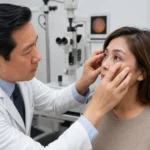


Kids Eye Doctor Near Me: How to Choose the Right Pediatric Eye Specialist for Your Child in Flushing, Queens NYC
Parents often search for kids eye doctor near me after noticing something unusual about their child’s vision. Sometimes a child squints while watching television, struggles to read at school, complains of headaches, or simply avoids activities that require clear eyesight. In many cases, children do not realize their vision is different because they have never experienced normal vision.
A comprehensive pediatric eye examination is about much more than determining whether a child needs glasses. It helps detect vision problems early, supports healthy visual development, and identifies eye conditions that may affect learning, confidence, and long-term eye health.
At LeeVision in Flushing, Queens, Board-Certified Ophthalmologist Dr. David H. Lee, MD believes that early diagnosis and evidence-based treatment give children the best opportunity to develop strong, healthy vision while avoiding preventable complications later in life.
Why Children’s Eyes Need Specialized Care
Many parents assume that children can simply visit the same eye doctor as adults. While comprehensive ophthalmologists treat patients of all ages, evaluating a child’s developing visual system requires a different approach, additional patience, and age-appropriate testing techniques.
Children’s eyes continue developing throughout infancy and early childhood. During these years, the brain is also learning how to process visual information. If one or both eyes are not sending clear images to the brain, normal vision development can be interrupted.
This is why regular pediatric eye examinations are so important—even when a child does not complain about blurry vision.
A pediatric-focused eye examination may evaluate:
- Visual acuity (how clearly your child sees)
- Eye alignment and muscle coordination
- Depth perception
- Color vision
- Eye movement
- Refractive errors such as nearsightedness, farsightedness, and astigmatism
- Overall eye health, including the retina and optic nerve
These evaluations help identify problems before they begin affecting school performance or daily activities.
Signs Your Child May Need an Eye Doctor

One of the biggest challenges parents face is recognizing vision problems. Young children often assume everyone sees the world the way they do.
Rather than saying, “I can’t see,” they may develop habits that compensate for poor vision.
Common Warning Signs Parents Should Watch For
Your child may benefit from seeing an eye doctor for kids near me if you notice:
- Frequent squinting
- Sitting very close to screens
- Holding books unusually close
- Complaints of headaches after reading
- Excessive eye rubbing
- Covering one eye while focusing
- Tilting the head frequently
- Poor hand-eye coordination
- Difficulty following words while reading
- Falling behind academically without another clear explanation
These symptoms do not always indicate a serious eye disease, but they deserve a professional evaluation.
Eye Symptoms That Need Prompt Medical Attention
Some symptoms should never be ignored because they may indicate an eye emergency.
Seek prompt ophthalmic care if your child experiences:
- Sudden vision loss
- Significant eye pain
- Eye injury
- Chemical exposure
- Sudden eye swelling
- Persistent redness with discharge
- A white pupil in photographs
- Sudden double vision
In these situations, parents often search for an eye walk in clinic near me because same-day evaluation may be appropriate. While not every eye problem requires emergency treatment, timely assessment helps determine whether urgent care is needed and reduces the risk of complications.
Common Childhood Eye Conditions
Many pediatric eye conditions can be treated successfully when diagnosed early. Unfortunately, several develop gradually and may go unnoticed during routine daily activities.
Refractive Errors
The most common reason children visit an eye doctor is blurry vision caused by refractive errors.
These include:
- Nearsightedness (myopia)
- Farsightedness (hyperopia)
- Astigmatism
Corrective glasses or, in selected cases, contact lenses help children see clearly and support normal learning and development.
Lazy Eye (Amblyopia)
Amblyopia, commonly called lazy eye, develops when one eye does not communicate properly with the brain during childhood.
If detected early, treatment may include:
- Prescription glasses
- Eye patching
- Vision therapy
- Treating the underlying cause
Early treatment significantly improves the likelihood of restoring normal visual development.
Crossed Eyes (Strabismus)
Strabismus occurs when the eyes do not point in the same direction.
Parents often notice one eye drifting inward or outward, especially when the child is tired.
Treatment may involve:
- Glasses
- Prism lenses
- Eye muscle exercises
- Surgery in selected cases
Because untreated strabismus can lead to permanent vision loss in one eye, early evaluation is essential.
Digital Eye Strain in Modern Children
Children today spend more time using tablets, smartphones, computers, and gaming devices than any previous generation.
In communities like Flushing and throughout New York City, many school-aged children alternate between classroom learning, homework, and recreational screen use, leaving little opportunity for their eyes to rest.
Although digital screens do not permanently damage eyesight, prolonged close-up work can contribute to:
- Eye fatigue
- Dry eyes
- Blurred vision after screen use
- Difficulty refocusing
- Headaches
- Increased discomfort in children with uncorrected vision problems
An eye examination can determine whether symptoms are related to screen habits, an uncorrected prescription, or another underlying eye condition.
What Happens During a Children’s Eye Examination?

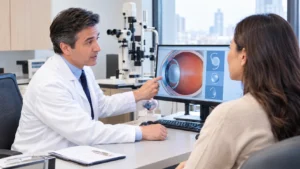
Many parents worry that an eye exam will be uncomfortable or difficult for their child. In reality, modern pediatric eye examinations are designed to be gentle, interactive, and age-appropriate. Even children who cannot yet read letters can have their vision assessed using specialized techniques.
At LeeVision in Flushing, Queens, every examination is tailored to the child’s age, developmental stage, symptoms, and medical history. The goal is not only to identify vision problems but also to understand how a child’s eyes work together as they grow.
A Typical Pediatric Eye Exam May Include
Depending on your child’s age and symptoms, the visit may involve:
- Review of medical and family eye history
- Age-appropriate vision testing
- Eye alignment and tracking evaluation
- Refraction to determine if glasses are needed
- Examination of the front and back of the eye
- Assessment of eye health and visual development
If necessary, dilating eye drops may be used so the ophthalmologist can obtain a more detailed view of the retina and optic nerve. Although dilation temporarily blurs near vision and increases light sensitivity, the effects usually wear off within a few hours.
When Should Children Have Their Eyes Examined?
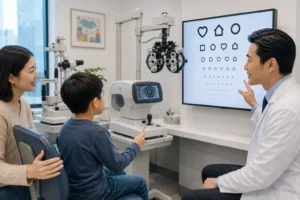
One of the most common questions parents ask is, “My child isn’t complaining about their vision. Do they still need an eye exam?”
The answer is often yes.
Some eye conditions develop gradually without obvious symptoms. Children frequently adapt to poor vision without realizing anything is wrong.
The American Academy of Ophthalmology and other eye care organizations recommend vision screening during infancy and early childhood, with comprehensive eye examinations when recommended by an eye care professional or if concerns arise.
Parents should also schedule an examination if they notice changes such as:
- Declining school performance
- Frequent headaches
- Difficulty concentrating while reading
- Squinting or covering one eye
- Family history of childhood eye disease
- Failed school vision screening
Early detection allows many childhood eye conditions to be treated before they interfere with learning and visual development.
Choosing the Right Kids Eye Doctor Near Me
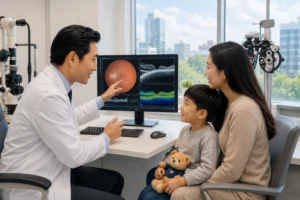
Searching online for a kids eye doctor near me often returns dozens of results, making it difficult to know which provider is the best fit for your family.
While convenience matters, experience and comprehensive eye care are even more important.
What Parents Should Look For
When choosing an eye doctor for kids near me, consider whether the practice offers:
- Comprehensive pediatric eye examinations
- Experience diagnosing childhood eye conditions
- Advanced diagnostic technology
- Personalized treatment recommendations
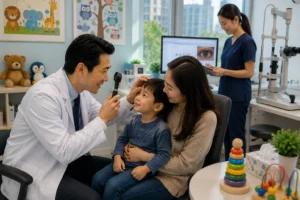
- A child-friendly examination environment
- Clear communication with both parents and children
- Ongoing follow-up when needed
A thorough examination should focus on your child’s long-term vision development rather than simply prescribing glasses.
Is a Walk-In Eye Clinic the Right Choice?
Many parents search for an eye walk in clinic near me when an eye problem appears suddenly.
Walk-in clinics can be helpful for urgent eye concerns such as:
- Red or irritated eyes
- Minor eye injuries
- Sudden swelling
- Foreign objects in the eye
- Eye infections
- Unexpected vision changes
However, routine pediatric eye examinations are generally best scheduled in advance. Planned appointments allow enough time for a complete evaluation, detailed testing, and discussion of treatment options if a vision problem is identified.
If your child experiences severe eye pain, significant trauma, sudden vision loss, or chemical exposure, seek immediate emergency medical care rather than waiting for a routine appointment.
Common Questions Parents Ask During Eye Consultations
During pediatric eye visits, parents often ask many of the same practical questions. Understanding these concerns can help families feel more confident before scheduling an appointment.
Will My Child Need Glasses Forever?
Not necessarily.
Some children require glasses only during certain stages of development, while others continue wearing them into adulthood. The need depends on the type of refractive error, how the eyes develop over time, and regular follow-up examinations.
Can Too Much Screen Time Damage My Child’s Eyes?
Current medical evidence does not show that digital screens permanently damage the eyes. However, prolonged screen use can increase eye strain, dryness, and may contribute to the progression of myopia in some children.
Encouraging regular outdoor activities, limiting unnecessary screen time, and following healthy visual habits can support overall eye health.
Are Contact Lenses Safe for Children?
For some children, yes.
Contact lenses may be appropriate for older children who can maintain good hygiene and use them responsibly. The decision depends more on maturity than age alone and should always be guided by an eye care professional.
Can Vision Problems Affect School Performance?
Absolutely.
Children with undiagnosed vision problems may struggle with reading, writing, focusing on classroom materials, or participating in sports. Because these difficulties can resemble attention or learning issues, a comprehensive eye examination is often an important part of evaluating academic challenges.
Helping Children Maintain Healthy Vision Every Day
Good eye health extends beyond the examination room. Parents can encourage lifelong healthy vision by promoting simple daily habits such as:
- Spending more time outdoors
- Taking regular breaks during screen use
- Wearing protective eyewear during sports
- Eating a balanced diet rich in leafy greens, colourful fruits, and omega-3 fatty acids
- Keeping up with scheduled eye examinations
- Seeking prompt care if new eye symptoms develop
These everyday habits support healthy visual development and may help reduce the impact of common childhood eye problems as children grow.
Helping Your Child Build a Lifetime of Healthy Vision
Children depend on their eyesight every day—whether they are learning in the classroom, playing sports, reading books, or exploring the world around them. Because many childhood eye conditions develop without obvious symptoms, regular eye examinations remain one of the most effective ways to protect long-term vision.
If you’ve been searching for a kids eye doctor near me, choosing a practice that provides comprehensive eye evaluations, evidence-based care, and personalized treatment planning can make a meaningful difference in your child’s visual development. Early diagnosis often allows many common childhood vision problems to be managed before they begin affecting learning, confidence, or daily life.
At LeeVision in Flushing, Queens, Dr. David H. Lee, MD, a Board-Certified Ophthalmologist, focuses on thorough eye examinations, advanced diagnostic technology, and individualized care to help children maintain healthy vision from an early age through adolescence.
Good vision is not just about seeing clearly today—it is an important investment in your child’s future education, development, and overall quality of life.
Frequently Asked Questions About Kids Eye Doctor Near Me
When should I take my child to a kids eye doctor near me?
Parents should consider visiting a kids eye doctor near me when they notice symptoms such as squinting, frequent eye rubbing, headaches, difficulty reading, sitting too close to screens, or problems following objects.
Even if your child has no noticeable symptoms, routine eye examinations can help detect hidden vision problems early.
How do I find the best kids eye doctor near me?
When choosing a kids eye doctor near me, look for an ophthalmology practice that provides comprehensive eye examinations, uses modern diagnostic technology, and has experience evaluating children’s developing vision.
A good pediatric eye evaluation should include more than checking whether your child needs glasses.
What does a kids eye doctor near me check during an eye exam?
A kids eye doctor near me evaluates:
- Visual clarity
- Eye alignment
- Eye movement
- Focusing ability
- Depth perception
- Eye health
- Signs of conditions such as amblyopia or strabismus
The examination is adjusted according to the child’s age and ability to participate.
Is a kids eye doctor near me different from a regular eye doctor?
A kids eye doctor near me may have additional experience evaluating children’s developing vision. Children are not simply smaller adults—their visual systems are still changing, requiring age-appropriate testing methods.
Does my child need an eye exam if they passed a school vision screening?
Yes, sometimes.
School screenings are helpful but limited. A comprehensive examination with a kids eye doctor near me can identify conditions that screenings may miss, including focusing problems, eye coordination issues, and certain eye diseases.
At what age should my child have their first eye examination?
The recommended timing depends on the child’s development, symptoms, and risk factors. Children with family history of eye problems or noticeable vision concerns may need evaluation earlier.
A kids eye doctor near me can guide parents on the appropriate examination schedule.
Can a kids eye doctor near me diagnose lazy eye?
Yes. A kids eye doctor near me can evaluate amblyopia, commonly called lazy eye, and determine appropriate treatment options.
Treatment may include glasses, patching, vision therapy, or addressing another underlying eye condition.
Can a kids eye doctor near me treat crossed eyes?
Yes. Strabismus, or crossed eyes, can often be managed with different approaches depending on the cause.
A kids eye doctor near me may recommend glasses, monitoring, or other treatments based on the child’s examination findings.
Does my child need glasses after visiting a kids eye doctor near me?
Not every child needs glasses. If a kids eye doctor near me identifies nearsightedness, farsightedness, or astigmatism, glasses may be recommended to provide clearer vision and support normal development.
Are contact lenses safe for children?
Some children can safely wear contact lenses when they are mature enough to follow proper hygiene and care instructions.
A kids eye doctor near me can determine whether contact lenses are appropriate based on eye health and responsibility level.
When should I search for an eye doctor for kids near me?
You should search for an eye doctor for kids near me if your child experiences blurry vision, reading difficulties, frequent headaches, eye discomfort, or changes in eye appearance.
Early evaluation helps identify problems before they interfere with daily activities.
What is the difference between an eye doctor for kids near me and a vision screening?
An eye doctor for kids near me provides a complete medical eye evaluation, while a screening only checks for certain vision concerns.
Comprehensive examinations evaluate both eyesight and overall eye health.
Can screen time affect my child’s eyes?
Long periods of screen use may contribute to digital eye strain, dryness, and discomfort.
A kids eye doctor near me can help determine whether symptoms are related to screen habits, an uncorrected prescription, or another eye condition.
How can I protect my child’s eyesight?
Parents can support healthy vision by encouraging:
- Outdoor activities
- Regular eye examinations
- Breaks during screen use
- Protective eyewear during sports
- Healthy nutrition
A kids eye doctor near me can provide additional recommendations based on your child’s needs.
Should I visit an eye walk in clinic near me for my child’s eye problem?
An eye walk in clinic near me may be useful for urgent concerns such as minor injuries, sudden irritation, redness, or foreign objects.
However, routine children’s eye examinations are usually better handled through scheduled appointments with a comprehensive eye care provider.
When is an eye walk in clinic near me necessary?
Parents should consider an eye walk in clinic near me for sudden symptoms that require timely evaluation.
Emergency symptoms include:
- Sudden vision loss
- Severe eye pain
- Chemical exposure
- Significant eye injury
- Sudden swelling
Can allergies affect my child’s eyes?
Yes. Seasonal allergies can cause itchy, watery, red, or irritated eyes.
A kids eye doctor near me can help determine whether symptoms are allergy-related or caused by another eye condition.
Can my child’s vision affect school performance?
Yes. Children with untreated vision problems may struggle with reading, focusing, or classroom activities.
A comprehensive evaluation from a kids eye doctor near me can identify whether vision problems are contributing to learning difficulties.
How often should my child visit a kids eye doctor near me?
The recommended frequency depends on age, eye health, family history, and whether your child wears glasses or has an existing condition.
Regular follow-up helps monitor changes as children grow.
Can a kids eye doctor near me detect serious eye problems?
Yes. Comprehensive eye examinations can identify various eye conditions and signs of abnormal eye development.
Early detection allows timely management and helps protect long-term vision.
What should I bring to my child’s appointment?
Parents should bring:
- Previous eye records
- Current glasses
- Medication information
- School screening results
- Questions about vision concerns
This helps the kids eye doctor near me understand your child’s complete eye health history.
Are eye drops used during children’s eye exams safe?
Yes. Dilating drops are commonly used when needed to allow a detailed examination of the inside of the eye.
Your kids eye doctor near me will explain why dilation is recommended and what temporary effects to expect.
Can my child outgrow vision problems?
Some childhood vision issues may change as children grow, while others require ongoing monitoring.
A kids eye doctor near me can track vision development and recommend appropriate care.
Why choose LeeVision for children’s eye care in Flushing Queens NYC?
LeeVision provides comprehensive ophthalmology services with a focus on accurate diagnosis, advanced technology, and personalized treatment planning.
Families looking for a kids eye doctor near me in Flushing, Queens, NYC can receive professional guidance from an experienced ophthalmology team.