


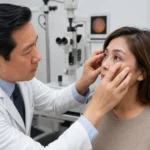

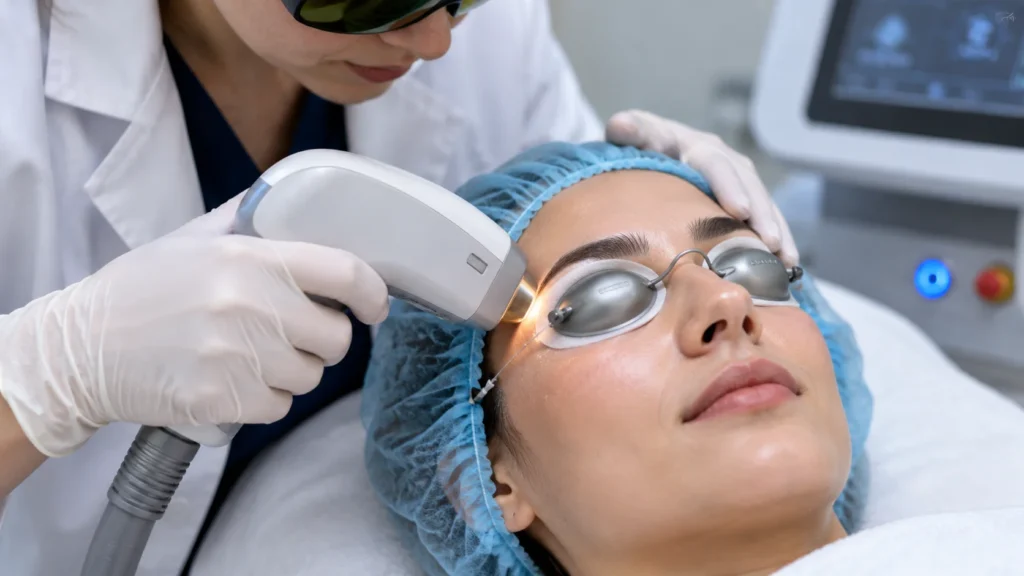
Resurfacing CO2 Laser is one of the most effective, evidence-based treatments available for improving the texture, tone, and tightness of the delicate skin around the eyes — addressing fine lines, mild eyelid laxity, and sun-related pigmentation with results that develop gradually and last for years. For many patients, this skin shows the earliest and most visible signs of aging, sun exposure, and long-term screen use. Fine lines at the outer corners, crepey upper eyelid skin, and mild pigmentation changes are common concerns brought up during consultations at LeeVision by patients across Flushing, Queens, and the greater NYC area. Understanding how CO2 laser resurfacing works, who qualifies, and what recovery looks like helps patients make an informed decision before moving forward.
At LeeVision, this treatment is evaluated and performed under the direction of Dr. David H. Lee, MD, a board-certified ophthalmologist with specific training in the anatomy of the eyelid and periorbital region — an area where precision matters far more than in general facial skin treatment, since the skin here is thinner and sits close to the eye itself.
Patients often search for this procedure under slightly different phrasing — resurfacing CO2 laser, resurfacing laser CO2, or CO2 skin resurfacing laser — but these all describe the same ablative laser technology discussed throughout this guide.
What Is CO2 Laser Resurfacing?
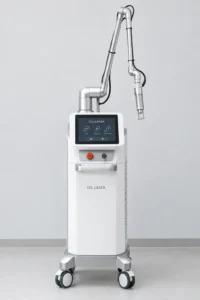
CO2 laser resurfacing is an ablative laser treatment for the skin that uses focused light energy to remove damaged outer layers of skin in a controlled way. As the skin heals, it regenerates with improved texture, firmer collagen structure, and a more even tone. Unlike surface-level treatments, CO2 skin resurfacing laser technology reaches deeper skin layers, which is why it tends to produce more noticeable results than lighter resurfacing options — particularly for periorbital wrinkles, mild eyelid skin laxity, and sun-related pigmentation.
Because the eye area has unique anatomical considerations, resurfacing laser CO2 treatment near the eyes requires a provider familiar with eyelid structure, tear film health, and eye safety protocols — which is why this treatment is offered under ophthalmologic supervision at LeeVision rather than as a purely cosmetic, non-medical service. Whether it’s called resurfacing CO2 laser therapy or CO2 laser resurfacing, the underlying goal is the same: controlled removal of damaged skin to reveal healthier tissue beneath.
Who Notices These Concerns Most Often
During consultations, certain patterns come up repeatedly. Office workers and commuters who spend long hours on screens often describe increased squinting and fine lines around the eyes. Patients in their 40s and beyond frequently ask whether upper eyelid skin looseness is “just aging” or something a laser can meaningfully improve. Others are simply looking for a non-surgical option before considering blepharoplasty (eyelid surgery), and want to understand where the line is between what a laser can achieve and what requires a surgical approach.
These are reasonable, common questions — and part of an honest consultation is explaining that laser resurfacing improves skin quality and mild-to-moderate laxity, but it is not a substitute for surgery in cases of significant excess skin or fat prolapse.
What CO2 Laser Resurfacing Can Improve
- Fine lines and wrinkles around the eyes (“crow’s feet”)
- Mild upper eyelid skin laxity
- Sun-related pigmentation and uneven tone around the eyes
- Rough or crepey periorbital skin texture
- Mild acne or surgical scarring near the eye area
Understanding Candidacy
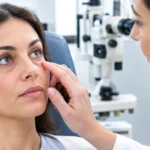
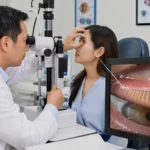
Not every patient is an ideal candidate for CO2 resurfacing laser treatment, and this is something Dr. Lee evaluates carefully during consultation. Before recommending resurfacing CO2 laser treatment, Dr. Lee reviews each patient’s skin type, eye health history, and treatment goals. Good candidates typically have:
- Mild to moderate periorbital wrinkling or skin laxity
- Realistic expectations about gradual, natural-looking improvement
- No active eye infections or untreated dry eye disease
- Willingness to follow a structured recovery and aftercare plan
Patients with significant dry eye, certain autoimmune conditions, active skin infections near the treatment area, or very dark skin tones (due to higher pigmentation-change risk) require additional evaluation, and in some cases, a different treatment approach may be recommended instead.
CO2 Laser Resurfacing vs. Other Resurfacing Options
| Treatment | Depth of Treatment | Downtime | Best For |
|---|---|---|---|
| CO2 Laser Resurfacing (Ablative) | Deep | 5–10 days | Moderate wrinkles, laxity, pigmentation |
| Erbium Laser Resurfacing | Moderate | 3–7 days | Finer lines, more precise, less thermal spread |
| Non-Ablative Fractional Laser | Superficial | 0–2 days | Mild texture and tone concerns, minimal downtime |
This comparison helps patients understand why CO2 is often chosen when results need to be more pronounced, even though it involves a longer recovery than lighter alternatives.
What Happens During Treatment
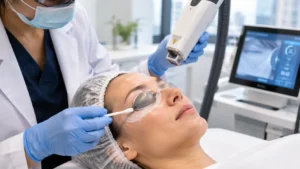
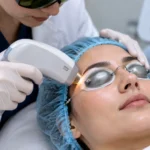
Before the procedure, protective eye shields are placed to safeguard the eye itself — a step that is specific to periorbital laser work and one of the reasons this treatment is performed under ophthalmologic care. A topical anesthetic is applied to the skin beforehand to keep the procedure tolerable. Most patients describe sensations of warmth or mild stinging rather than significant pain. Treatment time for the periorbital area is typically shorter than full-face resurfacing, often completed within 20–40 minutes. Throughout the resurfacing CO2 laser session, the provider monitors skin response closely to adjust energy settings as needed, which is part of why resurfacing laser CO2 treatment near the eyes should only be performed by an experienced, credentialed provider.
CO2 Laser Resurfacing Recovery Timeline
| Recovery Stage | What to Expect |
|---|---|
| Days 1–3 | Redness, swelling, oozing or crusting is normal |
| Days 4–7 | New skin begins to surface; peeling continues |
| Week 2 | Redness fades; makeup can typically be worn |
| Weeks 3–8 | Continued collagen remodeling; texture keeps improving |
| Months 2–6 | Long-term tightening and tone improvement become visible |
Sun protection and a careful, physician-guided skincare routine during healing directly affect the final outcome, which is why aftercare instructions are reviewed in detail after treatment.
Risks and Limitations of CO2 Laser Resurfacing
As with any ablative laser procedure, CO2 laser resurfacing carries risks that should be discussed honestly. These can include temporary redness, swelling, and in rare cases, changes in pigmentation, infection, or scarring — particularly if aftercare instructions are not followed. Results also vary based on skin type, degree of sun damage, and individual healing response. No outcome can be guaranteed, and this is something patients are counseled on clearly before treatment.
According to the American Academy of Ophthalmology, any laser procedure performed near the eye should only be done by a provider trained in ocular anatomy and protective eye-shielding protocols, given the proximity of treatment to the eye itself.
CO2 Laser Resurfacing Cost Considerations
Pricing for CO2 laser resurfacing depends on the treatment area, the number of sessions recommended, and the extent of correction needed. The cost of resurfacing CO2 laser treatment can also vary depending on whether a full periorbital session or a more targeted CO2 skin resurfacing laser approach is used for a smaller area. Because this is generally considered a cosmetic procedure, it is typically not covered by insurance. A personalized cost estimate is provided only after an in-person evaluation at LeeVision, since treatment planning is never standardized across patients.
Why This Matters for Patients in Flushing and Queens
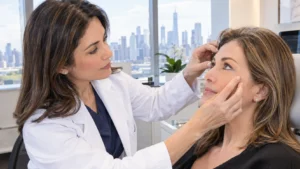
Urban lifestyles in NYC — long commutes, high screen exposure, seasonal allergy flare-ups, and pollution exposure — all contribute to earlier visible aging around the eyes for many patients. Combined with an aging population in the Flushing and greater Queens area, periorbital rejuvenation has become one of the more frequently requested consultations at LeeVision. Having this evaluated by a board-certified ophthalmologist adds a layer of safety that general cosmetic providers may not offer, particularly given the proximity of this treatment to the eye itself.
Frequently Asked Questions
Is CO2 laser resurfacing safe for the skin around the eyes?
Yes, when performed by a provider trained in periorbital anatomy and eye protection protocols. Protective eye shields and careful technique are essential given the sensitivity of this area.
How long do results from CO2 laser resurfacing last?
Results are considered long-lasting, often years, though ongoing sun exposure and natural aging will continue to affect the skin over time.
Does CO2 laser resurfacing hurt?
Most patients describe mild to moderate discomfort, managed with topical anesthetic before treatment. Warmth or tingling during the procedure is common.
Can CO2 laser resurfacing replace eyelid surgery (blepharoplasty)?
No. It improves skin texture, tone, and mild laxity, but does not remove excess skin or fat the way surgery can. A consultation helps determine which option fits your concerns.
How many sessions of CO2 resurfacing are needed?
Many patients see significant improvement after a single session, though some cases benefit from a follow-up treatment depending on skin condition and goals.
Who should avoid CO2 laser resurfacing?
Patients with active eye infections, untreated dry eye disease, certain autoimmune conditions, or unrealistic expectations about results are generally not ideal candidates until those issues are addressed.
If you’re considering CO2 laser resurfacing for the skin around your eyes, a consultation with Dr. David H. Lee at LeeVision in Flushing, Queens can help determine whether resurfacing CO2 laser treatment — or an alternative approach — best fits your skin and long-term eye health goals.
