


Upper Blepharoplasty Celebrities: What You Can Realistically Expect from Eyelid Surgery
The fascination with upper blepharoplasty celebrities isn’t just about gossip it reflects a growing curiosity about subtle, natural-looking facial rejuvenation. Over the past decade, upper eyelid surgery has quietly become one of the most requested aesthetic procedures worldwide. Unlike dramatic transformations, the goal here is refinement: brighter eyes, smoother contours, and a more rested appearance.
For many patients, celebrity results serve as a visual reference but they can also create unrealistic expectations. This guide breaks down what upper eyelid surgery actually involves, how it’s performed, what recovery looks like, and how to interpret celebrity before-and-after transformations with a critical, informed perspective.
Understanding Upper Blepharoplasty: What It Really Does
Blepharoplasty of upper eyelid focuses on removing or repositioning excess skin, fat, and sometimes muscle from the upper eyelids. Over time, aging, genetics, and environmental factors contribute to drooping eyelids (dermatochalasis), which can make you look tired or in some cases, even interfere with vision.
A well-performed blepharoplasty upper eyelids procedure doesn’t change your identity. Instead, it restores the natural eyelid contour you had years ago.
Key goals of the procedure:
- Eliminate sagging or hooded eyelids
- Improve symmetry
- Enhance the natural eyelid crease
- Create a more alert, refreshed appearance
This is why many public figures opt for it results are noticeable, but not obvious.
Blepharoplasty Celebrities: Why It’s So Popular in Hollywood
There’s a reason why discussions around blepharoplasty celebrities continue to trend. The eyes are the focal point of the face, especially on camera. Even minor heaviness in the upper eyelids can create shadows, making someone appear fatigued or older than they are.
Why celebrities choose upper blepharoplasty:
1. Subtle but powerful results
Unlike more invasive procedures, upper eyelid surgery can deliver a significant improvement without drastic change.
2. Minimal downtime (relatively speaking)
For public figures, recovery time matters. While healing still requires care, the downtime is manageable compared to more complex surgeries.
3. Camera-friendly outcomes
High-definition cameras emphasize fine details. Smoother eyelids reflect light better and reduce shadowing.
4. Longevity
Results often last many years, making it a worthwhile long-term investment.
That said, it’s important to remember: celebrities often have access to top-tier surgeons, advanced techniques, and post-procedure care that may not reflect the average experience.
Celebrities with Upper Blepharoplasty: Realistic vs Rumored Cases
When people search for celebrities with upper blepharoplasty, they’re usually looking for proof of what’s possible. However, most celebrities never publicly confirm procedures. What you see online is often speculation based on visual comparisons.
Common signs experts look for:
- More defined upper eyelid crease
- Reduced skin hooding
- Smoother transition between eyelid and brow
- Improved eye symmetry
Still, these changes can also result from:
- Professional lighting
- Makeup techniques
- Non-surgical treatments like Botox or laser resurfacing
- Natural aging and weight fluctuations
Important reality check:
Not every “before and after” you see is surgical. And even when it is, results vary widely depending on anatomy, age, and surgical approach.
Celebrity Upper Blepharoplasty Before and After: What the Photos Don’t Show
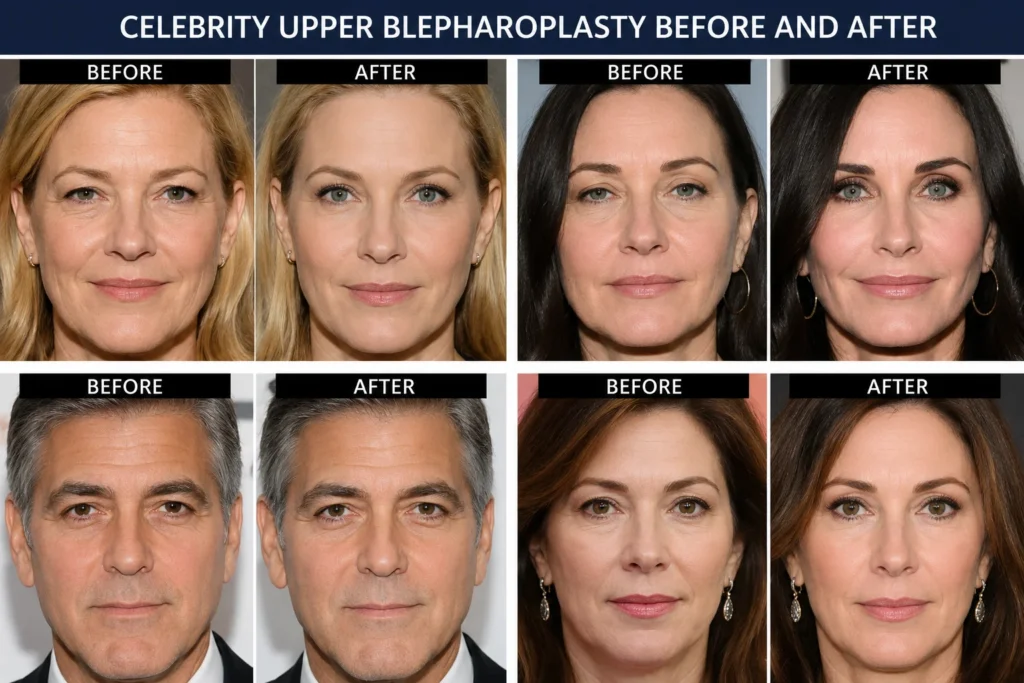
Images labeled celebrity upper blepharoplasty before and after are among the most searched but also the most misunderstood.
Photos can be misleading for several reasons:
1. Lighting and angles
Slight changes in lighting can make eyelids appear more lifted or more droopy.
2. Makeup and styling
Professional makeup artists use contouring to reshape the appearance of the eyes.
3. Timing of photos
Post-surgery swelling can last weeks, but public images are often taken months later when results are fully refined.
4. Additional treatments
Many celebrities combine procedures:
- Brow lifts
- Laser skin resurfacing
- Dermal fillers
- Skin tightening treatments
5. Digital editing
Even reputable media outlets sometimes retouch images.
What a genuine surgical result looks like:
- Natural crease not overly high or artificial
- Symmetry without stiffness
- No visible scarring (when healed properly)
- Eyes that still express emotion naturally
Who Is a Good Candidate for Upper Blepharoplasty?
Not everyone who admires upper blepharoplasty celebrities is automatically a suitable candidate.
You may benefit if you:
- Have sagging or hooded upper eyelids
- Notice your eyes look tired even when you’re well-rested
- Experience vision obstruction due to excess skin
- Want long-lasting improvement rather than temporary fixes
You may need to reconsider if:
- Your brow position is the main issue (a brow lift might be more appropriate)
- You have certain eye conditions (e.g., severe dry eye)
- Your expectations are unrealistic
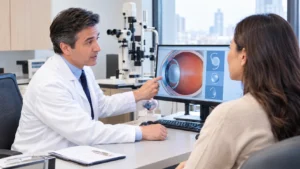
A consultation with a qualified specialist such as those at a trusted clinic like Leevision helps determine the right approach based on your anatomy, not trends.
Upper Blepharoplasty Procedure: Step-by-Step
Understanding the process removes a lot of uncertainty.
Pre-surgical planning
- Facial analysis
- Eyelid measurements
- Medical history review
- Discussion of goals and realistic outcomes
During the procedure
- Local anesthesia with sedation is commonly used
- Incisions are placed along the natural eyelid crease
- Excess skin and fat are removed or repositioned
- Incisions are closed with fine sutures
Duration:
Typically 45 minutes to 1.5 hours.
Technique matters:
A conservative, customized approach is key. Over-removal of skin or fat is what often leads to unnatural results.
Upper Blepharoplasty Recovery and Healing Timeline
One of the most searched concerns is upper blepharoplasty recovery and for good reason.
Immediate recovery (Days 1–3)
- Swelling and mild bruising
- Tightness around the eyes
- Cold compresses help reduce inflammation
Early healing (Week 1)
- Sutures are usually removed
- Most bruising begins to fade
- Patients can resume light activities
Ongoing recovery (Weeks 2–4)
- Swelling continues to decrease
- Makeup can usually be applied
- Results start becoming visible
Full healing (2–3 months)
- Final contour settles
- Scars fade significantly
Upper blepharoplasty recovery time:
While you may feel socially presentable within 7–10 days, complete healing takes several weeks.
Upper Blepharoplasty Cost: What Influences Pricing?
The upper blepharoplasty cost varies depending on multiple factors:
Key cost determinants:
- Surgeon’s experience and credentials
- Geographic location (e.g., upper blepharoplasty New York tends to be more expensive)
- Facility and anesthesia fees
- Complexity of the procedure
Average range:
- $2,500 to $7,000+ globally
- Premium markets may exceed this
Be cautious of unusually low pricing it can indicate compromised quality or safety standards.
Upper Blepharoplasty Near Me: Choosing the Right Clinic
Searching for upper blepharoplasty near me is only the first step. Choosing the right provider matters more than proximity.
What to look for:
- Board-certified surgeon
- Strong portfolio of natural results
- Transparent consultation process
- Emphasis on patient education
- Proper surgical facility accreditation
Red flags:
- Unrealistic promises
- Heavy reliance on edited before/after photos
- Lack of detailed explanation
Clinics with a focus on both ophthalmology and aesthetics like Leevision offer an added layer of safety and expertise when dealing with delicate eye structures.
Upper Blepharoplasty Gone Wrong: What Causes Poor Results?
Discussions around upper blepharoplasty gone wrong are important not to create fear, but to encourage informed decisions.
Common complications:
- Overcorrected eyelids (hollow or sunken appearance)
- Asymmetry
- Difficulty closing eyes fully
- Visible scarring
- Dry eye symptoms
Causes:
- Inexperienced surgeon
- Aggressive tissue removal
- Poor surgical planning
- Ignoring individual anatomy
Prevention:
- Choose a highly experienced specialist
- Avoid rushing into surgery
- Follow pre- and post-operative instructions carefully
Corrective procedures are possible, but they are more complex than the initial surgery.
Blepharoplasty Upper East Side vs Other Locations: Does Location Matter?
You’ll often come across searches like blepharoplasty upper East Side or upper blepharoplasty New York, known for premium aesthetic services.
What higher-end locations offer:
- Access to highly specialized surgeons
- Advanced surgical techniques
- Comprehensive aftercare
However, excellent results are not limited to one city. The surgeon’s skill and approach matter far more than the location itself.
Non-Surgical Alternatives: Are They Comparable?
Before committing to surgery, many explore alternatives:
Options include:
- Botox (for brow lifting effect)
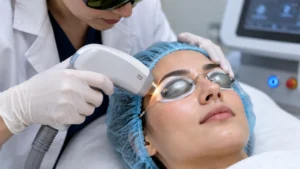
- Laser skin tightening
- RF-based skin tightening
- Dermal fillers (in selected cases)
Limitations:
These treatments can improve mild concerns, but they do not remove excess skin. For moderate to severe hooding, surgery remains the most effective solution.
Managing Expectations: What Celebrities Won’t Tell You
The biggest misconception driven by upper blepharoplasty celebrities is the idea of instant perfection.
Reality check:
- Swelling and bruising are part of the process
- Results take time to refine
- Outcomes depend on your unique anatomy
- No procedure can completely stop aging
What you can expect:
- A refreshed, more awake appearance
- Long-lasting improvement
- Subtle enhancement not transformation
Frequently Asked Questions (FAQs)
1. How long does upper blepharoplasty last?
Results typically last 7–15 years, depending on aging, skin quality, and lifestyle factors.
2. Is upper blepharoplasty painful?
Most patients report mild discomfort rather than pain. Local anesthesia ensures the procedure itself is comfortable.
3. When can I return to work after upper eyelid surgery?
Many people return within 7–10 days, once swelling and bruising have improved.
4. Can upper blepharoplasty fix dark circles?
Not directly. It targets excess skin on the upper eyelids, not pigmentation or under-eye hollows.
5. Will there be visible scars?
Incisions are placed within the natural eyelid crease, making scars nearly invisible once healed.
6. Is the procedure safe?
When performed by a qualified specialist, it is considered safe with a low complication rate.
7. What is the ideal age for upper blepharoplasty?
There’s no fixed age. Some people consider it in their 30s due to genetics, while others wait until their 50s or later.
8. Can men undergo upper blepharoplasty?
Absolutely. The approach is slightly different to maintain a masculine eyelid contour.
9. What causes eyelids to sag?
Aging, genetics, sun exposure, and collagen loss all contribute.
10. How do I know if I need a brow lift instead?
A consultation is essential. Sometimes drooping brows not eyelids are the primary issue.
Final Thoughts: Making a Smart, Informed Decision
The appeal of upper blepharoplasty celebrities lies in subtle transformation but real success comes from personalized care, not imitation.
If you’re considering this procedure, focus less on replicating a celebrity look and more on enhancing your natural features. A well-executed upper eyelid surgery should never make you look “done” just well-rested and more confident.
If you’re ready to explore your options, booking a consultation with a reputable clinic like Leevision can provide clarity. A professional evaluation ensures that the treatment plan aligns with your goals, anatomy, and long-term expectations—without guesswork.