



Lower Blepharoplasty Eyelid Surgery: A Complete Guide to Restoring a Youthful, Refreshed Look
The delicate skin beneath your eyes is often the first place to show signs of aging. Puffiness, under-eye bags, fine lines, and loose skin can make you look tired—even when you’re well-rested. For many patients, topical treatments and non-invasive procedures offer only temporary improvement.
That’s where lower blepharoplasty eyelid surgery comes in.
This specialized procedure focuses on rejuvenating the under-eye area by removing or repositioning fat, tightening skin, and smoothing contours. When performed by an experienced surgeon, the results can be subtle yet transformative helping you look naturally refreshed rather than “done.”
In this in-depth guide, we’ll walk through everything you need to know, including how the procedure works, candidacy, recovery expectations, risks, and how it compares to other eyelid treatments.
What Is Lower Blepharoplasty Eyelid Surgery?
Lower blepharoplasty is a surgical procedure designed to improve the appearance of the lower eyelids. It addresses common concerns such as:
- Under-eye bags
- Puffiness caused by fat herniation
- Loose or sagging skin
- Fine lines and wrinkles
- Dark circles caused by shadowing
Unlike non-surgical treatments that temporarily tighten or hydrate the skin, lower blepharoplasty targets the underlying structural causes of aging.
The procedure typically involves:
- Removing or redistributing fat deposits
- Tightening weakened muscles
- Trimming excess skin
- Improving overall contour of the under-eye area
The goal isn’t to change your appearance dramatically. Instead, it restores a smoother transition between the lower eyelid and cheek, creating a more rested, youthful look.
Why People Choose Lower Eyelid Surgery
Aging around the eyes is influenced by multiple factors:
- Natural collagen loss
- Genetics
- Lifestyle factors (sleep, stress, sun exposure)
- Fat displacement beneath the eyes
For some individuals, under-eye bags develop even in their 20s or 30s due to hereditary fat protrusion. Others notice gradual sagging over time.
Patients often seek lower blepharoplasty because:
- Makeup no longer conceals under-eye bags
- Fillers provide limited or temporary results
- They appear constantly tired or older than they feel
- Non-surgical treatments no longer deliver noticeable improvement
This procedure offers a longer-lasting solution compared to topical or injectable options.
Who Is a Good Candidate?
Not everyone with under-eye concerns needs surgery. A proper evaluation is essential.
You may be a suitable candidate if:
- You have persistent under-eye bags
- Skin laxity is moderate to severe
- You’re in good overall health
- You have realistic expectations
- Non-surgical treatments haven’t delivered desired results
Patients with mild hollowing but minimal fat protrusion may benefit more from dermal fillers instead.
A consultation at a reputable clinic like Leevision can help determine whether surgery or a combination of treatments is the best approach for your specific anatomy.
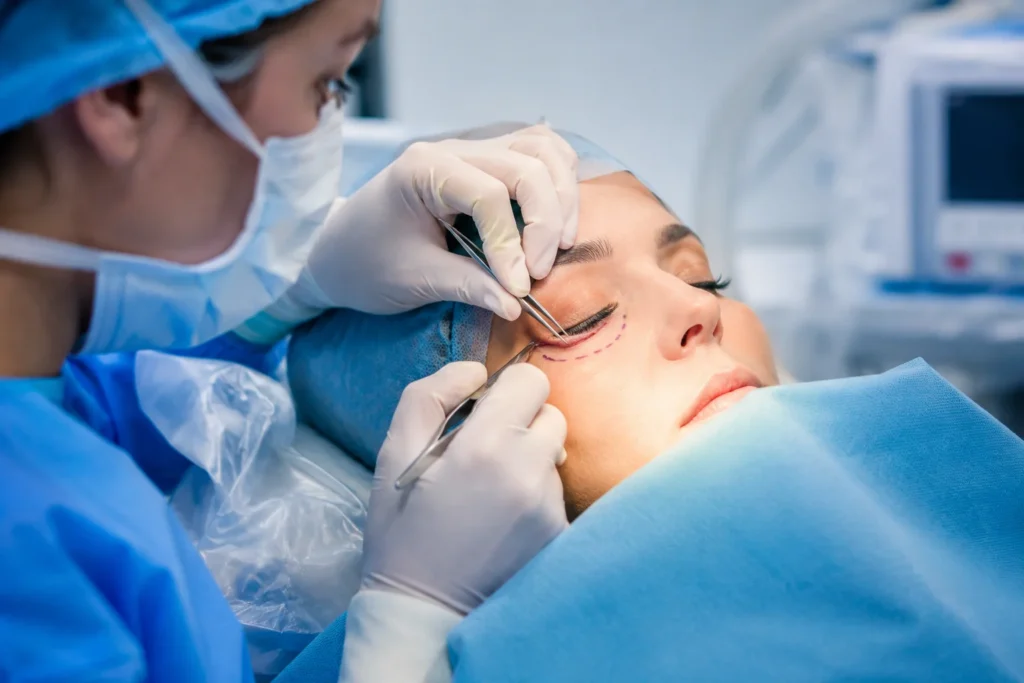
Surgical Techniques Used in Lower Blepharoplasty
There isn’t a one-size-fits-all approach. Surgeons choose techniques based on your anatomy and goals.
1. Transconjunctival Approach
- Incision made inside the eyelid
- No visible external scar
- Ideal for patients with fat bulges but minimal excess skin
2. Transcutaneous Approach
- Incision just below the lash line
- Allows removal of excess skin
- Suitable for patients with sagging skin and wrinkles
3. Fat Repositioning
Instead of removing fat, it’s redistributed to:
- Fill hollow areas
- Create smoother contours
- Reduce the “sunken” look
Modern techniques often favor fat preservation rather than aggressive removal, leading to more natural results.
Lower Eyelid Blepharoplasty Before and After
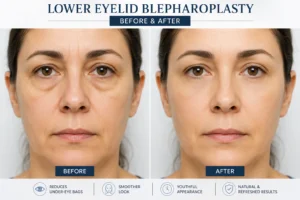
One of the most important aspects of decision-making is understanding realistic outcomes.
What Changes You Can Expect:
- Reduced puffiness
- Smoother under-eye contour
- Improved symmetry
- Softer, more youthful appearance
What It Won’t Do:
- Completely erase dark pigmentation (if caused by skin tone)
- Stop the aging process
- Change your natural eye shape dramatically
Before-and-after comparisons often show subtle but meaningful improvements. The best results are those that look natural and not surgically altered.
Recovery Timeline: What to Expect After Surgery
Recovery from lower blepharoplasty is generally manageable, but it requires patience.
First Week
- Swelling and bruising are common
- Mild discomfort or tightness
- Cold compresses help reduce swelling
Week 2
- Bruising begins to fade
- Stitches (if external) may be removed
- Most patients feel comfortable going out socially
Weeks 3–4
- Noticeable improvement in appearance
- Residual swelling continues to subside
Long-Term Healing
- Final results develop over 2–3 months
- Scars (if any) become barely visible
Following post-operative care instructions is crucial for optimal healing.
Risks and Complications to Consider
While lower blepharoplasty is generally safe, it’s still surgery.
Possible risks include:
- Infection
- Dry eyes
- Temporary vision changes
- Asymmetry
- Scarring (rare with skilled technique)
- Lower eyelid retraction (rare but serious)
Choosing an experienced, board-certified specialist significantly reduces these risks.
Lower Eyelid Blepharoplasty Near Me
Searching for lower eyelid blepharoplasty near me often brings up many clinics but expertise varies widely.
When selecting a provider, consider:
- Board certification and credentials
- Experience with eyelid procedures specifically
- Before-and-after gallery
- Patient reviews
- Consultation approach
A reputable clinic focuses on personalized treatment planning rather than a one-size-fits-all solution.
If you’re exploring advanced eye rejuvenation procedures, visiting a trusted provider like Leevision can give you a clearer understanding of your options and expected outcomes.
Upper Eyelid Blepharoplasty Cost
Although this article focuses on lower eyelids, many patients consider combining procedures for a balanced result.
The upper eyelid blepharoplasty cost depends on factors such as:
- Surgeon expertise
- Geographic location
- Facility fees
- Anesthesia costs
On average, upper eyelid surgery can range from:
- $3,000 to $7,000 (varies by region and complexity)
Combining upper and lower procedures may reduce overall cost compared to performing them separately.
Understanding Upper and Lower Eyelid Surgery Together
Combining procedures is common for patients experiencing:
- Drooping upper eyelids
- Under-eye bags
- Wrinkles around the eyes
While lower blepharoplasty addresses puffiness and sagging below the eyes, blepharoplasty of upper eyelid focuses on:
- Removing excess skin
- Improving field of vision (in some cases)
- Creating a more open eye appearance
Together, they provide comprehensive eye rejuvenation.
Upper Blepharoplasty Recovery and Healing
Recovery for upper eyelid surgery is similar but slightly faster.
Upper Blepharoplasty Recovery Time
- 7–10 days for initial healing
- 2–3 weeks for visible improvement
- Full healing within a few months
Patients often resume normal activities sooner compared to lower eyelid surgery.
Non-Surgical Alternatives: Are They Enough?
Not everyone is ready for surgery. Alternatives include:
- Dermal fillers
- Laser skin resurfacing
- Radiofrequency tightening
- PRP (platelet-rich plasma) treatments
However, these options:
- Provide temporary results
- May not address fat protrusion
- Require maintenance
For moderate to severe under-eye bags, surgery remains the most effective long-term solution.
Common Concerns: Upper Blepharoplasty Gone Wrong
One of the biggest fears patients have is unnatural results.
Poorly performed procedures can lead to:
- Hollowed eyes
- Over-tightened skin
- Asymmetry
- Difficulty closing eyes
This is why choosing an experienced specialist is critical. A conservative, anatomy-based approach ensures natural-looking outcomes.
Blepharoplasty Trends in Major Cities
In places like upper blepharoplasty New York or the Upper East Side, demand for subtle, natural enhancements is rising.
Patients today prefer:
- Minimal downtime
- Natural-looking results
- Combination treatments
This shift has influenced surgical techniques worldwide, emphasizing preservation rather than aggressive removal.
How Long Do Results Last?
Lower blepharoplasty offers long-lasting results.
- Fat removal/repositioning is typically permanent
- Skin tightening effects can last 10+ years
- Aging continues, but improvements remain noticeable
Maintaining results involves:
- Sun protection
- Healthy lifestyle habits
- Occasional non-surgical treatments
Preparing for Surgery
Preparation plays a key role in outcomes.
Before Surgery:
- Avoid blood-thinning medications
- Stop smoking
- Arrange transportation and recovery support
- Follow your surgeon’s instructions carefully
Proper preparation reduces complications and speeds up healing.
Psychological and Emotional Benefits
While blepharoplasty is a physical procedure, the emotional impact is often significant.
Patients frequently report:
- Increased confidence
- Looking more approachable
- Feeling aligned with how they feel internally
However, expectations should always remain realistic. The goal is enhancement—not perfection.
FAQs About Lower Blepharoplasty Eyelid Surgery
1. How long does lower blepharoplasty last?
Results can last 10–15 years or longer, depending on aging and lifestyle factors.
2. Is the procedure painful?
Most patients report mild discomfort rather than pain. Recovery is generally well tolerated.
3. Will there be visible scars?
In many cases, scars are hidden inside the eyelid or along natural creases, making them barely noticeable.
4. Can lower blepharoplasty fix dark circles?
It helps if dark circles are caused by shadowing from fat bulges. Pigmentation-related dark circles may need additional treatments.
5. How soon can I return to work?
Most patients return to work within 10–14 days, depending on healing.
6. Is it better than fillers?
For structural issues like fat protrusion, surgery provides more permanent results than fillers.
7. Can men undergo this procedure?
Yes. Lower blepharoplasty is increasingly popular among men seeking a more refreshed look.
8. What age is ideal for eyelid surgery?
There’s no fixed age. It depends on individual anatomy and concerns.
9. Can it be combined with laser treatments?
Yes. Many patients combine surgery with laser resurfacing for enhanced results.
10. How do I choose the right surgeon?
Look for experience, specialization in eyelid surgery, and natural-looking results in before-and-after photos.
Conclusion: Is Lower Blepharoplasty Right for You?
Lower blepharoplasty eyelid surgery is one of the most effective ways to address under-eye bags and restore a youthful, rested appearance. It’s not about changing how you look it’s about removing the signs of fatigue that don’t reflect how you feel.
If under-eye concerns are affecting your confidence or making you appear older than you are, a personalized consultation can help clarify your options.
A trusted clinic like Leevision offers advanced techniques and tailored treatment plans designed to achieve natural, balanced results. Taking that first step toward expert guidance can make all the difference in achieving outcomes that feel right for you.