








Multifocal Toric IOL: How It Works, Benefits, Risks & ReSTOR IOL
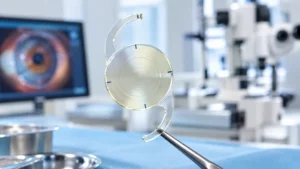
A multifocal toric IOL is an intraocular lens used during cataract surgery to address both presbyopia-related focusing problems and corneal astigmatism. Unlike a standard monofocal lens, a multifocal lens is designed to provide vision at more than one distance, while the toric design helps correct astigmatism. The right lens depends on the health of the eye, corneal measurements, visual needs, and realistic expectations.
For patients considering cataract surgery in Flushing, Queens, understanding the differences between these lens options can make the consultation much more productive.
What Is a Multifocal Toric IOL?
Multifocal Toric IOL vs. ReSTOR IOL
The multifocal component is designed to provide vision at multiple distances, such as distance and near. The toric component is designed to correct regular corneal astigmatism.
Astigmatism occurs when the cornea has an irregular curvature rather than being evenly rounded. A toric IOL has a specific optical design and orientation intended to compensate for this astigmatism.
According to the American Academy of Ophthalmology’s EyeWiki, toric IOLs are used during cataract surgery to reduce postoperative astigmatism, and multifocal or extended-depth-of-focus toric lenses may help reduce dependence on glasses for certain distances.
How Does a Multifocal Toric IOL Work?
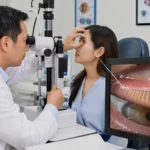
Before cataract surgery, the eye needs to be measured carefully. Your ophthalmologist evaluates factors such as corneal curvature, eye length, astigmatism, and the overall health of the eye.
The lens selection then considers two separate visual needs:
- Astigmatism correction: the toric portion addresses regular corneal astigmatism.
- Multiple-distance vision: the multifocal portion provides more than one focal point.
- Lens positioning: the toric component must be properly aligned because its orientation affects astigmatism correction.
This is why choosing a multifocal toric IOL is not simply a matter of selecting the lens with the most features. Accurate measurements and an appropriate preoperative evaluation are essential.
Who May Be a Candidate for a Multifocal Toric IOL?
A multifocal toric IOL may be considered for an adult undergoing cataract surgery who has a visually significant cataract, regular corneal astigmatism, and a desire to reduce dependence on glasses.
However, not everyone is a suitable candidate.
Your ophthalmologist may consider:
- The amount and type of astigmatism
- Corneal shape and health
- Retinal health
- Optic nerve health
- Existing eye conditions
- Previous eye surgery
- Pupil characteristics
- Tear-film and ocular-surface health
- Your expectations for near, intermediate, and distance vision
Patients with certain corneal, retinal, optic nerve, or other eye conditions may require a different lens strategy.
A detailed eye examination is therefore more important than choosing a premium lens based solely on its name.
What Are the Benefits of a Multifocal Toric IOL?
The potential advantage is that one lens can address more than one optical need during cataract surgery.
Potential benefits may include:
Correction of Astigmatism
The toric design is intended to reduce the effect of regular corneal astigmatism.
Multiple Focal Distances
The multifocal design can provide useful vision at more than one distance. This may reduce reliance on glasses for some activities.
A Personalized Cataract Surgery Plan
For an appropriate candidate, the lens can be selected according to the individual’s measurements, eye health, and visual priorities.
It is important to understand that these benefits do not mean that every patient will become completely glasses-free.
What Is a ReSTOR IOL?
ReSTOR IOL refers to the AcrySof ReSTOR family of multifocal intraocular lenses. FDA records identify AcrySof ReSTOR as a multifocal intraocular lens intended for use following cataractous lens removal in appropriate adult patients.
There have also been AcrySof IQ ReSTOR multifocal toric IOL models. FDA documentation specifically describes the AcrySof IQ ReSTOR +3.0 D Multifocal Toric IOL.
This distinction matters because ReSTOR is a specific lens product family, whereas “multifocal toric IOL” describes a broader category of lens technology.
Patients should therefore discuss the actual lens options available at their surgical center rather than assuming that every multifocal or toric lens is a ReSTOR lens.
Multifocal Toric IOL vs. ReSTOR IOL
These terms are related but do not mean exactly the same thing.
| Feature | Multifocal Toric IOL | ReSTOR IOL |
|---|---|---|
| Meaning | A category of IOL combining multifocal and toric functions | A specific multifocal IOL product family |
| Astigmatism correction | Yes, when designed as a toric model | Depends on the specific ReSTOR model |
| Multiple-distance vision | Designed for multiple focal points | Designed as a multifocal lens |
| Used during cataract surgery | Yes | Yes |
| Lens selection | Based on eye measurements and visual needs | Based on the specific model and patient suitability |
A ReSTOR toric model can therefore fall within the broader category of multifocal toric IOLs.
What Are the Limitations and Risks?
Premium multifocal lenses are not appropriate for everyone, and more optical features do not necessarily mean better vision for every patient.
Some patients may notice:
- Halos around lights
- Glare, particularly at night
- Reduced contrast in certain lighting conditions
- Difficulty adapting to multiple focal points
- Continued need for glasses for some activities
- Residual refractive error or astigmatism
Toric lenses also depend on accurate measurements and appropriate alignment. The FDA labeling for the AcrySof IQ ReSTOR toric lens emphasizes the importance of preoperative keratometry and biometry and appropriate lens-axis selection.
Cataract surgery itself also carries potential complications. Your ophthalmologist should discuss the risks that apply specifically to your eyes before surgery.
How Is the Right IOL Chosen?
There is no single premium IOL that is ideal for every cataract patient.
During a consultation, Dr. David H. Lee, MD, can evaluate your eye health, visual requirements, and measurements before discussing appropriate lens options.
Important questions include:
- Do you have significant astigmatism?
- How important is reducing dependence on glasses?
- Do you frequently drive at night?
- Do you have retinal or corneal conditions?
- How healthy is the ocular surface?
- What distances are most important for your daily activities?
- Are you comfortable with the possibility of halos or glare?
These details can be particularly important for patients who spend long hours using computers or digital devices, commute through New York City, or need dependable vision across multiple distances.
Why a Detailed Eye Examination Matters
A premium IOL should be selected only after evaluating the complete visual system.
At LeeVision in Flushing, Queens, a comprehensive assessment can help identify whether a multifocal, toric, multifocal toric, monofocal, or another lens approach is appropriate.
Dr. David H. Lee, MD, is a board-certified ophthalmologist with more than 23 years of experience in medical eye care. The goal of the consultation is not simply to select a lens but to understand the patient’s eyes, visual priorities, and long-term vision needs.
Frequently Asked Questions
Is a multifocal toric IOL good for astigmatism?
A multifocal toric IOL is specifically designed to combine multifocal vision correction with correction of regular corneal astigmatism. Whether it is appropriate depends on the type and amount of astigmatism and the overall health of the eye.
What is the difference between a toric IOL and a multifocal toric IOL?
A toric IOL primarily addresses astigmatism, while a multifocal toric IOL combines astigmatism correction with a multifocal optical design intended to provide vision at more than one distance.
Is ReSTOR a multifocal IOL?
Yes. FDA records classify AcrySof ReSTOR as a multifocal intraocular lens. Specific ReSTOR models have also been developed with toric functionality.
Can a ReSTOR IOL correct astigmatism?
Some ReSTOR models are toric and designed to address astigmatism. The specific lens model must be identified before determining whether it addresses a patient’s astigmatism.
Will I still need glasses after a multifocal toric IOL?
Some patients may still need glasses for particular activities even when a multifocal toric IOL is used. Visual results vary according to eye health, measurements, healing, and individual visual needs.
Are multifocal toric IOLs suitable for everyone?
No. Candidate selection depends on factors such as corneal health, retinal health, astigmatism, ocular-surface condition, previous eye procedures, and expectations.
How do I know which IOL is right for me?
The appropriate IOL is determined through a comprehensive eye examination, detailed measurements, discussion of your visual priorities, and assessment of the health of your eyes. A consultation with an ophthalmologist can help you understand the available options and their limitations.
Schedule a Cataract Lens Consultation in Flushing, Queens
Choosing an IOL is an individualized medical decision. If you are considering cataract surgery and want to understand whether a multifocal toric IOL or another lens option may be appropriate, LeeVision can evaluate your eyes and discuss the available choices.
LeeVision serves patients in Flushing, Queens, and New York City, with treatment planning based on individual eye measurements, ocular health, and visual goals.