




Eye Testing Machine: How Modern Eye Exams Detect Vision Problems Before Symptoms Become Serious
Many people assume an eye exam is only necessary when they notice blurry vision. In reality, modern eye testing machines can detect subtle changes in your eyes long before your vision noticeably worsens. These advanced diagnostic tools help identify common vision problems, monitor eye health, and even reveal early signs of serious eye diseases that may not cause symptoms in their initial stages.
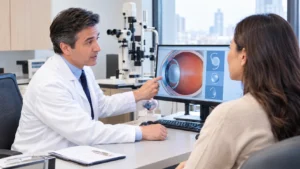
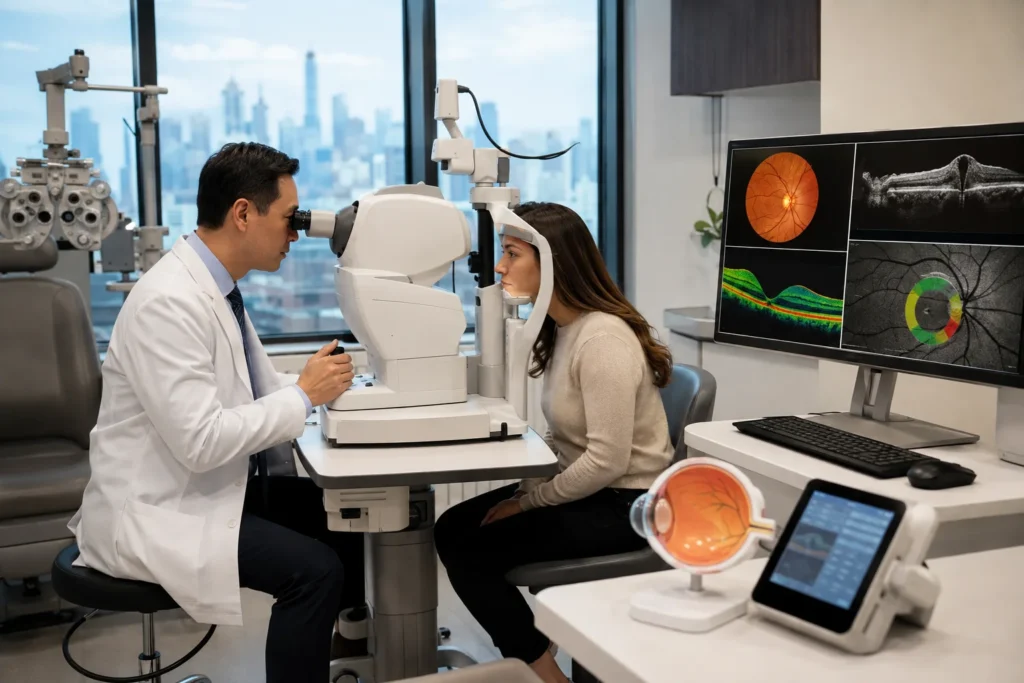
At LeeVision in Flushing, Queens, NYC, comprehensive eye examinations use advanced ophthalmic technology alongside a detailed clinical evaluation. While sophisticated eye testing machines provide highly accurate measurements, an experienced ophthalmologist interprets those results within the context of your overall eye health. This combination helps create a more complete picture of your vision and supports personalized treatment decisions.
Whether you are experiencing occasional blurry vision, sudden changes in eyesight, or simply want a routine eye checkup, understanding how these machines work can help you feel more confident about your eye care.
Why Eye Testing Machines Are More Important Than Ever
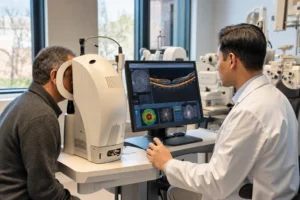
Today’s lifestyles place significant demands on our eyes. Hours spent using computers, smartphones, and tablets can contribute to digital eye strain, while aging naturally increases the risk of cataracts, glaucoma, and retinal diseases.
Modern eye testing machines do much more than determine whether you need glasses. They allow eye specialists to:
- Measure your vision with exceptional accuracy
- Detect early eye diseases before noticeable symptoms appear
- Monitor changes over time
- Evaluate the health of the retina, optic nerve, and cornea
- Assist in planning treatments such as LASIK or cataract surgery
Many patients are surprised to learn that serious eye conditions can develop silently. Diseases such as glaucoma may gradually damage vision without causing pain or obvious warning signs, making routine eye examinations especially valuable.
What Is an Eye Testing Machine?
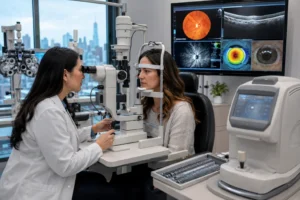
An eye testing machine refers to specialized diagnostic equipment used during a comprehensive eye examination. Different machines evaluate different parts of the eye, allowing ophthalmologists to assess both vision quality and eye health.
Rather than relying on a single device, modern eye exams often combine several advanced technologies to gather detailed information.
Auto Refractor
An auto refractor estimates your eyeglass prescription by measuring how light focuses inside the eye.
Patients often recognize this machine because it asks them to look at a small image while the device quickly takes measurements. Although it provides an excellent starting point, your ophthalmologist will refine the prescription during your vision test.
Digital Phoropter
The digital phoropter helps determine the clearest prescription for glasses or contact lenses.
During this test, patients answer familiar questions like:
- Which lens looks clearer?
- Option one or option two?
- Is this better or worse?
These responses help fine-tune your prescription for the sharpest possible vision.
Optical Coherence Tomography (OCT)
One of the most valuable technologies in modern ophthalmology, OCT creates highly detailed cross-sectional images of the retina and optic nerve.
This painless scan helps detect conditions such as:
- Glaucoma
- Macular degeneration
- Diabetic eye disease
- Retinal swelling
Many patients appreciate that OCT can identify microscopic changes long before noticeable vision loss develops.
Non-Contact Tonometer
This device measures eye pressure, an important part of glaucoma screening.
Instead of touching the eye, many modern tonometers use a gentle puff of air. While some patients find it surprising, the test lasts only a second and provides valuable information about your eye health.
What Causes Sudden Blurry Vision?
One of the most common concerns patients ask about during an eye examination is what causes sudden blurry vision. Although the answer varies, sudden vision changes should never be ignored because they can occasionally signal a medical emergency.
Possible causes include:
- Sudden changes in eyeglass prescription
- Severe dry eye syndrome
- Eye infections
- Corneal injuries
- Migraine-related visual disturbances
- Elevated eye pressure
- Retinal tears or retinal detachment
- Stroke affecting the visual pathways
Some causes are relatively minor and easily treated, while others require immediate medical attention. If blurry vision develops suddenly, especially when accompanied by flashes of light, floaters, severe eye pain, or partial vision loss, prompt evaluation by an ophthalmologist is strongly recommended.
What Causes Blurry Vision in One Eye?
Patients also frequently ask what causes blurry vision in one eye rather than both. When only one eye is affected, the problem often originates within that specific eye.
Common causes include:
Cataracts
As the eye’s natural lens becomes cloudy, vision may gradually become blurry in one eye before affecting the other.
Corneal Problems
Scratches, infections, swelling, or irregular corneal shape can reduce vision in only one eye.
Macular Disease
The macula is responsible for detailed central vision. Conditions affecting this area may make reading or recognizing faces more difficult in one eye.
Optic Nerve Disorders
Inflammation or damage to the optic nerve can interfere with signals traveling from the eye to the brain, resulting in blurred vision.
Retinal Conditions
Retinal tears, bleeding, or diabetic retinal disease may cause vision changes in one eye and often require timely diagnosis.
An advanced eye testing machine combined with a comprehensive examination allows ophthalmologists to identify which part of the eye is responsible for the blurred vision and recommend the most appropriate next steps.
How a Comprehensive Eye Exam Is Performed Using Modern Eye Testing Machines
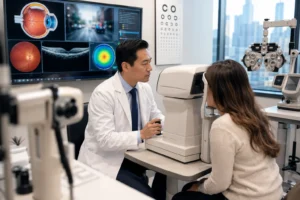
Many patients are surprised by how thorough a modern eye examination has become. Today’s eye testing machines allow ophthalmologists to evaluate not only how clearly you see but also the overall health of your eyes. A complete exam usually takes less than an hour, yet it can reveal conditions that might otherwise go unnoticed for years.
At LeeVision in Flushing, Queens, NYC, Dr. David H. Lee, MD, a Board-Certified Ophthalmologist, combines advanced diagnostic technology with a detailed clinical examination. Rather than relying on a single test, multiple diagnostic tools work together to provide a complete understanding of your vision and eye health.
Reviewing Your Vision and Medical History
Every comprehensive eye exam begins with a conversation rather than a machine.
Your ophthalmologist may ask questions such as:
- Have you noticed blurry vision recently?
- Is the blurry vision constant or intermittent?
- Does it affect one eye or both?
- Do you spend long hours on computers or mobile devices?
- Do you have diabetes, high blood pressure, or a family history of glaucoma?
These answers help determine which additional tests may be most important.
Measuring Visual Acuity
The familiar eye chart remains one of the most important parts of the examination.
This test measures:
- Distance vision
- Near vision
- Reading ability
- Overall visual sharpness
If your vision has changed, additional testing helps determine whether glasses alone will solve the problem or whether another eye condition is responsible.
Digital Prescription Testing
Modern digital refraction systems precisely measure how light enters your eyes.
They help diagnose:
- Nearsightedness (Myopia)
- Farsightedness (Hyperopia)
- Astigmatism
- Presbyopia (age-related difficulty focusing up close)
The results are then refined manually to ensure your prescription provides the clearest, most comfortable vision possible.
Corneal Mapping
Some eye testing machines create a highly detailed map of the front surface of your eye.
This test is especially valuable for patients considering:
- LASIK
- PRK
- SMILE vision correction
- Premium cataract surgery
Corneal mapping can also detect keratoconus and other irregularities that may not be visible during a routine examination.
Retinal Imaging
Modern retinal cameras capture high-resolution photographs of the back of your eye.
These images allow ophthalmologists to monitor changes over time and identify early signs of:
- Diabetic retinopathy
- Macular degeneration
- Retinal tears
- Hypertensive eye disease
Because these images can be compared year after year, even subtle changes are easier to detect.
When Blurry Vision Should Never Be Ignored
Although many cases of blurry vision result from a simple change in glasses prescription, some situations require immediate medical attention.
Seek urgent eye care if what causes sudden blurry vision is accompanied by:
- Sudden loss of vision
- Severe eye pain
- New flashes of light
- A sudden increase in floaters
- A curtain or shadow over part of your vision
- Double vision
- Eye injury
- Severe redness with blurred vision
These symptoms may indicate retinal detachment, acute glaucoma, optic nerve disorders, or other conditions that require prompt evaluation to help preserve vision.
Why Blurry Vision in One Eye Can Be More Concerning
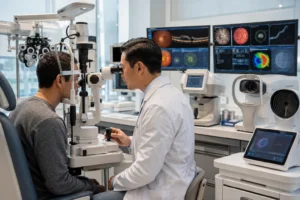
Many patients assume one blurry eye simply means they need new glasses. However, what causes blurry vision in one eye is not always related to refractive error.
An ophthalmologist considers several possibilities depending on how quickly the symptoms appeared.
| Symptom | Possible Cause | Should You Be Evaluated Quickly? |
|---|---|---|
| Gradual blurry vision | Cataract | Yes, routine evaluation |
| Sudden blurry vision | Retinal tear or retinal detachment | Yes, immediately |
| Distorted straight lines | Macular disease | Yes |
| Blurry vision with eye pain | Acute glaucoma or corneal problem | Emergency |
| Blurry vision after long screen use | Dry eye syndrome or digital eye strain | Yes, but usually not an emergency |
Because only a comprehensive examination can identify the exact cause, self-diagnosis is never recommended when vision changes unexpectedly.
Who Should Have Regular Eye Testing?
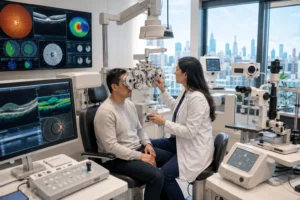
Routine eye exams are important even if your vision seems normal. Many eye diseases develop silently before symptoms become noticeable.
Comprehensive eye examinations are especially recommended for:
Adults Over Age 40
The risk of glaucoma, cataracts, and age-related macular degeneration increases with age. Early detection often allows treatment before significant vision loss occurs.
People with Diabetes
Diabetes can affect the tiny blood vessels inside the retina. Regular retinal examinations help identify diabetic eye disease before vision is permanently affected.
Office Workers and Heavy Screen Users
Patients in New York City often spend eight to ten hours each day using digital devices. Extended screen time may contribute to:
- Dry eyes
- Eye fatigue
- Blurry vision
- Headaches
- Difficulty focusing
Although digital eye strain usually does not cause permanent eye damage, it can significantly affect comfort and productivity.
Contact Lens Wearers
Regular examinations help ensure that contact lenses continue to fit properly while monitoring for corneal irritation, infections, or oxygen-related changes.
Common Questions Patients Ask During Eye Exams
During consultations, ophthalmologists frequently hear questions such as:
“Can an eye testing machine diagnose every eye disease?”
No. While modern machines provide incredibly detailed information, they are diagnostic tools—not replacements for clinical expertise. Your ophthalmologist combines machine results with a physical eye examination, medical history, and your symptoms to make an accurate diagnosis.
“Do these tests hurt?”
Most modern eye testing machines are completely painless. Many tests simply involve looking at a target while images or measurements are taken. Even tests that measure eye pressure are generally quick and well tolerated.
“If my vision seems fine, do I still need an eye exam?”
Yes. Several eye conditions, including glaucoma and diabetic retinopathy, may develop without noticeable symptoms in their early stages. Routine examinations help detect these problems before they begin affecting your vision.
Protecting Your Vision for the Future
Good vision is something most people don’t think about until it changes. However, regular eye examinations using a modern eye testing machine can identify problems long before they begin affecting daily life. Early diagnosis often allows treatment to start sooner, helping preserve vision and reduce the risk of permanent damage.
Whether you are experiencing what causes sudden blurry vision, wondering what causes blurry vision in one eye, or simply scheduling a routine eye exam, a comprehensive evaluation provides far more information than a basic vision screening.
At LeeVision in Flushing, Queens, NYC, Dr. David H. Lee, MD, combines advanced diagnostic technology with evidence-based ophthalmology to create individualized care plans based on each patient’s unique visual needs. The goal is not only to improve vision today but also to help protect long-term eye health.
Common Myths About Eye Testing Machines
Many patients have misconceptions about modern eye exams. Here are a few of the most common myths.
| Myth | Reality |
|---|---|
| An eye testing machine can replace an ophthalmologist. | No. The machine collects measurements, but diagnosis and treatment decisions require the expertise of a board-certified ophthalmologist. |
| I only need an eye exam if my vision is blurry. | Many serious eye diseases develop without noticeable symptoms. |
| Eye pressure is the only glaucoma test. | Glaucoma evaluation also includes optic nerve examination, OCT imaging, and visual field testing when needed. |
| A glasses prescription tells everything about eye health. | Your prescription is only one part of a comprehensive eye examination. |
| Blurry vision always means I need stronger glasses. | Blurry vision may be caused by cataracts, dry eye disease, retinal disorders, glaucoma, or neurological conditions. |
Frequently Asked Questions
What is an eye testing machine used for?
An eye testing machine helps ophthalmologists evaluate your vision, measure your glasses prescription, screen for eye diseases, and monitor changes in the retina, cornea, optic nerve, and other structures. Different machines perform different tests as part of a comprehensive eye examination.
Can an eye testing machine detect glaucoma?
Yes. Modern diagnostic equipment can measure eye pressure, evaluate the optic nerve, and perform OCT imaging to help detect glaucoma. However, glaucoma is diagnosed using the combination of several clinical findings—not a single machine.
What causes sudden blurry vision?
What causes sudden blurry vision depends on the underlying condition. Possible causes include dry eye syndrome, migraine, corneal injury, retinal detachment, elevated eye pressure, optic nerve disease, stroke, or sudden changes in the eye’s focusing ability. Sudden vision loss should always be evaluated promptly.
Is sudden blurry vision always an emergency?
Not always, but it should never be ignored. If sudden blurry vision occurs with eye pain, flashes of light, new floaters, partial vision loss, or severe redness, seek immediate ophthalmic care.
What causes blurry vision in one eye?
What causes blurry vision in one eye may include cataracts, corneal disease, macular degeneration, retinal disorders, optic nerve problems, or an updated prescription requirement. Only a comprehensive eye examination can determine the exact cause.
Can dry eyes cause blurry vision?
Yes. Dry eye disease commonly causes fluctuating blurry vision, burning, irritation, watery eyes, and discomfort, especially after prolonged computer or smartphone use.
Can diabetes affect blurry vision?
Yes. Diabetes may damage the retina and cause diabetic retinopathy, diabetic macular edema, or temporary vision fluctuations related to blood sugar changes. Routine diabetic eye exams are essential.
How often should adults have an eye examination?
Most healthy adults should have routine comprehensive eye examinations every one to two years. People with diabetes, glaucoma, cataracts, or other eye conditions may require more frequent visits based on their ophthalmologist’s recommendations.
Are eye testing machines safe?
Yes. Modern ophthalmic diagnostic equipment is non-invasive, painless, and designed to safely evaluate vision and eye health. Most tests take only a few minutes.
Can an eye testing machine detect cataracts?
Yes. While cataracts are diagnosed through a clinical examination, advanced imaging and slit-lamp evaluation help determine the severity and whether surgery may be beneficial.
Can blurry vision come from too much screen time?
Yes. Digital eye strain may cause temporary blurry vision, dry eyes, headaches, and difficulty focusing after extended computer or smartphone use. Taking regular visual breaks and maintaining good eye lubrication can help reduce symptoms.
When should I see an ophthalmologist instead of waiting?
Schedule an eye examination as soon as possible if you experience:
- Sudden blurry vision
- Blurry vision in one eye
- Persistent eye pain
- Flashes or floaters
- Double vision
- Loss of peripheral vision
- Eye injury
- Rapid changes in your eyesight
Early evaluation often leads to earlier treatment and better long-term outcomes