


Cataract Surgeon Near Me: How to Choose the Right Eye Specialist in Flushing, Queens
If you are searching for a cataract surgeon near me, you may already be noticing that your vision is not as clear as it once was. Blurry vision, faded colors, glare from headlights, difficulty reading, or trouble seeing clearly at night can all occur with cataracts. However, these symptoms can also be caused by other eye conditions, which is why a detailed eye examination matters before deciding on treatment.
For patients in Flushing, Queens, New York City, finding the right ophthalmologist is not simply about choosing the closest office. Cataract surgery is a personalized procedure, and the decision should consider your eye health, visual needs, existing conditions, lens options, and overall surgical safety.
At LeeVision, Dr. David H. Lee, MD, a board-certified ophthalmologist, approaches cataract care with this broader picture in mind.
What Is a Cataract and Where Does It Develop?
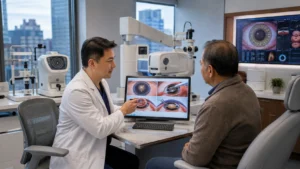
A cataract develops in the natural lens inside the eye. This lens normally helps focus light onto the retina, which is the light-sensitive tissue at the back of the eye.
As proteins within the lens change over time, the lens can gradually become cloudy. Instead of light passing clearly through the lens, it becomes scattered, which can make vision appear hazy or less sharp.
Common Cataract Symptoms
Early cataracts may cause few noticeable symptoms. As the cataract progresses, patients may experience:
- Blurry or cloudy vision
- Difficulty seeing at night
- Increased sensitivity to bright lights
- Glare or halos around headlights
- Colors appearing faded
- Difficulty reading even with glasses
- Frequent changes in eyeglass prescriptions
- Double vision in some cases
Not every change in vision means that you have a cataract. Dry eye disease, glaucoma, retinal conditions, corneal problems, and refractive errors can produce overlapping symptoms. A comprehensive eye examination helps determine what is actually affecting your vision.
When Should You See a Cataract Surgeon Near Me?
One common misconception is that a cataract must become “fully mature” before surgery. In modern ophthalmology, surgery is generally considered when the cataract begins interfering with activities that matter to you, such as reading, driving, working, using digital devices, or seeing clearly in everyday situations.
You usually do not need to rush into surgery simply because a cataract has been diagnosed. The timing should be based on your symptoms, examination findings, lifestyle, and discussion with your ophthalmologist.
Why a Comprehensive Evaluation Matters
A cataract may not be the only reason your vision has changed. Before recommending surgery, an ophthalmologist may evaluate the:
- Cornea
- Natural lens
- Retina
- Optic nerve
- Eye pressure
- Tear film and ocular surface
- Overall eye health
This is particularly important when a patient also has diabetes, glaucoma, dry eye disease, previous eye surgery, or another condition that could influence visual results.
What Happens During Cataract Surgery?
Cataract surgery involves removing the cloudy natural lens and replacing it with an artificial intraocular lens (IOL). The IOL remains inside the eye and becomes the new focusing lens.
Modern cataract surgery is typically performed with numbing medication, and the patient is generally awake but comfortable. The cloudy lens is carefully removed through a very small surgical opening, followed by placement of the selected IOL.
The exact surgical approach depends on the patient’s anatomy, cataract characteristics, surgeon’s assessment, and available technology.
What Is the Cataract Surgery Procedure Laser?
Patients often search specifically for cataract surgery procedure laser because they have heard about laser-assisted cataract surgery.
A femtosecond laser can be used for certain steps of cataract surgery, including creating an anterior capsulotomy—the opening made in the capsule surrounding the natural lens. FDA records recognize ophthalmic femtosecond lasers for specific applications during cataract surgery.
However, “laser cataract surgery” does not mean that the entire cataract is simply removed by a laser. Cataract surgery remains a surgical procedure involving removal of the cloudy lens and placement of an IOL.
The right technology should be selected based on the individual eye rather than marketing terminology.
What If You Also Have Dry Eyes?
Another important issue is the health of the eye’s surface. Patients searching for a dry eye specialist near me may have symptoms such as burning, fluctuating vision, irritation, redness, or a gritty sensation.
Dry eye can sometimes make vision appear blurry even when the cataract itself is not the only problem. For this reason, evaluating and treating significant ocular-surface problems before cataract surgery can be an important part of personalized planning.
Cataract Surgery Is Not One-Size-Fits-All
The goal is not simply to remove a cataract. A careful ophthalmologist considers what the patient wants from vision after surgery, what the eye can realistically achieve, and which IOL option is appropriate.
Some patients primarily want excellent distance vision. Others want to reduce their dependence on glasses for multiple distances. Existing astigmatism, corneal health, retinal disease, glaucoma, dry eye, and other factors may influence the available choices.
A detailed consultation allows these factors to be discussed before a surgical decision is made.
Questions Patients Commonly Ask
Do I need cataract surgery as soon as I am diagnosed?
Not necessarily. If the cataract is mild and does not significantly interfere with daily activities, your ophthalmologist may recommend monitoring it rather than immediate surgery.
Is laser cataract surgery completely different from regular cataract surgery?
No. Laser technology can assist with specific surgical steps, but cataract surgery still involves removing the cloudy natural lens and replacing it with an IOL.
Can dry eye affect cataract surgery planning?
Yes. The tear film and ocular surface can affect visual quality and measurements used during surgical planning, so significant dry eye should be evaluated appropriately.
How do I find the right cataract surgeon near me?
Look beyond proximity. Consider the surgeon’s ophthalmology credentials, experience with cataract care, diagnostic evaluation, explanation of risks and alternatives, IOL planning, and willingness to answer your questions clearly.
For patients in Flushing and surrounding Queens communities, an individualized evaluation at an established ophthalmology practice can help determine whether cataract surgery is actually the right next step.
Choosing the Right Intraocular Lens After Cataract Surgery
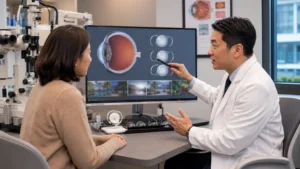
One of the most important decisions in cataract surgery is choosing the appropriate intraocular lens (IOL). The IOL replaces the cloudy natural lens removed during surgery, but there is no single lens that is ideal for every patient.
Your ophthalmologist considers your eye measurements, corneal health, retinal and optic nerve condition, existing astigmatism, lifestyle, and how much you would like to depend on glasses.
Monofocal Lenses
A monofocal IOL is designed to provide clear vision at one primary distance, often distance vision. Patients may still need glasses for reading or other close-up activities.
This can be a straightforward option for someone who values dependable vision at a particular distance and does not mind wearing reading glasses.
Astigmatism-Correcting Lenses
Patients with significant corneal astigmatism may be candidates for a toric IOL. These lenses are designed to reduce the effect of astigmatism and may improve uncorrected vision after cataract surgery.
The important point is that lens selection depends on accurate measurements. If the ocular surface is significantly dry, treating the dry eye before measurements may help improve the reliability of surgical planning.
Presbyopia-Correcting Lens Options
Some advanced IOL designs are intended to provide useful vision at more than one distance and potentially reduce dependence on glasses.
However, these lenses are not automatically the best choice for everyone. Certain patients may notice visual phenomena such as glare or halos, and conditions involving the cornea, retina, optic nerve, or ocular surface can influence whether an advanced lens is appropriate.
A good cataract consultation should therefore focus on which lens fits your eyes and visual priorities, rather than simply choosing the most advanced-sounding option.
Laser-Assisted Cataract Surgery: What Patients Should Know
When patients search for cataract surgery procedure laser, they are often trying to understand whether laser surgery is safer or better than conventional cataract surgery.
Laser-assisted cataract surgery uses a femtosecond laser for selected steps of the procedure. Other parts of cataract removal still require surgical instruments and careful management by the ophthalmologist.
The laser can be useful in appropriate cases, but technology alone does not determine the quality of cataract surgery. Patient selection, accurate measurements, surgical planning, surgeon experience, and postoperative care remain important.
Does Every Cataract Patient Need Laser Surgery?
No.
The appropriate approach depends on the patient’s individual eye and surgical plan. A consultation should explain what technology is being recommended, which step it will assist with, and whether that technology offers a meaningful benefit for that particular patient.
This is one reason it is better to ask an ophthalmologist why a particular technique is recommended rather than assuming that the newest technology is automatically the best choice.
Dry Eye and Cataract Surgery
Patients who search for a dry eye specialist near me may not realize how closely the ocular surface can relate to cataract planning.
Dry eye disease can cause burning, irritation, fluctuating vision, redness, and intermittent blurriness. These symptoms may become more noticeable around the time of cataract surgery.
Why Dry Eye Should Be Addressed Before Surgery
The tear film contributes to the quality of the eye’s optical surface. Significant dryness can also interfere with measurements used for IOL calculations.
For this reason, an ophthalmologist may recommend treating dry eye before finalizing cataract measurements. Treatment can vary depending on the cause and severity and may include artificial tears, eyelid care, environmental changes, prescription therapies, or other approaches.
This is especially relevant for patients who spend many hours looking at computers and phones. Long periods of screen use can reduce blinking and contribute to ocular-surface symptoms.
What Is Recovery Like After Cataract Surgery?
Many patients are surprised by how quickly they can resume some normal activities, but recovery is not identical for everyone.
Mild irritation, light sensitivity, or temporary blurry vision can occur during the early recovery period. Your ophthalmologist will provide instructions regarding eye drops, follow-up appointments, protecting the eye, and activities to avoid.
| Recovery Stage | What You May Notice |
|---|---|
| First day | Blurry vision, mild irritation, light sensitivity |
| First few days | Vision generally begins settling, but fluctuations can occur |
| Following weeks | Vision and comfort continue to stabilize |
| Longer-term | Final visual outcome is assessed as healing progresses |
Healing continues after the first few days. The fact that vision looks better quickly does not mean the eye has completely finished healing.
Cataract Surgery Risks and Realistic Expectations
Cataract surgery is commonly performed and generally has a strong safety record, but it is still eye surgery and does carry risks.
Potential complications can include infection, inflammation, changes in eye pressure, retinal problems, swelling, bleeding, or other surgical complications. Existing conditions such as glaucoma, retinal disease, corneal disease, or diabetic eye disease can also influence the expected visual outcome.
The goal of a careful consultation is not to promise perfect vision. It is to determine what improvement is realistically achievable and what limitations may remain.
When Should You Contact Your Eye Doctor After Surgery?
After cataract surgery, increasing pain, significant redness, sudden vision loss, new flashes, or a sudden increase in floaters should not simply be considered part of normal recovery.
These symptoms require prompt medical evaluation because some postoperative complications need treatment quickly.
What If Vision Becomes Cloudy Again Later?
Some patients develop posterior capsule opacification (PCO) after cataract surgery. Patients sometimes call this a “secondary cataract,” although it is not a new cataract growing back.
PCO occurs when the capsule behind the implanted lens becomes cloudy. It can occur months or years after surgery and can usually be treated with a YAG laser procedure.
This is an important distinction because patients may assume that a cloudy lens has returned. The implanted IOL itself has not necessarily become a cataract.
Finding a Cataract Surgeon Near Me in Flushing, Queens
Choosing a cataract surgeon near me should involve more than distance from your home.
Patients in Flushing, Queens, and throughout New York City may have very different visual demands. Someone who drives frequently at night may have different priorities from someone whose main concern is reading, computer work, or seeing faces clearly across a room.
During a consultation, consider asking:
- What is causing my current vision problem?
- Is cataract surgery necessary now?
- What type of IOL is appropriate for my eyes?
- Do I have astigmatism?
- Should my dry eye be treated before measurements?
- Is laser-assisted surgery appropriate for me?
- What visual limitations should I realistically expect?
- What are the risks in my particular case?
- What will recovery involve?
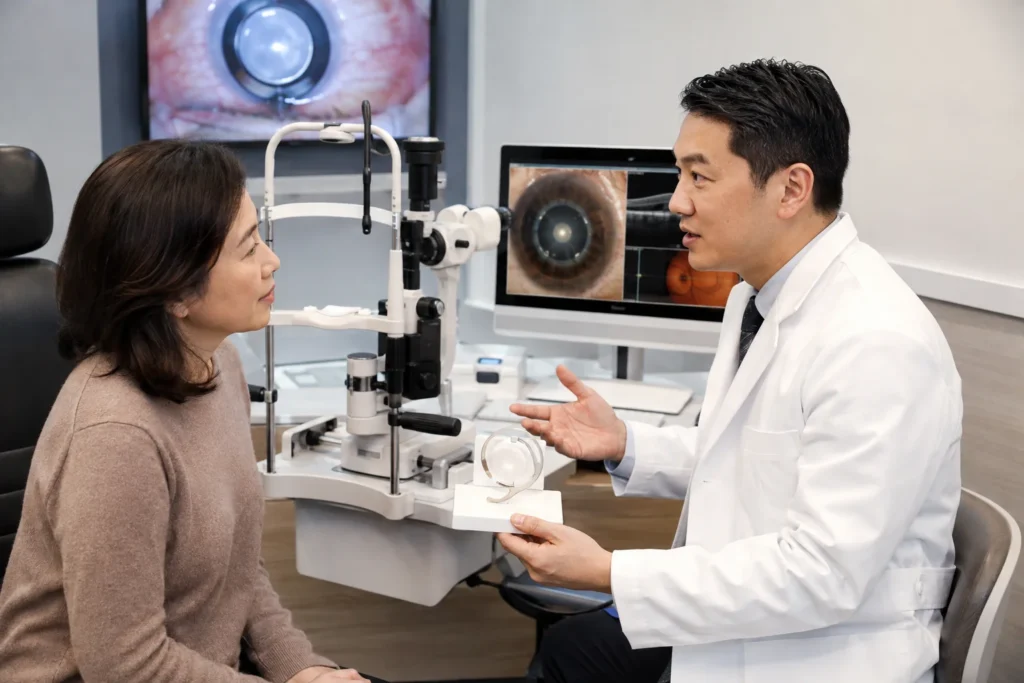
At LeeVision, Dr. David H. Lee, MD, a board-certified ophthalmologist, can evaluate these factors as part of a comprehensive, individualized approach to cataract and overall eye care. The purpose of the evaluation is to help patients understand their options clearly so that treatment decisions are based on their actual eye health and visual needs.
Making an Informed Decision About Cataract Surgery
Searching for a cataract surgeon near me is often the beginning of a more important question: Is cataract surgery actually right for my eyes, and what should I expect from it?
The answer cannot be determined from a search result alone. A proper evaluation looks at the cataract, cornea, retina, optic nerve, eye pressure, ocular surface, and your day-to-day visual needs.
For patients in Flushing, Queens, NYC, this personalized approach is particularly useful because visual demands vary widely. A person who drives at night may have different priorities from someone who spends most of the day reading, working on a computer, or using a smartphone.
At LeeVision, Dr. David H. Lee, MD, a board-certified ophthalmologist, can evaluate these factors and explain whether observation, cataract surgery, or treatment of another eye condition is the most appropriate next step.
Questions to Ask Before Choosing a Cataract Surgeon Near Me
When comparing a cataract surgeon near me, do not focus only on distance or online ratings. A meaningful consultation should help you understand your diagnosis and choices.
Consider asking:
- What is causing my current vision problem?
- How advanced is my cataract?
- Could dry eye be contributing to my blurry vision?
- Which IOL options are appropriate for my eyes?
- Do I have astigmatism?
- Is laser-assisted cataract surgery appropriate for me?
- What are the limitations of my expected visual outcome?
- What risks are particularly relevant to my eyes?
- How long should I expect recovery to take?
Cataract surgery is highly established, but it remains surgery. The safest decision is an informed one based on your individual examination rather than a promise of perfect vision.
Cataract Surgeon Near Me: Why a Complete Eye Evaluation Matters
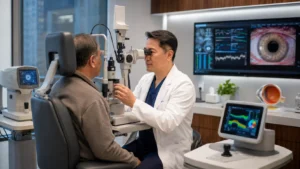
A cataract may be responsible for reduced vision, but it is not always the only explanation.
Glaucoma, diabetic retinal disease, age-related macular degeneration, corneal disorders, dry eye disease, and other conditions can influence vision. Some of these conditions may continue to affect sight even after a cataract has been removed.
That is why choosing a cataract surgeon near me should also mean choosing an ophthalmologist who evaluates the overall health of the eye.
Cataract Surgery Should Have Realistic Goals
The goal of cataract surgery is to remove the cloudy natural lens and replace it with an artificial intraocular lens. Many people experience improved vision afterward, but the final result depends on the health of the entire visual system.
A healthy retina and optic nerve, for example, can provide a different visual outlook than an eye affected by advanced retinal or optic-nerve disease.
Cataract Surgery Procedure Laser: What Should You Ask?
If you are searching cataract surgery procedure laser, ask exactly what the laser will do during the operation.
Laser-assisted cataract surgery can be used for selected steps, but cataract surgery is not simply a procedure in which a laser “melts away” the cataract. The cloudy lens still has to be removed and an artificial lens placed inside the eye.
The important question is not whether a procedure sounds technologically advanced. The important question is whether the technique is appropriate for your particular anatomy, cataract, visual goals, and surgical plan.
Dry Eye Specialist Near Me and Cataract Planning
Someone searching for a dry eye specialist near me may already know that burning, irritation, fluctuating vision, or a gritty feeling can interfere with daily life.
Dry eye can also make vision fluctuate. If the ocular surface is unstable, an ophthalmologist may need to address it before relying on certain eye measurements for cataract planning.
This does not mean every cataract patient needs extensive dry-eye treatment. It means the ocular surface should be considered when symptoms or examination findings suggest that dryness may be affecting visual quality or measurements.
Cataract Surgeon Near Me: What Happens After Surgery?
Recovery is usually progressive rather than instantaneous. Some patients notice improved vision quickly, while others experience temporary blur, light sensitivity, irritation, or fluctuations as the eye heals.
Your surgeon will provide individualized postoperative instructions and follow-up appointments. NEI advises patients to contact their eye doctor promptly for significant pain, vision loss, marked redness, flashes, or a sudden increase in floaters after surgery.
Can a Cataract Come Back?
The original cataract does not grow back after the cloudy natural lens has been removed.
However, some patients later develop posterior capsule opacification (PCO), sometimes called a secondary cataract. This involves clouding of the capsule behind the implanted lens and can often be treated with a YAG laser procedure.
Frequently Asked Questions About Cataract Surgery
How do I find a cataract surgeon near me?
Start by looking for an ophthalmologist who provides a comprehensive evaluation rather than focusing only on the nearest location. When searching for a cataract surgeon near me, consider board certification, cataract experience, diagnostic evaluation, IOL planning, discussion of risks, and postoperative care.
What should I expect from a cataract surgeon near me consultation?
A cataract surgeon near me consultation should determine whether the cataract is actually responsible for your vision problems and whether surgery is appropriate at this stage. Your ophthalmologist may assess the lens, cornea, retina, optic nerve, eye pressure, and ocular surface before discussing treatment.
Do I need surgery immediately after finding a cataract?
No. A cataract does not automatically require immediate surgery. Surgery is generally considered when vision loss begins interfering with activities such as reading, driving, or other daily tasks. NEI specifically notes that most patients do not need to rush into surgery.
Is cataract surgery painful?
Cataract surgery is generally performed with numbing medication, and patients are commonly awake during the procedure. You may notice lights or movement, but the surgical area is anesthetized.
Is laser cataract surgery better than regular cataract surgery?
Not automatically. Cataract surgery procedure laser technology can assist with specific surgical steps, but whether it is beneficial depends on the individual patient and surgical plan. Technology should support good clinical decision-making rather than replace it.
Is cataract surgery procedure laser completely performed by a laser?
No. The phrase cataract surgery procedure laser can be misleading. Laser technology may assist with selected parts of surgery, while the ophthalmologist still performs the surgical procedure, removes the cataract, and places the IOL.
What type of lens is used after cataract surgery?
The cloudy natural lens is replaced with an artificial intraocular lens, or IOL. Depending on your eye health and visual goals, options may include monofocal, astigmatism-correcting, or other advanced lens designs.
Can dry eye affect cataract surgery?
Yes. Dry eye can cause fluctuating or blurry vision and may influence the ocular surface used for surgical planning. If you are searching for a dry eye specialist near me, discussing your symptoms with an ophthalmologist can help determine whether dry eye needs attention before cataract measurements or surgery.
Should I see a dry eye specialist near me before cataract surgery?
If you have persistent burning, irritation, fluctuating vision, redness, or a gritty sensation, an ocular-surface evaluation may be useful. A dry eye specialist near me can assess whether dry eye is contributing to your symptoms and whether treatment should be started before cataract surgery planning.
Can dry eye remain after cataract surgery?
Some patients experience dryness or irritation during recovery. Existing dry eye can also remain an issue after surgery. Your postoperative eye-care plan should therefore take the condition of the ocular surface into account.
Can I still need glasses after cataract surgery?
Yes. Cataract surgery does not guarantee complete freedom from glasses. Depending on the IOL selected and the eye’s health, you may still need glasses for certain distances or activities.
Can cataract surgery improve night vision?
If a cataract is causing glare, reduced contrast, or difficulty seeing at night, removing it may improve vision. However, night-vision quality can also be affected by other eye conditions and by individual optical factors, so improvement cannot be guaranteed.
What are the risks of cataract surgery?
Potential complications include infection, bleeding, inflammation, changes in eye pressure, retinal problems, swelling, double vision, and other surgical complications. Some risks are more relevant when a patient has conditions such as glaucoma, retinal disease, corneal disease, or diabetic eye disease.
How long does cataract surgery recovery take?
Early recovery often begins within days, but the eye continues healing afterward. NEI notes that many people are completely healed around eight weeks, although individual recovery varies.
What symptoms after cataract surgery need urgent attention?
Severe or persistent pain, sudden vision loss, significant redness, flashes of light, or a sudden increase in floaters should be reported promptly to your eye doctor. These symptoms should not simply be assumed to be normal healing.
Can cataracts affect both eyes?
Yes. Cataracts can develop in one or both eyes. If both eyes require surgery, the procedures are generally performed separately rather than treating both eyes at exactly the same time.
Can a cataract spread from one eye to the other?
No. A cataract in one eye does not spread to the other eye. However, cataracts can independently develop in both eyes.
What makes LeeVision different when searching for a cataract surgeon near me?
The most useful part of a cataract consultation is understanding your individual eye health, visual needs, lens choices, risks, and realistic expectations. LeeVision in Flushing, Queens, provides ophthalmic evaluation and personalized treatment planning with Dr. David H. Lee, MD, a board-certified ophthalmologist.