






How to Fix Tired Eyes: Practical Ways to Reduce Eye Strain and Improve Vision
Tired eyes are common, especially when much of the day is spent looking at computers, phones, tablets, or other close-up tasks. You may notice burning, dryness, blurry vision, headaches, difficulty focusing, or simply a heavy, tired feeling around the eyes.
The good news is that tired eyes are often related to eye strain, dry eye, prolonged near work, or an outdated vision prescription rather than permanent damage. However, persistent symptoms should not automatically be blamed on screen time. A comprehensive eye examination can help identify whether the problem is simple eye fatigue or something that needs treatment.
For people searching how to fix tired eyes or how to fix tired looking eyes, the first step is understanding what is actually causing the symptoms.
What Causes Tired Eyes?

“Tired eyes” is not one specific medical condition. It is a description of symptoms that can have several causes.
Digital Eye Strain
Long periods of computer or smartphone use can contribute to digital eye strain. When concentrating on a screen, people tend to blink less often, which can allow the tear film on the surface of the eye to become unstable. This may lead to dryness, burning, fluctuating vision, and discomfort.
This is particularly relevant for people with screen-heavy workdays in Flushing, Queens, NYC, where long hours at a computer, commuting, and smartphone use can all add to the amount of close-up visual work.
Dry Eyes
Dry eye is another common reason eyes may feel tired or look irritated. It occurs when the eyes do not produce enough tears or when tears evaporate too quickly or do not function properly.
Typical symptoms include:
- Burning or stinging
- Scratchy sensation
- Redness
- Light sensitivity
- Intermittent blurry vision
- Eye fatigue
Dry eye can also make vision fluctuate during the day, particularly after prolonged screen use.
An Outdated or Uncorrected Prescription
Sometimes the problem is not the screen itself. An uncorrected refractive error can make the eyes work harder to maintain clear vision.
Nearsightedness, farsightedness, astigmatism, and presbyopia can all contribute to blurry vision or eye strain. Squinting, headaches, difficulty focusing, and tired eyes may be clues that your prescription needs to be evaluated.
How to Fix Tired Eyes at Home
If your symptoms are mild and mainly occur after reading or screen use, several simple changes may help.
Follow the 20-20-20 Approach
During prolonged screen work, take regular visual breaks. A commonly recommended approach is to look away from the screen approximately every 20 minutes and focus on something farther away for about 20 seconds.
The purpose is not to “strengthen” the eyes. Instead, breaks reduce continuous near-focus demand and give you an opportunity to blink normally and relax your visual system.
Blink More Deliberately
People often blink less while concentrating on digital screens. Making a conscious effort to blink fully and regularly can help maintain the tear film over the eye.
If dryness is a major part of your symptoms, an eye doctor can determine whether artificial tears or another dry-eye treatment is appropriate.
Improve Your Screen Setup
Your workspace can influence how your eyes feel by the end of the day.
Consider:
- Reducing glare on the screen
- Keeping the screen at a comfortable viewing distance
- Adjusting text size so you are not constantly squinting
- Avoiding direct airflow from fans or air conditioners toward your eyes
- Taking regular breaks from continuous near work
These changes may be particularly useful for office workers who spend many consecutive hours at a computer.
Give Your Eyes Adequate Rest
Fatigue throughout the body can make visual discomfort more noticeable. Getting adequate sleep and addressing environmental factors such as dry air may help reduce symptoms.
However, rest alone will not correct an underlying refractive error, cataract, glaucoma, retinal disease, or other eye condition. That is why persistent symptoms deserve proper evaluation rather than repeated self-treatment.
How to Fix Tired Looking Eyes
Sometimes people mean something slightly different when they search how to fix tired looking eyes.
The eyes may look:
- Puffy
- Red
- Dry
- Irritated
- Heavy around the eyelids
- Less bright than usual
These changes can accompany lack of sleep, allergies, dry eye, prolonged screen exposure, or irritation. Treating the underlying cause is more useful than simply trying to make the eyes appear less tired.
For example, if dryness is causing redness and discomfort, addressing the ocular surface may improve both comfort and appearance. If allergies are responsible, allergy management may be more appropriate than repeatedly using cosmetic eye products.
Can You Improve Vision Without Glasses?

This is one of the most common questions behind searches for how to improve vision without glasses.
The answer depends on why your vision is blurry.
If blurry vision is caused by a refractive error such as myopia, hyperopia, astigmatism, or presbyopia, exercises or eye vitamins generally cannot reshape the eye enough to eliminate the underlying prescription. Corrective options may include glasses, contact lenses, or—in appropriately selected adults—refractive surgery.
Lifestyle habits can support overall eye health, but they should not be presented as a substitute for medically appropriate vision correction.
What About LASIK?
For some adults who want to reduce dependence on glasses or contact lenses, refractive surgery may be an option. But LASIK is not appropriate for everyone.
A proper evaluation considers factors such as prescription stability, corneal thickness and shape, tear production, eye health, and realistic expectations. FDA guidance also emphasizes that refractive surgery can have limitations and risks, including dry eye, glare, halos, and the possibility that glasses may still be needed.
The goal should never be simply to avoid glasses at any cost. The goal is to choose the safest and most appropriate way to achieve useful, comfortable vision.
When Should Tired Eyes Be Checked by an Eye Doctor?
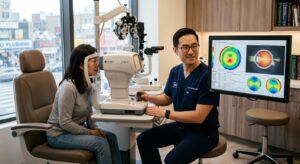
![Ophthalmologist evaluating a patient with tired eyes in Flushing Queens NYC]](https://www.leevision.com/wp-content/uploads/2026/08/ChatGPT-Image-Aug-17-2026-12_46_14-AM-300x200.webp "ChatGPT Image Aug 17 2026 12 46 14 AM")
Occasional eye fatigue after a long day is usually different from persistent or worsening visual symptoms.
Consider scheduling an eye examination if you experience:
- Ongoing blurry vision
- Frequent headaches or eye strain
- Difficulty focusing even after rest
- Vision that remains unclear with your current glasses or contacts
- Persistent redness, dryness, or irritation
- Increasing difficulty reading or seeing at night
- New changes in vision
A comprehensive eye examination can evaluate your prescription as well as the health of the cornea, lens, retina, optic nerve, and other structures. Some eye diseases may have few noticeable symptoms in their early stages, making regular eye care important for long-term vision preservation.
For patients in Flushing, Queens, New York City, the right approach is to identify the cause rather than assume every tired-eye symptom comes from screen time. At LeeVision, an evaluation can help distinguish everyday eye strain from dry eye, refractive error, or an underlying eye condition requiring attention.
What Is the Best Way to Fix Tired Eyes?
The best approach depends on what is causing the fatigue. If symptoms mainly appear after several hours of screen use, regular visual breaks, complete blinking, reduced glare, and a comfortable screen setup may help.
If symptoms continue despite these changes, the cause may be dry eye, an outdated prescription, allergy-related irritation, contact lens discomfort, or another eye condition. In that situation, an eye examination is more useful than repeatedly trying home remedies.
Tired Eyes vs. Dry Eyes: What Is the Difference?
These problems can overlap, but they are not exactly the same.
| Tired Eyes | Dry Eyes |
|---|---|
| Often follows prolonged visual work | May occur throughout the day |
| Heavy or fatigued feeling | Burning, stinging, or gritty sensation |
| May improve after rest | May persist despite rest |
| Can cause temporary focusing difficulty | Can cause fluctuating or blurry vision |
| Often associated with near work | Related to tear-film problems |
A person can also have both. For example, prolonged computer use can reduce blinking and make an existing dry-eye problem more noticeable.
Can Eye Exercises Fix Tired Eyes?

Eye exercises may provide relief from certain types of visual discomfort, particularly when they encourage breaks from prolonged near focusing. However, they should not be promoted as a way to permanently eliminate glasses or correct conditions such as myopia or astigmatism.
If your vision remains blurry, the important question is why it is blurry. A comprehensive examination can determine whether the problem is refractive, ocular-surface related, or associated with another eye condition.
Do Blue-Light Glasses Fix Tired Eyes?
Blue-light filtering glasses are frequently marketed for digital eye strain, but they should not be considered a guaranteed treatment for tired eyes.
For many people, the more important factors are screen habits, blinking, glare, viewing distance, dry-eye symptoms, and an appropriate prescription. If screens consistently make your eyes uncomfortable, these factors deserve attention before assuming blue light is the main cause.
What If Contact Lenses Make My Eyes Tired?
Contact lenses can contribute to dryness, irritation, fluctuating vision, and discomfort, particularly when worn for long periods.
If your eyes feel tired shortly after inserting contacts, or symptoms become worse toward the end of the day, your lenses, wearing schedule, tear film, and eye health may need to be evaluated.
Do not continue wearing contact lenses through significant pain, redness, or sudden vision changes. These symptoms can require prompt professional assessment.
Can Allergies Cause Tired-Looking Eyes?
Yes. Seasonal or environmental allergies can cause itchy, watery, red, and irritated eyes. Rubbing the eyes repeatedly can make the surrounding area look more tired or swollen.
Rather than treating the appearance alone, it is better to address the underlying irritation. An eye-care professional can help determine whether allergies, dry eye, eyelid inflammation, or another condition is contributing to the symptoms.
Why Do My Eyes Feel Tired Even After Sleeping?
If your eyes remain uncomfortable after adequate sleep, lack of sleep may not be the main explanation.
Possible contributors include dry eye, prolonged screen exposure, an incorrect prescription, contact lens problems, allergies, or eyelid-related issues. Persistent symptoms are a good reason to have your eyes examined rather than assuming you simply need more rest.
Can Drinking More Water Improve Tired Eyes?
Staying adequately hydrated supports normal body function, but drinking extra water is not a universal treatment for tired eyes.
If dryness is caused by an unstable tear film, environmental exposure, medications, eyelid problems, or another ocular-surface issue, hydration alone may not resolve it. The underlying cause should be considered when symptoms are persistent.
Can Better Lighting Reduce Eye Strain?
Yes, comfortable lighting can make visual tasks easier.
A very bright screen in a dark room, strong reflections, or glare from windows can make prolonged reading or computer work uncomfortable. Adjusting room lighting and reducing reflections can make the visual environment more comfortable.
How to Improve Vision Without Glasses Naturally
There is an important distinction between supporting healthy vision and removing a refractive prescription.
Healthy habits such as protecting the eyes from excessive UV exposure, maintaining a balanced diet, avoiding smoking, controlling conditions that affect eye health, and having appropriate eye examinations can support long-term vision health.
However, these habits do not reliably eliminate myopia, hyperopia, astigmatism, or presbyopia. If you want to reduce dependence on glasses, an ophthalmologist can discuss whether contact lenses, refractive surgery, or another option is appropriate for your eyes.
When Tired Eyes Could Mean Something More Serious

Most tired-eye symptoms are not emergencies, but certain changes should not be ignored.
Seek prompt eye-care evaluation for symptoms such as:
- Sudden loss or significant reduction of vision
- New flashes or a sudden increase in floaters
- A curtain or shadow across your vision
- Significant eye pain
- Severe redness with vision changes
- Sudden double vision
- A new, persistent distortion of straight lines
These symptoms are different from ordinary screen-related fatigue and can sometimes indicate a condition requiring urgent treatment.
A Practical Daily Routine for Tired Eyes
A simple routine can help reduce unnecessary visual stress:
During screen work: Take regular distance-viewing breaks and blink fully.
Throughout the day: Keep your screen comfortable to view and minimize glare.
For contact lens wearers: Follow the recommended wearing schedule and do not ignore persistent discomfort.
For recurring dryness: Discuss appropriate lubricating drops or other treatment with an eye-care professional.
For persistent blurry vision: Have your prescription and eye health evaluated instead of assuming the problem is temporary.
For long-term eye health: Maintain regular comprehensive eye examinations appropriate for your age and risk factors.
The most important principle is simple: do not treat every tired-eye symptom as the same problem. Comfortable eyes and clear vision depend on identifying the reason behind the symptoms.
Frequently Asked Questions About How to Fix Tired Eyes
How to fix tired eyes after a long day?
If you are searching for how to fix tired eyes, start with a short break from screens and close-up work. Blink fully, look at something in the distance, reduce screen glare, and give your eyes time to relax. If how to fix tired eyes remains a daily concern, an eye examination can help identify dry eye, an outdated prescription, or another cause.
How to fix tired eyes from computer use?
For people wondering how to fix tired eyes after computer work, regular distance-viewing breaks can help. Keep the screen at a comfortable distance, increase text size if necessary, reduce glare, and remember to blink regularly. These habits can be especially helpful for people who spend many hours working on computers.
How to fix tired eyes naturally?
When patients ask how to fix tired eyes naturally, the first steps are usually simple visual habits rather than complicated remedies. Take regular breaks, maintain comfortable lighting, blink frequently, get adequate sleep, and avoid unnecessary eye rubbing.
These habits may improve comfort, but they cannot correct an underlying refractive error or eye disease.
How to fix tired looking eyes?
Understanding how to fix tired looking eyes starts with finding the reason behind their appearance. Dryness, allergies, irritation, lack of sleep, prolonged screen use, and eyelid swelling can all make the eyes appear tired.
If you are researching how to fix tired eyes because your eyes look red, heavy, or irritated, treating the underlying cause is usually more useful than focusing only on appearance.
How to fix tired eyes when they feel dry?
If dryness is contributing to tired eyes, blinking regularly and taking breaks from screens may help. Artificial tears may also be appropriate for some people, but the best option depends on the cause of the dryness.
Knowing how to fix tired eyes properly means treating the cause rather than simply masking the symptoms.
How to fix tired eyes and blurry vision?
If tired eyes occur together with blurry vision, do not automatically assume that screen time is responsible. Dry eye can cause fluctuating vision, while an outdated prescription can also make focusing more difficult.
If you want to know how to fix tired eyes and blurry vision at the same time, a comprehensive eye examination can determine whether you need a prescription update or treatment for another condition.
How to fix tired eyes from reading?
Reading for extended periods can cause visual fatigue, particularly when you work continuously at a close distance. When considering how to fix tired eyes, take regular breaks and occasionally focus on something farther away.
Good lighting and a comfortable reading distance can also make prolonged reading easier on the eyes.
How to fix tired eyes without eye drops?
Not every case of tired eyes requires eye drops. If you are learning how to fix tired eyes without drops, focus on regular breaks, complete blinking, reducing glare, managing screen time, and maintaining a comfortable visual environment.
However, persistent dryness may require professional evaluation to determine whether lubricating drops or another treatment is appropriate.
How to fix tired eyes from phone use?
Smartphones require prolonged close focusing and can encourage reduced blinking. If your goal is learning how to fix tired eyes caused by phone use, take frequent breaks, hold the phone at a comfortable distance, increase text size, and avoid using the screen continuously for long periods.
If symptoms continue even after changing your habits, an eye examination is worthwhile.
How to fix tired eyes if I wear contact lenses?
Contact lenses can contribute to dryness and irritation, particularly after extended wear. When considering how to fix tired eyes, contact lens wearers should also consider lens fit, wearing time, cleaning practices, and the condition of the eye surface.
Persistent redness, pain, light sensitivity, or worsening vision should be evaluated promptly.
How to fix tired eyes caused by allergies?
Allergies can make the eyes itchy, watery, red, and swollen. If allergies are the reason your eyes look tired, understanding how to fix tired eyes means addressing the allergic irritation rather than repeatedly rubbing the eyes.
Avoiding known triggers and discussing appropriate allergy treatment with an eye-care professional may help.
How to fix tired eyes after not getting enough sleep?
Lack of sleep can make the eyes appear tired and may increase the sensation of eye discomfort. If you are wondering how to fix tired eyes after a poor night’s sleep, adequate rest, hydration, and a break from prolonged screen use may help.
If your eyes remain tired even after normal sleep, another cause may be involved.
How to fix tired eyes if glasses feel uncomfortable?
If your glasses no longer provide comfortable vision, your prescription may have changed or the glasses may need adjustment. In this situation, how to fix tired eyes starts with checking whether your vision correction is still appropriate.
An eye examination can determine whether a prescription update is needed.
Can I improve vision without glasses?
People searching how to improve vision without glasses should first understand the reason for their blurry vision. Healthy lifestyle habits can support eye health, but they generally cannot eliminate myopia, hyperopia, astigmatism, or presbyopia.
If you want to know how to fix tired eyes while also reducing dependence on glasses, an ophthalmologist can discuss glasses, contact lenses, and refractive surgery when appropriate.
How to improve vision without glasses naturally?
There is no reliable natural exercise that permanently eliminates common refractive errors. If your goal is to learn how to improve vision without glasses, focus on maintaining healthy eyes and having regular examinations rather than relying on unproven vision exercises.
For some appropriately selected adults, refractive procedures may reduce dependence on glasses, but candidacy must be determined through a proper examination.
Can eye exercises fix tired eyes?
Eye exercises may encourage breaks from prolonged near work and can sometimes improve visual comfort. However, they should not be considered a guaranteed way to eliminate glasses or permanently correct refractive errors.
For patients asking how to fix tired eyes, identifying the underlying cause is more important than relying on exercises alone.
Do blue-light glasses help tired eyes?
Blue-light filtering glasses are not a guaranteed treatment for digital eye strain. If you are researching how to fix tired eyes, factors such as screen glare, prolonged near work, reduced blinking, dry eye, and an incorrect prescription may be more important.
Can dry eyes cause tired-looking eyes?
Yes. Dryness can cause redness, irritation, watery eyes, and a heavy feeling around the eyes. If you are searching how to fix tired looking eyes, addressing dry eye may improve both comfort and appearance.
When should I see an ophthalmologist for tired eyes?
If you have tried basic measures for how to fix tired eyes but symptoms continue, schedule a comprehensive eye examination. Persistent blurry vision, frequent headaches, ongoing redness, significant dryness, or difficulty focusing should not simply be ignored.
An ophthalmologist can evaluate your prescription and examine the cornea, lens, retina, optic nerve, and other structures of the eye.
Can LASIK reduce my dependence on glasses?
For appropriately selected adults, LASIK may reduce dependence on glasses or contact lenses. However, it is not suitable for everyone and does not guarantee perfect vision.
If your interest in how to improve vision without glasses is related to LASIK, an ophthalmologist should evaluate your prescription, corneal health, tear film, eye health, and expectations before recommending surgery.
Is there one best treatment for tired eyes?
There is no single treatment that works for every patient. The right approach to how to fix tired eyes depends on whether the symptoms are caused by digital eye strain, dry eye, allergies, contact lenses, refractive error, or another eye condition.
A personalized evaluation is often the safest way to determine the appropriate treatment.
Can tired eyes damage my eyesight?
Ordinary eye fatigue from prolonged visual tasks does not mean that your eyes are being permanently damaged. However, persistent symptoms should not automatically be dismissed as simple fatigue.
If you repeatedly need to know how to fix tired eyes, especially when symptoms are accompanied by persistent blurry vision or other changes, an eye examination can help rule out an underlying problem.
What is the fastest way to fix tired eyes?
There is no single instant solution for every cause. For temporary screen-related fatigue, stepping away from the screen, blinking fully, looking into the distance, and resting your eyes may provide relief.
For ongoing symptoms, the best answer to how to fix tired eyes is to identify the underlying cause and treat it appropriately.