





Intense Pulse Light Therapy for Dry Eyes: A Modern Treatment for Healthier, More Comfortable Eyes
Dry eye disease is one of the most common reasons people visit an ophthalmologist today. Many patients describe their symptoms as burning, watery eyes, blurry vision, redness, or the constant feeling that something is stuck in the eye. Ironically, excessive tearing can also be a sign of dry eye because the eye tries to compensate for poor-quality tears.
For many people, lubricating eye drops provide temporary relief but do not address the underlying cause. When dry eye is linked to blocked oil glands in the eyelids, intense pulse light therapy for dry eyes has become an important non-surgical treatment option. Instead of simply masking symptoms, this treatment aims to improve the health of the tear film by restoring the normal function of the meibomian glands.
At practices such as LeeVision in Flushing, Queens, NYC, a board-certified ophthalmologist evaluates the specific cause of dry eye before recommending any advanced treatment. Every patient experiences dry eye differently, and successful care depends on identifying the underlying problem rather than treating everyone the same way.
Why Dry Eye Disease Is Becoming More Common
Modern lifestyles place significant stress on our eyes. Many people spend long hours working on computers, using smartphones, or switching between multiple digital devices throughout the day. Blinking naturally decreases during screen use, allowing tears to evaporate more quickly.
Other factors that commonly contribute include:
- Aging
- Hormonal changes
- Contact lens wear
- Certain medications
- Previous eye surgery
- Seasonal allergies
- Autoimmune conditions
- Environmental pollution
- Air conditioning and heating systems
Patients living in busy urban areas like New York City often experience additional environmental factors such as pollution, dry indoor air, and prolonged screen exposure, all of which can make dry eye symptoms worse.
Understanding the Tear Film
Healthy vision depends on more than simply producing tears.
The tear film contains three important layers that work together to protect the eye:
| Tear Layer | Function |
|---|---|
| Oil Layer | Prevents tears from evaporating too quickly |
| Water Layer | Keeps the eye hydrated and nourished |
| Mucus Layer | Helps tears spread evenly across the eye |
When the oil layer becomes unstable, tears evaporate rapidly. Even if the eye produces enough tears, poor-quality tears cannot properly lubricate the surface of the eye.
This is why many patients continue using artificial tears several times a day without lasting improvement.
What Causes Meibomian Gland Dysfunction?
One of the leading causes of chronic dry eye is Meibomian Gland Dysfunction (MGD).
The meibomian glands are tiny oil-producing glands located along the edge of the eyelids. Their job is to release healthy oils that slow tear evaporation.
Over time, these glands can become clogged with thickened oil and inflammation.
When this happens, patients often notice:
- Burning eyes
- Red eyelids
- Blurry vision that improves after blinking
- Sensitivity to light
- Eye fatigue
- Contact lens discomfort
- Gritty or sandy sensation
- Frequent watering
During eye examinations, many patients are surprised to learn that their problem is not a lack of tears but poor tear quality caused by blocked oil glands.
What Is Intense Pulse Light Therapy for Dry Eyes?
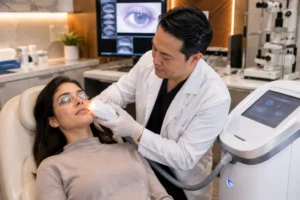
Intense pulse light therapy for dry eyes is a non-surgical treatment designed to reduce inflammation around the eyelids and improve the function of blocked meibomian glands.
Originally developed for certain skin conditions, ophthalmologists later discovered that carefully controlled pulses of light could also improve the health of the eyelids and tear-producing system in selected patients with evaporative dry eye.
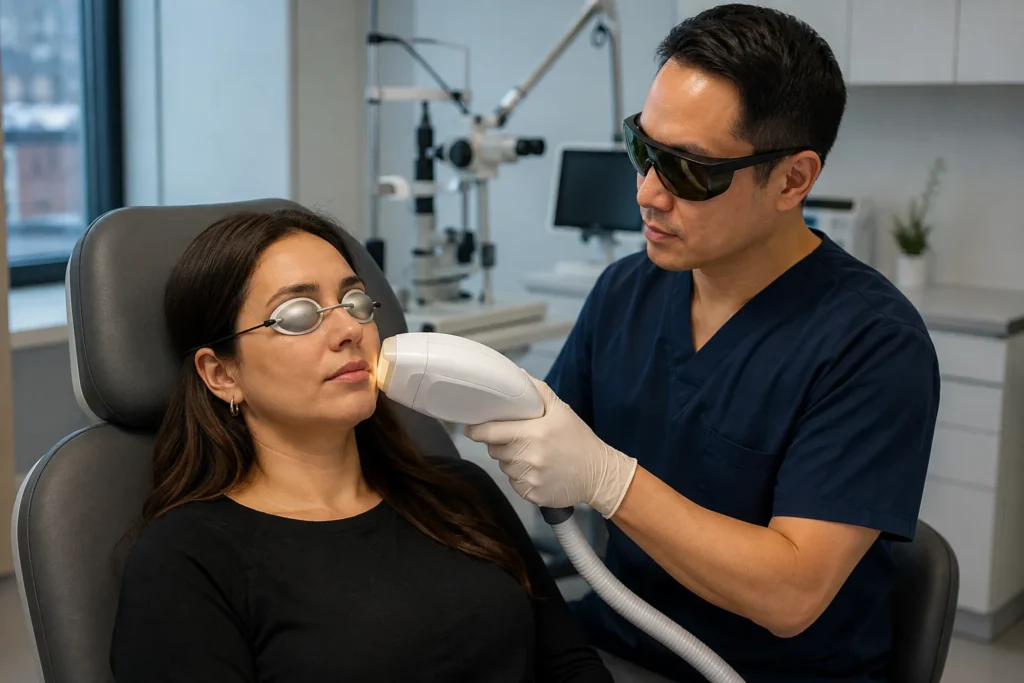
Unlike laser treatments that focus a single wavelength of light, IPL delivers broad-spectrum pulses of light to the skin beneath the eyes and around the eyelids while specially designed eye shields protect the eyes throughout the procedure.
The goal is not to treat the eyeball itself but to improve the surrounding tissues responsible for maintaining a healthy tear film.
How IPL Therapy Helps Improve Dry Eye
Although every patient responds differently, IPL therapy may help by:
Reducing Eyelid Inflammation
Chronic inflammation around the eyelids is a major contributor to dry eye disease. IPL helps reduce inflammatory changes that interfere with healthy tear production.
Improving Oil Gland Function
Heat generated during treatment softens thickened oils inside blocked glands, allowing healthier oil flow after gland expression.
Stabilizing the Tear Film
Better oil quality slows tear evaporation, helping moisture remain on the eye surface for longer periods.
Decreasing Abnormal Blood Vessels
Some patients develop tiny abnormal blood vessels along the eyelid margin that contribute to inflammation. IPL may reduce these vessels, decreasing inflammatory signals over time.
Who May Benefit Most From IPL Therapy?
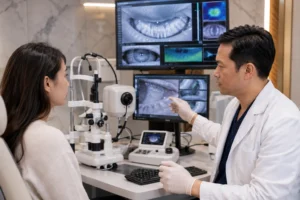
Not every person with dry eye is a candidate for IPL.
A comprehensive eye examination helps determine whether symptoms are related to meibomian gland dysfunction, aqueous tear deficiency, allergies, blepharitis, or another eye condition.
Patients who may benefit include those who:
- Have chronic evaporative dry eye
- Have meibomian gland dysfunction
- Experience recurrent eyelid inflammation
- Continue having symptoms despite artificial tears
- Spend long hours using digital screens
- Have rosacea affecting the eyelids
- Want a non-surgical treatment option for long-term symptom management
One of the most common questions ophthalmologists hear is:
“Why do my eyes still feel dry even though I use eye drops several times every day?”
In many cases, the answer lies in poor oil gland function rather than inadequate tear production. That is why identifying the root cause is often more important than simply changing eye drops.
What Happens During an Intense Pulse Light Therapy for Dry Eyes Treatment?
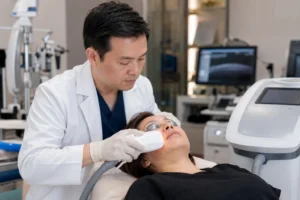
Many patients feel anxious before trying a new eye treatment, especially when they hear the word “light.” One of the first things we explain during a consultation is that intense pulse light therapy for dry eyes does not shine light directly into the eyes. Instead, specially controlled pulses are applied to the skin around the lower eyelids while protective eye shields keep the eyes safe throughout the procedure.
A typical treatment session generally includes:
- Reviewing your symptoms and eye health
- Cleaning the treatment area
- Placing protective eye shields
- Applying a cooling gel to the skin
- Delivering a series of light pulses around the eyelids
- Expressing the meibomian glands, when appropriate
- Providing personalized aftercare instructions
Most sessions are completed in less than 30 minutes, making IPL a convenient option for many patients with busy schedules in Flushing, Queens, and throughout New York City.
Does IPL Treatment Hurt?
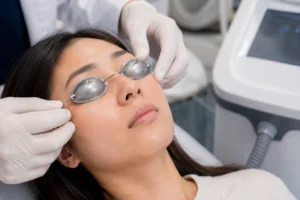
This is one of the most frequently asked questions during an eye consultation.
Most patients describe the sensation as a quick, gentle snap against the skin, similar to a light rubber band. Some warmth is normal, but the treatment is generally well tolerated. Because every person has a different pain threshold, the experience can vary slightly.
Following treatment, mild redness may occur around the treated skin but usually settles within a short period.
When Will You Notice Results?
Dry eye disease develops over time, and improvement is usually gradual rather than immediate.
Some patients notice:
- Less burning
- Better comfort while reading
- Reduced eye fatigue
- More stable vision during computer work
- Less dependence on artificial tears
Others require several sessions before experiencing meaningful improvement. Your ophthalmologist will recommend a treatment plan based on the severity of your meibomian gland dysfunction, eyelid inflammation, and overall eye health.
The goal is long-term improvement in tear quality—not a temporary fix.
Benefits of Intense Pulse Light Therapy for Dry Eyes
Compared with relying only on lubricating eye drops, IPL offers several potential advantages for carefully selected patients.
| Potential Benefit | Why It Matters |
|---|---|
| Improves oil gland function | Helps reduce tear evaporation |
| Reduces eyelid inflammation | Supports a healthier tear film |
| Non-surgical | No incisions or stitches |
| Minimal downtime | Most patients return to normal activities the same day |
| Can complement other dry eye treatments | Often used alongside lid hygiene and prescription therapies |
| Personalized treatment | Tailored to the underlying cause of dry eye |
While IPL can significantly improve symptoms for many people, it is not considered a cure. Dry eye is often a chronic condition that requires ongoing management.
Are There Any Risks or Limitations?
Every medical treatment has benefits and limitations, and IPL is no exception.
Possible temporary side effects may include:
- Mild skin redness
- Temporary warmth
- Slight swelling
- Increased light sensitivity for a short time
Serious complications are uncommon when treatment is performed by an experienced eye care professional using appropriate protective measures.
IPL may not be suitable for everyone, including certain individuals with specific skin types, active skin infections, or medical conditions. A comprehensive eye examination and medical history help determine whether the treatment is appropriate.
Other Treatments That May Be Recommended
Dry eye disease often requires a combination of therapies rather than a single solution. Depending on your examination findings, your ophthalmologist may recommend:
Artificial Tears
Lubricating eye drops can temporarily relieve dryness but do not correct blocked meibomian glands.
Warm Compresses
Applying gentle heat to the eyelids may soften thickened oils and improve gland function, particularly in mild cases.
Eyelid Hygiene
Cleaning the eyelid margins helps remove debris, bacteria, and excess oils that contribute to inflammation.
Prescription Eye Drops
For patients with significant inflammation, prescription medications may help improve tear production and reduce inflammation over time.
Lifestyle Changes
Simple adjustments often make a noticeable difference, including:
- Following the 20-20-20 rule during screen use
- Blinking more frequently
- Staying hydrated
- Using a humidifier indoors
- Wearing sunglasses outdoors to reduce wind exposure
What Is the Best Non Surgical Eye Lift?
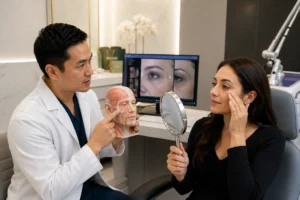
Patients searching for what is the best non surgical eye lift are often concerned about tired-looking eyes, drooping eyelids, or fine lines around the eye area.
It is important to understand that cosmetic concerns and dry eye disease are different conditions, although they may occur together.
Several non-surgical options may improve the appearance of the eye area, depending on the underlying cause:
| Treatment | Best For |
|---|---|
| Prescription eyelid-lifting eye drops | Mild eyelid drooping in selected patients |
| Neuromodulator injections | Crow’s feet and brow positioning |
| Dermal fillers | Volume loss beneath the eyes |
| Radiofrequency skin tightening | Mild skin laxity |
| Intense Pulse Light (IPL) | Eyelid inflammation associated with dry eye—not eyelid lifting |
During an ophthalmology consultation, your doctor will determine whether the concern is functional, cosmetic, or related to an underlying eye condition before recommending treatment.
Laser Treatment for Under Eye Wrinkles
Another common search is laser treatment for under eye wrinkles.
Laser skin resurfacing is designed to improve skin texture by stimulating collagen production. Depending on the technology used, treatment may help reduce:
- Fine lines
- Mild wrinkles
- Uneven skin texture
- Sun damage
- Age-related skin changes
However, laser treatment for under eye wrinkles does not treat dry eye disease or blocked meibomian glands.
Some patients mistakenly believe cosmetic laser procedures and IPL dry eye therapy are the same treatment. In reality, they have different goals:
| IPL for Dry Eyes | Laser for Under Eye Wrinkles |
|---|---|
| Improves meibomian gland function | Improves skin appearance |
| Helps stabilize the tear film | Stimulates collagen remodeling |
| Reduces eyelid inflammation | Targets wrinkles and skin texture |
| Supports eye comfort | Supports cosmetic rejuvenation |
Understanding this distinction helps patients choose the treatment that best addresses their primary concern, whether it is eye comfort, vision quality, or facial rejuvenation.
Why a Comprehensive Eye Evaluation Matters
Dry eyes, blurry vision, eyelid irritation, and cosmetic concerns around the eyes can sometimes overlap. What appears to be a simple dryness problem may actually involve meibomian gland dysfunction, blepharitis, allergies, or another ocular surface condition.
That is why a thorough examination is essential before beginning any advanced treatment. At practices like LeeVision in Flushing, Queens, NYC, board-certified ophthalmologist Dr. David H. Lee, MD uses advanced diagnostic technology and evidence-based ophthalmology to identify the underlying cause of symptoms and develop a personalized treatment plan focused on long-term eye health rather than short-term symptom relief.
Frequently Asked Questions About Intense Pulse Light Therapy for Dry Eyes
Is intense pulse light therapy for dry eyes FDA approved?
The IPL devices used in ophthalmology may have FDA clearance for specific indications, while their use for dry eye management depends on the device and clinical application. Your ophthalmologist can explain which technology is being used and why it is appropriate for your condition.
How many IPL sessions are usually needed for dry eyes?
Most patients require a series of treatments rather than a single session. The exact number depends on the severity of your meibomian gland dysfunction, eyelid inflammation, and how your eyes respond over time.
Is intense pulse light therapy for dry eyes permanent?
No. Dry eye disease is usually a chronic condition. IPL helps improve the health of the tear film, but maintenance treatments and daily eyelid care may still be recommended to keep symptoms under control.
Who is the best candidate for intense pulse light therapy for dry eyes?
Patients with evaporative dry eye, meibomian gland dysfunction (MGD), ocular rosacea, or chronic eyelid inflammation often benefit the most after a comprehensive eye examination.
Can IPL replace artificial tears?
Not always. Many patients continue using lubricating eye drops, especially during the early stages of treatment. IPL is often part of a personalized dry eye management plan rather than a replacement for every therapy.
Can I wear contact lenses after IPL treatment?
Most patients can resume wearing contact lenses based on their ophthalmologist’s instructions. If your eyes remain irritated, you may be advised to wait until the ocular surface feels more comfortable.
Does IPL improve blurry vision?
If blurry vision is caused by an unstable tear film from dry eye disease, improving tear quality may also improve visual clarity. However, blurry vision can have many causes, including cataracts, glaucoma, retinal disease, or refractive error, so a proper eye examination is essential.
Can dry eye return after successful IPL treatment?
Yes. Since dry eye disease is often ongoing, symptoms can gradually return over time. Regular follow-up visits help determine whether maintenance treatment is appropriate.
Is intense pulse light therapy for dry eyes safe?
When performed by a trained ophthalmologist using proper eye protection and appropriate patient selection, IPL is generally considered a safe, non-surgical treatment for many patients with evaporative dry eye.
Does insurance cover IPL for dry eyes?
Coverage varies depending on your insurance provider and treatment plan. Many insurance policies consider IPL an elective procedure for dry eye management, so patients should confirm benefits before treatment.
What is the best non surgical eye lift if I also have dry eyes?
The answer depends on the cause of your concern. If droopy eyelids are cosmetic, treatments such as neuromodulators, fillers, or skin-tightening procedures may be considered. If irritation and inflammation are causing the eyes to look tired, treating the underlying dry eye disease may improve overall eye comfort and appearance.
Is laser treatment for under eye wrinkles the same as IPL?
No. Laser treatment for under eye wrinkles focuses on improving skin texture and collagen production, while intense pulse light therapy for dry eyes is designed to improve eyelid health and meibomian gland function. Although both use light-based technology, they treat different concerns.
Can screen time make dry eyes worse?
Yes. Looking at digital screens reduces blink frequency, causing tears to evaporate more quickly. Office workers, students, and remote employees commonly experience worsening dry eye symptoms after prolonged screen use.
When should I see an ophthalmologist instead of treating dry eyes myself?
You should schedule an eye examination if you experience:
- Persistent dryness despite using eye drops
- Blurry vision
- Eye pain
- Increasing redness
- Light sensitivity
- Recurrent eyelid swelling
- Symptoms affecting work or daily activities
These signs may indicate a condition that requires professional evaluation rather than over-the-counter treatment alone.