






Multifocal Intraocular Lens for Cataract Surgery: Understanding Your Vision Correction Options
Cataract surgery has become much more than a procedure to remove a cloudy lens. Today, many patients also see it as an opportunity to reduce their dependence on glasses for everyday activities. One of the most discussed options is a multifocal intraocular lens for cataract surgery, which is designed to improve vision at multiple distances after the natural lens is removed.
During consultations at LeeVision in Flushing, Queens, New York City, many patients ask whether multifocal lenses can truly replace their glasses. The answer depends on several factors, including the health of the eye, lifestyle, and visual expectations. While these advanced lenses can provide excellent functional vision for many people, they are not the ideal choice for everyone.
Understanding how these lenses work—and their benefits as well as their limitations—can help you make a more confident and informed decision before cataract surgery.
Understanding Cataracts and Why the Natural Lens Needs to Be Replaced
A cataract develops when the eye’s natural lens gradually becomes cloudy with age. Instead of allowing light to pass through clearly, the cloudy lens scatters light, leading to blurred vision, glare from headlights, faded colours, and difficulty reading or driving at night.
Many people initially notice only small changes, often believing they simply need a stronger eyeglass prescription. However, once a cataract progresses, changing glasses no longer restores clear vision because the problem lies inside the eye rather than in the prescription itself.
Cataract surgery removes this cloudy natural lens and replaces it with an artificial lens called an intraocular lens (IOL). Since the original lens cannot regenerate, selecting the right replacement lens becomes one of the most important decisions before surgery.
What Is a Multifocal Intraocular Lens for Cataract Surgery?
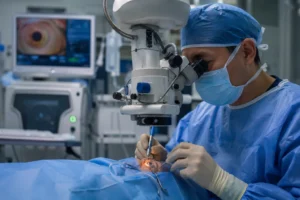
A multifocal intraocular lens for cataract surgery is an advanced artificial lens implanted during cataract surgery that provides more than one focal point. Unlike a standard monofocal lens, which usually corrects vision at only one distance, a multifocal lens is designed to help patients see both near and far without constantly switching between different pairs of glasses.
Think of it as a lens that distributes incoming light to support multiple viewing distances. Your brain gradually learns how to select the clearest image depending on whether you’re reading a menu, working on a computer, or looking across the room.
While many patients experience significant freedom from glasses, the adjustment period varies from person to person. Most individuals adapt over several weeks as the visual system becomes accustomed to the new optics.
How Multifocal Lenses Work
Rather than focusing light at a single point, multifocal IOLs use specially engineered optical zones that divide incoming light into multiple focal distances.
This design may improve vision for:
- Reading books and mobile phones
- Computer work
- Shopping and everyday tasks
- Watching television
- Driving during daylight
- Social activities without frequently reaching for glasses
Although these lenses reduce dependence on spectacles, some patients may still need glasses for very small print or prolonged reading in dim lighting.
Who May Be a Good Candidate?

Choosing the right lens is a personalised decision rather than a one-size-fits-all recommendation.
Many ophthalmologists consider multifocal lenses for patients who:
- Have visually significant cataracts
- Want greater independence from glasses
- Have healthy corneas and retinas
- Do not have advanced glaucoma or severe macular disease
- Understand both the benefits and possible visual compromises
At LeeVision, Dr. David H. Lee, MD, uses detailed diagnostic testing and evidence-based ophthalmology to evaluate whether a patient is likely to benefit from premium intraocular lens technology. The goal is not simply reducing glasses but selecting the safest option that supports long-term visual quality.
Patients Who May Need Alternative Lens Options
A multifocal lens may not be recommended if someone has:
- Significant dry eye disease
- Advanced diabetic retinal disease
- Irregular corneal shape
- Severe glaucoma with vision loss
- Previous eye conditions affecting contrast sensitivity
In these situations, another type of intraocular lens may provide clearer and more predictable vision.
Multifocal Lens vs Standard Monofocal Lens
Choosing between these lenses is one of the most common questions patients ask before cataract surgery.
| Feature | Multifocal IOL | Monofocal IOL |
|---|---|---|
| Distance Vision | Excellent | Excellent |
| Near Vision | Often good without glasses | Usually requires reading glasses |
| Intermediate Vision | Better for computer use | Glasses often needed |
| Glasses Dependence | Reduced for many patients | More likely |
| Night Glare & Halos | May occur during adaptation | Usually less noticeable |
| Suitable for Everyone | No | Yes, in many cases |
The right choice depends on your visual priorities rather than simply choosing the most advanced lens available.
Many Patients Also Ask About Multifocal Contact Lenses
Before deciding on cataract surgery, patients frequently ask, what are multifocal contact lenses, and whether they provide a similar experience.
Multifocal contact lenses are soft or rigid contact lenses that contain multiple prescription zones to help people with presbyopia see at different distances. They are commonly worn by adults over 40 who have not had cataract surgery but want to reduce their reliance on reading glasses.
Although both multifocal contact lenses and multifocal intraocular lenses aim to improve vision at multiple distances, they are designed for entirely different situations. Contact lenses are removable and sit on the surface of the eye, while an intraocular lens is permanently implanted inside the eye during cataract surgery.
The next part will explore how multifocal IOLs compare with other premium lens options, explain are there progressive contact lenses, discuss possible side effects such as halos and glare, and help patients understand what to realistically expect after surgery.
Are There Progressive Contact Lenses?
One of the most common questions people ask after learning about premium cataract lenses is, are there progressive contact lenses? The short answer is yes—but the terminology can be confusing.
Unlike progressive eyeglasses, contact lenses do not have visible sections for distance, intermediate, and near vision. Instead, the contact lens version is called a multifocal contact lens. These lenses use specialised optical designs that allow your eyes and brain to focus at different distances.
In other words, when patients ask whether progressive contact lenses exist, they are usually referring to multifocal contact lenses.
For people who have not developed cataracts but are experiencing age-related near vision loss (presbyopia), multifocal contact lenses can be an effective non-surgical solution. However, once cataracts significantly affect vision, replacing the cloudy natural lens with an intraocular lens often becomes the more appropriate long-term treatment
Multifocal Intraocular Lens vs Multifocal Contact Lenses

Although both options aim to reduce dependence on glasses, they serve different purposes and are recommended for different stages of life.
| Feature | Multifocal Intraocular Lens | Multifocal Contact Lenses |
|---|---|---|
| Used During Cataract Surgery | Yes | No |
| Permanently Implanted | Yes | No |
| Daily Maintenance | None | Requires cleaning or replacement |
| Designed For | Cataract patients | Presbyopia without cataracts |
| Glasses Independence | Often significant | Varies by prescription |
| Surgical Procedure Required | Yes | No |
Patients who are already planning cataract surgery generally do not need multifocal contact lenses afterwards because the implanted lens becomes their permanent vision correction.
Benefits of Multifocal Intraocular Lenses
Many people choose premium intraocular lenses because they want greater visual freedom throughout the day. While results vary, many patients appreciate the convenience of performing everyday activities without constantly changing glasses.
Potential benefits include:
- Clearer vision at multiple distances
- Reduced dependence on reading glasses
- Improved convenience for daily activities
- Greater independence while travelling
- Better overall quality of life for many suitable candidates
- Permanent vision correction after cataract removal
During consultations, many patients mention that they would simply like to read a restaurant menu, check text messages, or enjoy family gatherings without searching for their glasses. Multifocal IOLs are designed with these everyday goals in mind.
Understanding the Possible Limitations
Premium technology also comes with trade-offs. An experienced ophthalmologist will discuss these before surgery so that expectations remain realistic.
Some patients notice:
- Halos around lights at night
- Increased glare while driving after dark
- Slightly reduced contrast sensitivity
- A period of visual adaptation as the brain adjusts
- Occasional need for reading glasses for very fine print
These symptoms are often most noticeable during the first few weeks or months after surgery. Many patients gradually adapt, although some continue to notice mild visual effects, particularly in low-light conditions.
Being aware of these possibilities before surgery often leads to higher satisfaction because patients know what to expect.
The Importance of Personalised Lens Selection
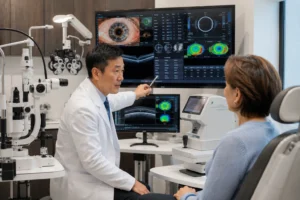
Selecting an intraocular lens should never be based solely on advertisements or online reviews. Every eye is unique, and the best lens for one person may not be the best option for another.
A comprehensive cataract evaluation typically includes advanced measurements of:
- Corneal shape
- Eye length
- Tear film quality
- Pupil size
- Retinal health
- Existing astigmatism
- Overall visual needs and lifestyle
At LeeVision in Flushing, Queens, New York City, Dr. David H. Lee, MD, emphasises shared decision-making. Rather than recommending the same lens for every patient, treatment planning is tailored to each individual’s eye health, daily activities, and long-term visual goals.
Questions Patients Frequently Ask Before Choosing a Multifocal Lens
Many concerns raised during cataract consultations are practical rather than technical. Patients often want straightforward answers before making a decision.
Will I Still Need Glasses?
Many patients become less dependent on glasses after receiving a multifocal intraocular lens for cataract surgery. However, reading glasses may still be helpful for very small print or prolonged close work.
How Long Does It Take to Adjust?
Most people adapt within several weeks, although some continue noticing gradual improvement over the first few months as the brain learns to process the new optical system.
Can Both Eyes Receive Multifocal Lenses?
In many cases, yes. The decision depends on the health of each eye, the patient’s visual goals, and the ophthalmologist’s clinical assessment.
Are Multifocal Lenses Worth It?
For carefully selected candidates who value reduced dependence on glasses, many find the additional visual flexibility worthwhile. The decision should always balance benefits, limitations, and personal expectations rather than focusing on convenience alone.
Common Misconceptions About Multifocal Lenses
Several myths continue to create confusion among patients researching cataract surgery online.
“Everyone Will Have Perfect Vision Without Glasses”
No intraocular lens can guarantee complete freedom from glasses. Individual healing, eye health, and lifestyle all influence the final outcome.
“Premium Lenses Are Automatically Better”
Premium does not always mean better for every patient. A monofocal lens may provide the sharpest and most predictable vision for individuals with certain retinal or corneal conditions.
“Night Vision Problems Never Improve”
Many patients notice halos and glare becoming less bothersome over time as the brain adapts to the multifocal optics. While some visual effects may persist, they often become easier to ignore during daily life.
Recovery After Multifocal Intraocular Lens for Cataract Surgery

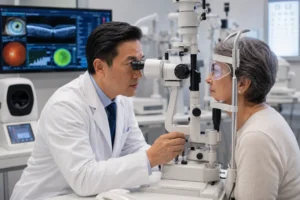
Recovering from cataract surgery is usually quicker than many patients expect. Since the procedure is minimally invasive, most people return home the same day and notice clearer vision within the first few days. However, the brain also needs time to adapt to the new multifocal optics.
During the first few weeks, vision may seem to fluctuate slightly as the eye heals. Some patients also notice mild halos or glare around lights at night. These effects often become less noticeable as the visual system adjusts.
Your ophthalmologist will provide personalised aftercare instructions, which commonly include:
- Using prescribed eye drops as directed
- Avoiding rubbing the operated eye
- Wearing a protective eye shield while sleeping if recommended
- Avoiding swimming and dusty environments during early healing
- Attending all scheduled follow-up appointments
Most people can resume light daily activities within a day or two, but complete visual adaptation may take several weeks or, in some cases, a few months.
Setting Realistic Expectations
One of the most important conversations before cataract surgery is about expectations. A multifocal intraocular lens can significantly reduce dependence on glasses for many patients, but it does not create “perfect vision” in every situation.
Some individuals may still prefer reading glasses for very small print, prolonged reading, or dimly lit environments. Others may continue to notice mild night-time halos, especially when driving.
Successful outcomes depend on several factors, including:
- Overall eye health
- Presence of retinal or corneal disease
- Dry eye severity
- Accurate pre-surgical measurements
- Individual healing response
- Lifestyle and visual priorities
This is why experienced ophthalmologists focus on matching the lens to the patient—not simply choosing the most advanced technology available.
Why a Comprehensive Eye Evaluation Matters
Before recommending a premium intraocular lens, a thorough eye examination helps determine whether it is the right choice.
A comprehensive cataract assessment may include:
- Detailed vision testing
- Corneal measurements
- Retinal evaluation
- Tear film assessment
- Optical biometry for precise lens calculations
- Discussion of work, hobbies, and daily visual needs
At LeeVision in Flushing, Queens, New York City, Dr. David H. Lee, MD, uses advanced diagnostic technology and evidence-based treatment planning to help patients understand their options and make informed decisions based on their individual eye health.
Frequently Asked Questions
Is a multifocal intraocular lens for cataract surgery worth choosing?
A multifocal intraocular lens for cataract surgery can be an excellent choice for patients who want clearer vision at multiple distances and less dependence on glasses. The right option depends on your eye health, lifestyle, and expectations, which is why a comprehensive eye examination is essential before surgery.
Who is the best candidate for a multifocal intraocular lens for cataract surgery?
The best candidates for a multifocal intraocular lens for cataract surgery are patients with healthy eyes, visually significant cataracts, and a desire to reduce their need for glasses. People with advanced retinal disease or severe glaucoma may benefit from a different lens option.
Can a multifocal intraocular lens for cataract surgery replace reading glasses?
A multifocal intraocular lens for cataract surgery significantly reduces the need for reading glasses for many patients. However, some people may still use glasses for very small print or prolonged reading in dim lighting.
How long does it take to adjust to a multifocal intraocular lens for cataract surgery?
Most patients begin adapting to a multifocal intraocular lens for cataract surgery within a few weeks. Complete visual adaptation may continue for several months as the brain learns to process multiple focal points.
Are halos normal after a multifocal intraocular lens for cataract surgery?
Yes. Mild halos and glare are recognised side effects after receiving a multifocal intraocular lens for cataract surgery. These symptoms often become less noticeable as healing progresses and the brain adapts.
Is a multifocal intraocular lens for cataract surgery permanent?
Yes. A multifocal intraocular lens for cataract surgery is implanted inside the eye during cataract surgery and is designed to remain there permanently. Unlike contact lenses, it does not require daily removal or maintenance.
Can both eyes receive a multifocal intraocular lens for cataract surgery?
Many patients receive a multifocal intraocular lens for cataract surgery in both eyes. Your ophthalmologist will determine the safest approach after evaluating the health and visual needs of each eye.
What are multifocal contact lenses?
If you are wondering what are multifocal contact lenses, they are specialised contact lenses that help people with presbyopia see at near, intermediate, and far distances. Unlike a multifocal intraocular lens for cataract surgery, they are removable and worn on the surface of the eye.
Are there progressive contact lenses?
Many people ask, are there progressive contact lenses? The answer is yes, although the medical term is multifocal contact lenses. They provide multiple focusing zones but are different from a multifocal intraocular lens for cataract surgery, which is permanently implanted during cataract surgery.
Can I drive after a multifocal intraocular lens for cataract surgery?
Most patients can return to driving after a multifocal intraocular lens for cataract surgery once their ophthalmologist confirms that their vision meets driving requirements. Night driving may initially involve mild glare or halos.
Does a multifocal intraocular lens for cataract surgery improve computer vision?
Yes. One of the advantages of a multifocal intraocular lens for cataract surgery is improved intermediate vision, making computer work and many daily activities more comfortable for suitable candidates.
Is a multifocal intraocular lens for cataract surgery safe?
A multifocal intraocular lens for cataract surgery is considered safe for appropriate candidates when performed by an experienced ophthalmologist. As with any surgical procedure, there are benefits, risks, and limitations that should be discussed before surgery.
What is the difference between a multifocal intraocular lens for cataract surgery and a monofocal lens?
A multifocal intraocular lens for cataract surgery is designed to provide vision at multiple distances, while a monofocal lens usually focuses at one primary distance. The best choice depends on your visual goals and overall eye health.
Can patients with dry eye receive a multifocal intraocular lens for cataract surgery?
Patients with dry eye may still be candidates for a multifocal intraocular lens for cataract surgery, but dry eye should usually be treated first. A healthy tear film helps improve surgical measurements and visual outcomes.
When should I consult an ophthalmologist about a multifocal intraocular lens for cataract surgery?
If cataracts are making reading, driving, or daily activities difficult, schedule a comprehensive eye examination. An experienced ophthalmologist can determine whether a multifocal intraocular lens for cataract surgery is the right option for your eyes and lifestyle.