



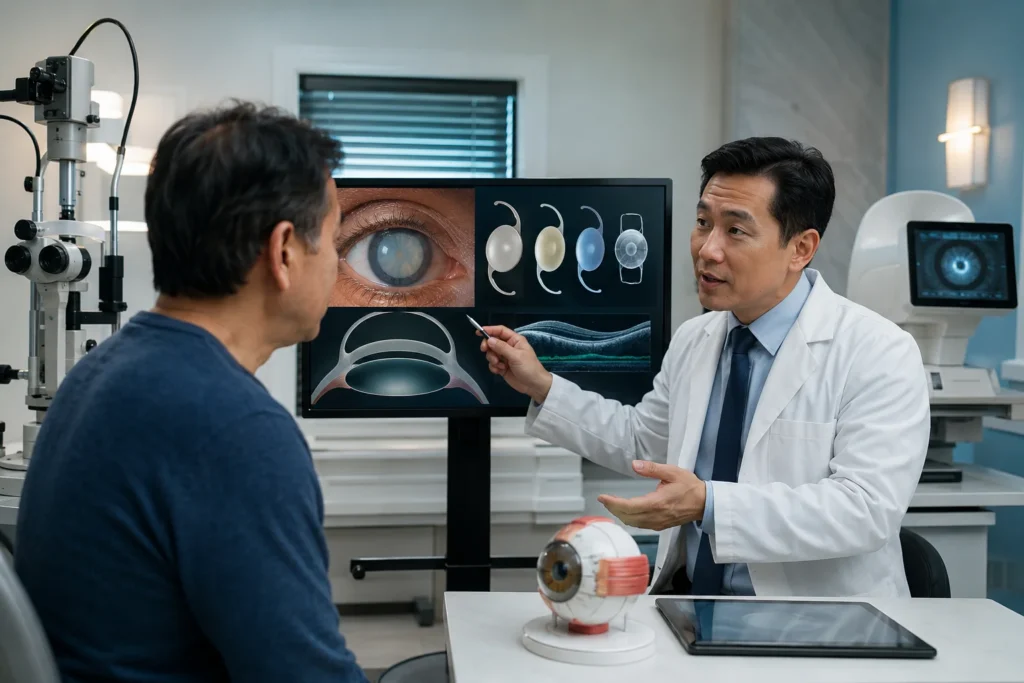
Refractive Cataract Surgery: A Modern Approach to Cataract Removal and Clearer Vision
Cataracts are one of the most common causes of blurry vision as we age, but today’s treatment options have advanced far beyond simply removing the cloudy lens. Many patients now ask whether they can reduce their dependence on glasses at the same time as cataract surgery. That is exactly where refractive cataract surgery comes in.
Unlike traditional cataract surgery, refractive cataract surgery is designed to improve both the cataract and your overall vision by carefully selecting an intraocular lens (IOL) that matches your lifestyle and visual needs. Whether you enjoy reading, driving at night, working on digital screens, or playing sports, the goal is to provide the best possible vision while maintaining long-term eye health.
At LeeVision in Flushing, Queens, NYC, Dr. David H. Lee, MD, a Board-Certified Ophthalmologist, believes that every cataract patient deserves an individualized treatment plan rather than a one-size-fits-all approach. Modern diagnostic technology allows surgeons to make highly precise lens calculations, helping patients make informed decisions about their vision.
What Is Refractive Cataract Surgery?
Refractive cataract surgery is an advanced form of cataract surgery that not only removes the cloudy natural lens but also corrects common vision problems such as:
- Nearsightedness (Myopia)
- Farsightedness (Hyperopia)
- Astigmatism
- Age-related reading vision loss (Presbyopia)
Instead of focusing only on cataract removal, this procedure aims to improve your overall quality of vision after surgery.
Traditional cataract surgery restores clarity by replacing the cloudy lens with a standard artificial lens. While vision usually becomes much clearer, many patients still need glasses afterward.
Refractive cataract surgery takes this a step further by using premium lens technology and advanced measurements to reduce dependence on glasses whenever appropriate.
Why Do Cataracts Affect Vision?
Inside every healthy eye is a natural lens that focuses light onto the retina. Over time, this lens gradually becomes cloudy due to aging, medical conditions, certain medications, or previous eye injuries.
As the cataract progresses, patients often notice:
- Blurry or cloudy vision
- Increased sensitivity to bright lights
- Halos around headlights
- Difficulty driving at night
- Frequent changes in eyeglass prescription
- Colors appearing dull or yellow
Many people describe it as looking through a foggy window that becomes harder to clean.
No eye drops or medications can reverse a cataract. Once it begins interfering with daily life, surgery is the only proven treatment.
How Refractive Cataract Surgery Differs from Standard Cataract Surgery
Although both procedures remove the cataract safely, their goals are slightly different.
| Standard Cataract Surgery | Refractive Cataract Surgery |
|---|---|
| Removes cloudy lens | Removes cloudy lens |
| Restores clear vision | Restores vision while correcting refractive errors |
| Standard intraocular lens | Customized premium lens options |
| Usually requires glasses afterward | May significantly reduce dependence on glasses |
| Basic measurements | Advanced diagnostic mapping and customized planning |
This personalized approach is one reason many patients now ask about refractive cataract surgery during their consultation.
Who Is a Good Candidate for Refractive Cataract Surgery?
Not everyone has the same visual goals. Some patients simply want safer driving, while others hope to read, travel, or use digital devices with fewer glasses.
You may be a good candidate if you:
- Have visually significant cataracts
- Want greater freedom from glasses
- Have healthy retinas and optic nerves
- Have realistic expectations about surgery
- Are willing to discuss premium lens options
Your ophthalmologist will evaluate several factors before recommending treatment, including:
- Corneal health
- Eye surface condition
- Amount of astigmatism
- Retinal health
- Lifestyle needs
- Previous eye surgeries
A thorough examination ensures that the chosen lens matches both your eyes and your daily routine.
Understanding Toric Lens for Cataract Surgery
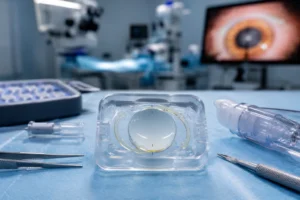
One of the most common questions patients ask is whether a toric lens for cataract surgery is worth considering.
A toric intraocular lens is specially designed to correct astigmatism—a condition where the cornea has an irregular shape instead of being perfectly round.
Without correcting astigmatism, vision may remain blurry even after a successful cataract operation.
A toric lens helps by:
- Sharpening distance vision
- Reducing dependence on prescription glasses
- Improving driving vision
- Providing clearer overall focus
However, toric lenses must be positioned very precisely during surgery. Modern imaging systems help ophthalmologists align the lens accurately for the best possible outcome.
Patients often ask if they will never need glasses again after receiving a toric lens. The answer depends on their individual prescription, reading needs, and overall eye health. While many patients enjoy significantly improved distance vision, some may still choose glasses for close-up work or prolonged reading.
Refractive Cataract Surgery vs. Refractive Lens Exchange Surgery
Patients sometimes confuse refractive cataract surgery with refractive lens exchange surgery, but they are performed for different reasons.
Refractive Cataract Surgery
- Cataract is already present.
- The cloudy natural lens is removed.
- The main goal is restoring vision while improving refractive error.
Refractive Lens Exchange Surgery
- The natural lens is still clear.
- Lens replacement is performed primarily to reduce dependence on glasses.
- Often considered by patients with significant refractive errors or presbyopia who may not be ideal candidates for laser vision correction.
Although both procedures involve replacing the eye’s natural lens with an artificial one, the reason for surgery is different. Your ophthalmologist will determine which option is appropriate based on your age, eye health, and visual goals.
Why Personalized Lens Selection Matters
One of the biggest advances in modern cataract care is that surgery is no longer just about removing a cloudy lens. Choosing the right intraocular lens can have a lasting impact on how you see during everyday activities.
During a consultation, patients commonly ask questions such as:
- Will I still need reading glasses?
- Can I drive comfortably at night?
- Which lens is best for my lifestyle?
- Is a toric lens for cataract surgery right for me?
- Should I consider refractive lens exchange surgery instead?
These are important discussions because there is no single “best” lens for everyone. The right choice depends on your vision goals, eye measurements, overall eye health, and expectations after surgery.
Premium Intraocular Lens Options for Refractive Cataract Surgery
One of the biggest advantages of refractive cataract surgery is the ability to personalize your vision with advanced intraocular lenses (IOLs). Rather than choosing the same lens for every patient, your ophthalmologist recommends an option based on your eye health, daily activities, and long-term vision goals.
Common premium lens options include:
Monofocal Lens
A monofocal lens provides clear vision at one distance, usually far away. Many patients still need reading glasses for close work, but it remains an excellent choice for people who prefer simple, reliable vision correction.
Toric Lens for Cataract Surgery
A toric lens for cataract surgery is designed for patients with astigmatism. By correcting the irregular curvature of the cornea, it can provide sharper distance vision and reduce dependence on glasses after surgery.
Multifocal and Extended Depth of Focus (EDOF) Lenses
These premium lenses are designed to improve vision at multiple distances. They may reduce the need for glasses during everyday activities, although some patients may still require reading glasses for very small print or prolonged close work.
The best lens is not always the most advanced one—it is the one that best matches your eyes and lifestyle.
What Happens Before Refractive Cataract Surgery?

A successful outcome starts long before the day of surgery.
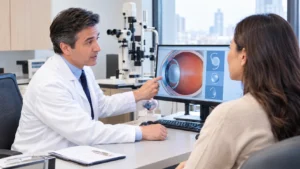
During your consultation, your ophthalmologist performs a detailed eye examination using advanced diagnostic technology. This evaluation helps create a personalized surgical plan.
Your examination may include:
- Visual acuity testing
- Corneal mapping
- Biometry to measure eye length
- Retinal examination
- Tear film evaluation
- Eye pressure measurement
- Astigmatism assessment
If dry eye disease is present, it is often treated before surgery because an unhealthy eye surface can affect lens measurements and visual results.
Many patients in Flushing, Queens, NYC spend long hours using computers, smartphones, and tablets. Digital eye strain and dry eye are common concerns that should be addressed before surgery for the most accurate measurements.
What to Expect During the Procedure
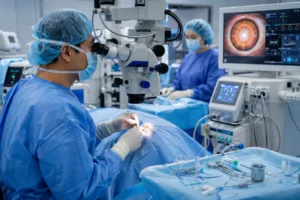
Many patients feel nervous before surgery, often asking, “Will I be awake?” or “Will I feel pain?”
In most cases, refractive cataract surgery is performed under local anesthesia with numbing eye drops. Patients remain awake but comfortable, and the procedure is generally painless.
During surgery:
- The cloudy natural lens is removed through a tiny incision.
- The selected artificial intraocular lens is inserted.
- The new lens unfolds and is carefully positioned.
- The incision usually seals without stitches.
The procedure typically takes less than 30 minutes, although the total visit is longer to allow for preparation and recovery.
Most patients return home the same day.
Recovery After Refractive Cataract Surgery
Vision often begins improving within a few days, but complete healing takes several weeks.
A typical recovery timeline looks like this:
| Recovery Stage | What You May Notice |
|---|---|
| First 24 hours | Mild blurry vision, light sensitivity, slight irritation |
| First week | Vision becomes clearer each day |
| Two to four weeks | Continued healing and improving focus |
| Four to eight weeks | Vision stabilizes for most patients |
Your ophthalmologist will prescribe medicated eye drops to reduce inflammation and prevent infection.
During recovery, patients are usually advised to:
- Avoid rubbing the eye
- Wear the protective shield as instructed
- Use eye drops exactly as prescribed
- Avoid heavy lifting for a short period
- Attend all follow-up appointments
Benefits of Refractive Cataract Surgery
Patients often choose refractive cataract surgery because it offers more than cataract removal alone.
Potential benefits include:
- Clearer overall vision
- Reduced dependence on glasses
- Correction of astigmatism with a toric lens for cataract surgery
- Better quality of life
- Improved night driving for appropriate candidates
- Personalized vision correction
- Long-lasting lens replacement
The goal is not perfection but achieving the best possible vision for your individual needs.
Understanding the Limitations
While refractive cataract surgery offers excellent results for many patients, it is important to have realistic expectations.
No surgery can guarantee complete freedom from glasses.
Some patients may still need eyewear for:
- Reading very small print
- Extended computer work
- Detailed hobbies
- Certain night driving situations
Additionally, other eye conditions—such as glaucoma, diabetic retinopathy, or macular degeneration—may limit the final visual outcome even when cataract surgery is technically successful.
A detailed consultation helps determine what level of vision improvement is realistic for your specific eyes.
Common Questions Patients Ask During Consultation
Patients considering surgery often bring up concerns that go beyond the procedure itself.
“Am I too old for refractive cataract surgery?”
Age alone is rarely the deciding factor. Overall eye health and general medical health are much more important than the number of birthdays you’ve had.
“Will the cataract come back?”
No. Once the cloudy natural lens has been removed, the cataract cannot return. However, some people develop clouding of the capsule behind the new lens months or years later. This is called posterior capsule opacification (PCO) and is commonly treated with a quick YAG laser procedure.
“Can both eyes be treated together?”
Most surgeons recommend operating on one eye first, followed by the second eye after the first has begun healing. This approach allows the surgeon to confirm healing and optimize the treatment plan for the second eye.
“Is refractive lens exchange surgery better than refractive cataract surgery?”
Not necessarily. Refractive lens exchange surgery is typically performed before a cataract develops, while refractive cataract surgery is performed after the lens becomes cloudy. The right option depends on your age, vision goals, and eye health.
Making the Right Decision
Choosing cataract surgery is about more than removing a cloudy lens—it is about improving how you see the world every day.
An experienced ophthalmologist will discuss:
- Your lifestyle
- Your visual priorities
- Whether a toric lens for cataract surgery is appropriate
- Whether premium lenses fit your goals
- The expected benefits and limitations
- Any existing eye conditions that may influence results
At LeeVision in Flushing, Queens, New York City, Dr. David H. Lee, MD emphasizes evidence-based ophthalmology and shared decision-making, helping patients understand every available option before choosing a treatment plan.
A thoughtful consultation, accurate diagnostic testing, and personalized lens selection are the foundation of successful refractive cataract surgery, ensuring that patients make informed decisions with confidence.
Frequently Asked Questions About Refractive Cataract Surgery
What is refractive cataract surgery?
Refractive cataract surgery is an advanced form of cataract surgery that removes the cloudy natural lens and replaces it with an artificial intraocular lens (IOL). The goal is not only to restore clear vision but also to reduce common refractive errors such as nearsightedness, farsightedness, presbyopia, and astigmatism whenever possible.
Is refractive cataract surgery better than standard cataract surgery?
Neither procedure is universally better. Standard cataract surgery focuses on removing the cataract, while refractive cataract surgery also aims to improve overall vision through customized lens selection. The best option depends on your eye health, prescription, and lifestyle.
What is a toric lens for cataract surgery?
A toric lens for cataract surgery is a premium intraocular lens designed to correct astigmatism. It helps create sharper distance vision and may reduce the need for prescription glasses after cataract surgery.
Who needs a toric lens for cataract surgery?
Patients with moderate or significant astigmatism are often good candidates for a toric lens for cataract surgery. During your eye examination, your ophthalmologist measures the shape of your cornea to determine whether a toric lens is appropriate.
Will I still need glasses after refractive cataract surgery?
Possibly. Many patients become less dependent on glasses, but some still use them for reading, prolonged computer work, or detailed close-up tasks. Your results depend on the type of intraocular lens selected and your individual eye health.
How long does refractive cataract surgery take?
The procedure itself usually takes about 15 to 30 minutes per eye. Including preparation and recovery, most patients spend a few hours at the surgical center before returning home the same day.
Is refractive cataract surgery painful?
Most patients report little to no pain. Numbing eye drops are used during surgery, and mild irritation or a scratchy sensation afterward usually improves within a few days.
How long is the recovery period?
Many patients notice better vision within several days, although complete healing may take four to eight weeks. Your ophthalmologist will monitor your progress during follow-up visits.
What are the benefits of refractive cataract surgery?
Potential benefits include:
- Clearer vision
- Reduced dependence on glasses
- Improved distance vision
- Correction of astigmatism with a toric lens for cataract surgery
- Personalized lens selection
- Long-term improvement in visual quality
Are premium lenses worth it?
Premium intraocular lenses may be worthwhile for patients who want greater freedom from glasses. However, they are not the best choice for everyone. Your ophthalmologist will explain the advantages, limitations, and expected visual outcomes.
What is refractive lens exchange surgery?
Refractive lens exchange surgery replaces the eye’s natural lens before a cataract develops. It is often considered for patients with significant refractive errors or presbyopia who are not ideal candidates for laser vision correction.
What is the difference between refractive cataract surgery and refractive lens exchange surgery?
The procedures are technically similar because both replace the natural lens with an artificial lens. The difference is that refractive cataract surgery treats an existing cataract, while refractive lens exchange surgery is performed before a cataract forms to improve vision and reduce dependence on glasses.
Can cataracts come back after surgery?
No. Once the cloudy natural lens has been removed, it cannot grow back. Some patients develop a cloudy membrane behind the artificial lens, which can usually be treated quickly with a YAG laser procedure.
Is refractive cataract surgery safe?
Yes. Cataract surgery is one of the most commonly performed surgical procedures worldwide. Like any surgery, it carries some risks, but serious complications are uncommon when performed by an experienced ophthalmologist and followed by proper postoperative care.
How do I know if I am a good candidate?
A comprehensive eye examination is the only way to determine whether refractive cataract surgery is right for you. Your ophthalmologist will evaluate your cataract, eye health, lifestyle, and vision goals before recommending treatment