


Refractive Eye Surgery: A Complete Patient Guide to Modern Vision Correction
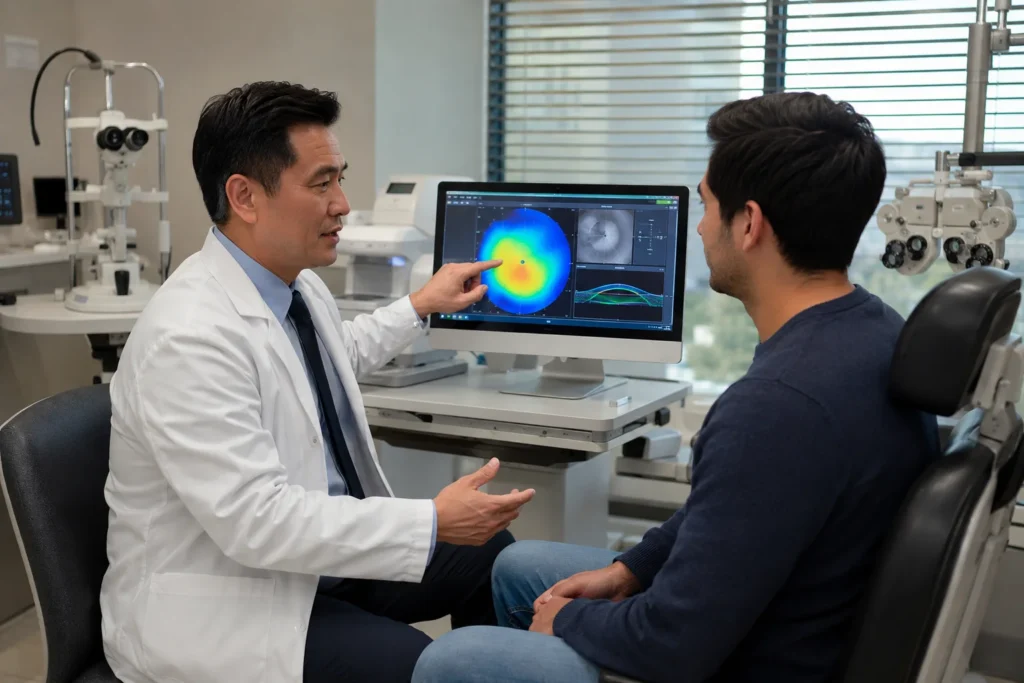
If you are tired of depending on glasses or contact lenses, you may have started researching refractive eye surgery. Modern vision correction can reduce dependence on corrective lenses, but deciding whether surgery is right for you requires more than checking your glasses prescription.
A proper decision begins with understanding your eye health, corneal structure, prescription stability, lifestyle, age, and expectations. In an ophthalmology consultation, the goal is not simply to determine whether surgery can be performed, but whether it is the safest and most appropriate option for your eyes.
For patients considering treatment in Flushing, Queens, NYC, a comprehensive evaluation with a board-certified ophthalmologist can help clarify which options are realistic and what limitations should be expected.
What Is Refractive Eye Surgery?
Refractive eye surgery is a group of procedures designed to improve the way the eye focuses light, reducing dependence on glasses or contact lenses.
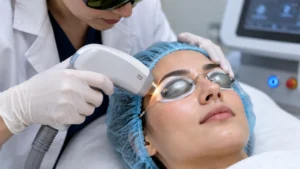
The most familiar procedure is LASIK, which reshapes the cornea—the clear front surface of the eye. Other forms of laser vision correction include PRK and SMILE. Each technique works differently and has its own advantages, limitations, recovery process, and candidacy requirements.
The purpose of treatment is not simply to produce perfect vision on an eye chart. An experienced ophthalmologist also considers visual quality, corneal health, tear-film stability, night vision, prescription stability, and the patient’s daily visual demands.
This distinction is important because two people with identical glasses prescriptions may not be equally suitable for the same procedure.
How Does Refractive Surgery Correct Vision?
A healthy eye focuses incoming light onto the retina, the light-sensitive tissue at the back of the eye. When the eye’s focusing system is not properly matched to its length or shape, light may focus in front of or behind the retina.
This produces common refractive errors such as:
- Myopia (nearsightedness): distant objects appear blurry.
- Hyperopia (farsightedness): close-up vision may be difficult, particularly with age.
- Astigmatism: an irregular curvature causes blurred or distorted vision.
Laser vision correction changes the shape of the cornea so that incoming light can be focused more appropriately.
However, refractive surgery does not correct every possible cause of blurred vision. Problems involving the lens, retina, optic nerve, or ocular surface may require completely different treatment.
Why a Detailed Eye Examination Comes First
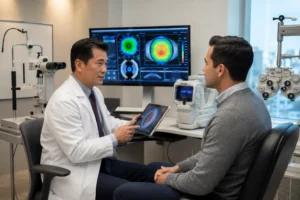
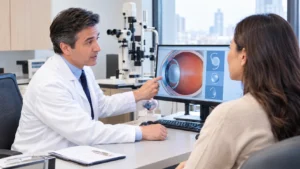
One of the most important parts of refractive surgery is actually the examination that happens before surgery.
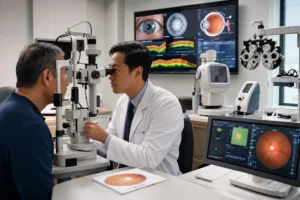
A glasses prescription or an automated measurement cannot tell the complete story about your eyes. Your ophthalmologist may evaluate your corneal thickness and shape, tear film, eye pressure, retina, optic nerve, prescription stability, and overall ocular health.
Advanced diagnostic imaging can help identify corneal irregularities that may not be obvious during a routine vision test.
What Does an Autorefractor Eye Test Do?
An autorefractor is an automated instrument that estimates the eye’s refractive error. It can provide useful objective measurements during an eye examination.
Patients sometimes search online for an autorefractor eye test house or other automated methods of checking their prescription. While automated testing can be convenient, it should not be confused with a comprehensive ophthalmic evaluation.
An autorefractor does not determine whether you are a candidate for LASIK, PRK, or another refractive procedure. That decision requires examination of the entire eye and interpretation of multiple clinical findings.
Who May Be a Candidate for Refractive Eye Surgery?

Candidacy is individualized. There is no single prescription level that automatically makes someone suitable for surgery.
A potential candidate generally needs healthy eyes and a reasonably stable prescription. The ophthalmologist will also consider corneal thickness, corneal shape, dry-eye symptoms, age, previous eye conditions, medications, and other factors.
The U.S. Food and Drug Administration advises patients to discuss their individual risks and suitability with an appropriately qualified eye-care professional before LASIK.
When Surgery May Need to Be Delayed
Sometimes the safest decision is to treat another eye problem first.
For example, significant dry eye can make the surface of the eye less stable and may need attention before considering laser vision correction. An abnormal corneal shape can also affect whether a laser procedure is appropriate.
A changing prescription may be another reason to wait. If the prescription has not stabilized, treating it surgically may not provide the predictable long-term result the patient expects.
This is why a responsible consultation should include both the reasons for surgery and the reasons not to proceed.
Refractive Error Is Not the Same as Cataract
Another important distinction is between refractive error and cataract.
Refractive errors affect how light is focused. A cataract occurs when the eye’s natural lens becomes cloudy. These conditions can sometimes produce similar complaints, but they require different approaches.
People researching the sign symptoms of cataract may notice blurry or cloudy vision, faded colors, difficulty seeing at night, sensitivity to bright light, halos around lights, or changes in vision. The National Eye Institute notes that cataracts can gradually interfere with everyday activities as they progress.
Why This Difference Matters
LASIK does not remove a cataract because LASIK changes the cornea rather than replacing the cloudy natural lens.
If vision problems are being caused primarily by a cataract, the appropriate discussion may involve cataract surgery and intraocular lens options rather than corneal laser surgery.
This is one reason a complete eye examination is more valuable than choosing a procedure based only on an online search or a glasses prescription.
LASIK Is Not Automatically the Best Procedure
LASIK is widely known, but it is not the only form of refractive surgery.
PRK, for example, does not create the same type of corneal flap used in LASIK. Recovery is generally different, and the appropriate choice depends on the patient’s corneal characteristics and other clinical factors.
SMILE is another laser vision correction approach that uses a different surgical technique. Availability and suitability depend on the patient’s prescription, anatomy, technology, and surgeon’s assessment.
The right question is therefore not simply, “Which procedure is best?”
It is:
“Which vision-correction option is safest and most appropriate for my eyes?”
That answer should come from a detailed examination and a shared decision-making discussion with an ophthalmologist.
What Patients Should Realistically Expect
Many patients considering refractive eye surgery are primarily concerned about three things: whether the procedure will hurt, how quickly vision will improve, and whether they will ever need glasses again.
These are reasonable questions, but the answers vary between patients and procedures.
Refractive surgery can reduce dependence on glasses or contact lenses, but no responsible ophthalmologist should promise perfect or permanent freedom from corrective lenses. Some patients may experience residual prescription, dry-eye symptoms, glare, halos, or other visual disturbances.
Age also matters. Surgery can correct the refractive error present at the time of treatment, but it cannot prevent presbyopia, the normal age-related reduction in near-focusing ability.
For someone considering refractive eye surgery in Flushing, Queens, New York City, the most useful first step is therefore not selecting a procedure from an advertisement. It is obtaining a careful assessment of the eyes, understanding the available alternatives, and deciding whether the expected benefits justify the potential risks and limitations.
Understanding the Main Refractive Surgery Options
Once an eye examination confirms that vision correction may be appropriate, the next step is understanding which procedure fits your eyes. LASIK, PRK, and SMILE are not interchangeable treatments, even though they share the same broad goal of reducing dependence on glasses or contact lenses.
LASIK
LASIK reshapes the cornea after creating a thin corneal flap. One reason patients often consider LASIK is its generally rapid visual recovery compared with surface-based procedures.
However, faster recovery does not mean that LASIK is automatically the safest choice for everyone. Corneal measurements, tear-film health, prescription, lifestyle, and other findings must be considered before surgery.
PRK
PRK also reshapes the cornea but does not create a LASIK-style flap. Instead, the surface layer of the cornea is removed or displaced before laser treatment, and the surface then heals.
The early recovery period can be more noticeable than with LASIK, and useful vision may take longer to stabilize. For selected patients, however, PRK can be an appropriate alternative when LASIK is not ideal.
SMILE
SMILE uses a small corneal incision through which a precisely created piece of corneal tissue is removed. It is another form of laser vision correction, but it is not appropriate for every prescription or every corneal anatomy.
The availability of a particular procedure should never be the sole reason for choosing it. A patient’s examination should determine which options are worth considering.
LASIK, PRK, and SMILE: What Is the Difference?
| Feature | LASIK | PRK | SMILE |
|---|---|---|---|
| Main treatment area | Cornea | Cornea | Cornea |
| Corneal flap | Yes | No | No traditional flap |
| Early recovery | Usually quicker | Usually slower | Generally relatively quick |
| Surface healing | Less prominent | More significant | Different from PRK |
| Candidacy | Depends on examination | Depends on examination | Depends on prescription and anatomy |
| Best choice | Individualized | Individualized | Individualized |
This comparison is useful for understanding the procedures, but it should not be used to choose surgery without an examination.
What Are the Risks of Refractive Eye Surgery?
Like any surgical procedure, refractive eye surgery has potential risks. A good consultation should discuss these openly rather than focusing only on the potential benefits.
Some patients may experience:
- Dryness or fluctuating vision
- Glare or halos, particularly in certain lighting conditions
- Difficulty with night vision
- Residual or recurrent refractive error
- Temporary visual fluctuations during healing
- Corneal complications
- Rare but serious complications affecting vision
The likelihood and significance of these problems vary according to the procedure, the patient’s anatomy, pre-existing eye conditions, and other factors.
The FDA advises patients to understand potential LASIK complications and discuss individual risks with their eye-care professional before treatment.
Dry Eye Deserves Special Attention
Dry eye is particularly important when discussing laser vision correction.
Patients who spend long hours looking at computers or phones may already experience burning, fluctuating vision, foreign-body sensation, or tired eyes. Contact lens wear can also contribute to ocular-surface discomfort.
This is relevant to many people living and working in an urban environment such as Flushing, Queens, where screen-heavy office work and long commuting days can make visual comfort an everyday concern.
If the ocular surface is unhealthy before surgery, treating that problem first may improve comfort and make the preoperative measurements more reliable.
What Happens During a Refractive Surgery Consultation?
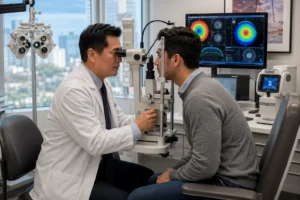
A thorough consultation should be much more than reading letters from an eye chart.
Your ophthalmologist may begin by reviewing your visual history and asking how you currently use glasses or contact lenses. The discussion may include your occupation, hobbies, driving habits, screen use, previous eye procedures, allergies, medications, and any history of dry eye.
The examination may then include detailed measurements of the cornea and assessment of the overall health of the eyes.
Questions Patients Commonly Ask
Patients often want to know:
- Will I feel anything during the procedure?
- How soon can I return to work?
- Can I drive at night afterward?
- Will I still need reading glasses?
- What happens if my prescription changes?
- Can dry eye affect my recovery?
- Is LASIK safer than PRK for my eyes?
- What happens if I am not a candidate?
These questions are not minor details. They help determine whether the patient’s expectations match what the procedure can realistically provide.
Recovery: What Should You Expect?
Recovery varies by procedure and by patient.
Some people notice useful vision relatively quickly, while others experience fluctuating vision or discomfort during the early healing period. The surface of the eye may need time to stabilize, and vision can continue changing during the recovery process.
Patients should follow their surgeon’s instructions regarding prescribed eye drops, eye protection, hygiene, activity restrictions, and follow-up appointments.
Returning to Work and Daily Activities
The timing of a return to normal activities depends on the procedure, the individual’s healing, and the nature of their work.
Someone working at a computer may have different concerns from someone who works outdoors, participates in contact sports, or drives at night for long periods.
Rather than following a generic recovery timetable, patients should ask their ophthalmologist when their specific activities are appropriate.
Can Refractive Surgery Prevent Future Vision Problems?
This is an important misconception to address.
Refractive surgery changes the focusing characteristics of the eye, but it does not make the eye immune to future eye disease.
A person can still develop cataracts, glaucoma, retinal disease, dry eye, or other age-related conditions after successful refractive surgery.
Regular comprehensive eye examinations therefore remain important, particularly as patients get older.
Refractive Surgery and Presbyopia
Presbyopia deserves particular attention for patients in their 40s and beyond.
The natural lens inside the eye gradually becomes less flexible with age. As a result, focusing on nearby objects becomes more difficult.
A patient may have excellent distance vision after refractive surgery and still eventually need reading glasses.
This does not mean the surgery failed. It reflects a normal age-related change that laser corneal surgery does not stop.
When Cataract Surgery Becomes the More Relevant Option
If the natural lens becomes significantly cloudy, cataract surgery may eventually become more appropriate than corneal laser correction.
Patients sometimes assume that increasing blur means their glasses prescription simply needs to be changed. But persistent glare, halos, cloudy vision, faded colors, or worsening night vision can warrant a comprehensive eye examination.
Recognizing the difference between ordinary refractive error and cataract-related visual changes is particularly important for older adults.
The National Eye Institute recommends discussing cataract symptoms with an eye-care professional when vision changes begin interfering with daily activities.
Making a Safe Decision About Vision Correction

The best refractive surgery decision is not necessarily the one that promises the quickest recovery or the greatest freedom from glasses.
A medically sound decision considers:
- Whether the prescription is stable
- Whether the cornea is healthy
- Whether dry eye is adequately controlled
- Whether expectations are realistic
- Whether age-related vision changes are already developing
- Whether another eye condition could explain the visual symptoms
- Whether alternatives may provide a better risk-benefit balance
At LeeVision, the purpose of a refractive evaluation should be to understand these factors clearly and help the patient make an informed decision based on individual eye health rather than marketing claims.
For patients in Flushing, Queens, NYC, this personalized approach is particularly valuable because modern refractive surgery offers several possibilities, but not every possibility is appropriate for every pair of eyes.
The most important outcome is not simply reducing the need for glasses. It is choosing an approach that respects patient safety, visual quality, long-term eye health, and realistic expectations.
Refractive Eye Surgery: FAQs, Patient Guidance, and SEO Information
How to Decide Whether Refractive Eye Surgery Is Right for You
The decision to undergo refractive eye surgery should be based on your individual eyes rather than your glasses prescription alone.
A good consultation considers corneal measurements, prescription stability, tear-film health, eye pressure, retinal health, lifestyle, age, and expectations. The FDA specifically recommends that patients understand candidacy requirements, potential risks, limitations, and alternatives before undergoing LASIK or another refractive procedure.
For patients in Flushing, Queens, New York City, this individualized approach can be particularly useful when contact lenses have become uncomfortable, work requires frequent glasses use, or daily activities make corrective lenses inconvenient.
Questions to Ask Before Vision Correction
Before choosing refractive eye surgery, patients should feel comfortable asking:
- Why am I a candidate for this procedure?
- Which procedure is most appropriate for my cornea?
- Is my prescription stable?
- Do I have dry eye?
- What are my individual risks?
- Could I still need glasses afterward?
- How could presbyopia affect my vision later?
- Are there non-surgical alternatives?
- What happens if the desired correction is not achieved?
These questions help turn a procedure decision into informed shared decision-making.
Frequently Asked Questions About Refractive Eye Surgery
What is refractive eye surgery?
Refractive eye surgery refers to procedures that change the focusing characteristics of the eye to reduce dependence on glasses or contact lenses. LASIK, PRK, and SMILE are examples of corneal refractive procedures.
The exact procedure depends on the patient’s prescription, corneal anatomy, eye health, age, and visual goals.
Is refractive eye surgery the same as LASIK?
No. LASIK is one form of refractive eye surgery. PRK and SMILE are other approaches to laser vision correction.
The fact that LASIK is widely known does not mean it is automatically the best choice for every patient.
Is refractive eye surgery safe?
When appropriately selected patients are treated with approved technology and proper surgical planning, refractive eye surgery can provide significant reduction in dependence on glasses or contacts.
However, it is still elective surgery and carries risks. Dry eye, glare, halos, residual prescription, changes in night vision, and other complications can occur. Some patients may experience serious visual complications.
Can everyone who wears glasses have refractive eye surgery?
No. Wearing glasses or contacts does not automatically make someone a candidate.
A stable prescription, healthy cornea, adequate corneal tissue, reasonable expectations, and overall eye health are important considerations. Dry eye, certain corneal conditions, unstable prescriptions, and other factors may make treatment inappropriate or require further evaluation.
Does an autorefractor eye test determine whether I need LASIK?
No. An autorefractor provides an automated estimate of refractive error, but it cannot independently determine surgical candidacy.
An autorefractor eye test is only one part of an eye examination. Refractive surgery planning requires additional assessment of the cornea, ocular surface, eye health, and visual needs.
Can I rely on an autorefractor eye test at home?
An autorefractor eye test house search may lead patients toward automated or consumer-based vision-testing options, but these should not replace an in-person ophthalmic examination when surgery is being considered.
Automated measurements can be useful, but they do not provide the complete clinical information needed to safely plan refractive eye surgery.
What are the main risks of refractive eye surgery?
Potential risks include dry eye, glare, halos, starbursts, difficulty with night vision, residual refractive error, undercorrection, overcorrection, and other complications.
The FDA emphasizes that some patients may still need glasses or contact lenses and that certain visual symptoms can occur after treatment.
Can refractive eye surgery cause dry eye?
It can. Dry-eye symptoms may occur or become worse following laser vision correction.
This is why evaluating the ocular surface before refractive eye surgery is important. Patients who already experience burning, irritation, fluctuating vision, or contact lens intolerance should discuss these symptoms during the consultation.
Will I have perfect vision after refractive eye surgery?
No surgeon should guarantee perfect vision.
The goal of refractive eye surgery is generally to reduce dependence on glasses or contacts, but individual results vary. Some patients may continue to need corrective lenses for certain activities or may require additional treatment.
Can I still need glasses after refractive eye surgery?
Yes. Some patients may need glasses after refractive eye surgery, particularly for specific tasks such as night driving or reading.
The FDA specifically notes that patients may still require glasses or contact lenses after LASIK.
Will I need reading glasses after refractive eye surgery?
Possibly, particularly as you develop presbyopia.
Presbyopia is the normal age-related loss of near-focusing ability. Correcting distance vision with refractive eye surgery does not stop the natural aging process of the eye.
Can people over 40 have refractive eye surgery?
Age alone does not automatically rule out refractive eye surgery, but the discussion becomes more complicated after approximately age 40 because presbyopia becomes increasingly relevant.
For some patients, the ophthalmologist may discuss different strategies, including whether corneal laser correction or another lens-based option makes more sense.
What are the sign symptoms of cataract?
The sign symptoms of cataract can include cloudy or blurry vision, faded colors, difficulty seeing at night, sensitivity to headlights or bright lights, halos around lights, and sometimes double vision. Cataracts can initially produce few or no noticeable symptoms.
Can cataract symptoms be confused with a refractive error?
Yes. Both cataracts and refractive errors can cause blurry vision.
However, cataracts involve clouding of the natural lens, while refractive errors involve how the eye focuses light. If a patient’s vision keeps changing despite updated glasses, or if glare and night-vision problems are increasing, a comprehensive eye examination can help identify the underlying cause.
Can LASIK treat cataracts?
No. LASIK reshapes the cornea and does not remove a cloudy natural lens.
If a cataract is responsible for significant visual impairment, cataract surgery may eventually be recommended. The National Eye Institute explains that cataract surgery removes the cloudy lens and replaces it with an artificial intraocular lens.
What happens if I develop cataracts after refractive eye surgery?
Having successful refractive eye surgery does not prevent future cataracts.
Patients can still develop age-related eye conditions after laser vision correction, which is why regular eye examinations remain important throughout adulthood.
Is PRK better than LASIK?
Neither procedure is universally better.
PRK may be appropriate for some patients who are not ideal LASIK candidates, while LASIK may offer faster early visual recovery for appropriately selected patients. The decision should be based on corneal anatomy, prescription, ocular surface health, lifestyle, and other clinical factors.
Is SMILE better than LASIK?
Not necessarily. SMILE and LASIK use different techniques, and each has specific indications and limitations.
The most appropriate approach depends on the patient’s individual examination rather than simply choosing the newest or most popular procedure.
How long does recovery take after refractive eye surgery?
Recovery depends on the procedure and the individual patient.
LASIK often has a relatively rapid early visual recovery, while PRK generally involves a longer surface-healing period. Vision can continue to fluctuate while the eyes stabilize.
Your surgeon should provide personalized instructions regarding work, exercise, eye protection, medications, and follow-up.
Can I return to computer work after refractive eye surgery?
Many patients return to computer-based work relatively soon, but timing varies by procedure and recovery.
Because prolonged screen use can reduce blinking and aggravate dry-eye symptoms, patients who work at computers should discuss visual comfort and screen habits during recovery.
Can I drive at night after refractive eye surgery?
Night driving should be approached carefully during the recovery period.
Some patients experience glare, halos, or reduced contrast sensitivity after refractive eye surgery. These symptoms may improve with healing, but patients should follow their surgeon’s advice before returning to night driving.
Does refractive eye surgery last forever?
The corneal change created by surgery is intended to be long-lasting, but that does not mean your vision can never change again.
Age-related changes, presbyopia, cataracts, and other eye conditions can affect vision later. The FDA also cautions that patients should understand that results may not represent the last vision correction they will ever need.
What is the most important thing to know before refractive eye surgery?
The most important point is that refractive eye surgery should be selected for the patient, not the other way around.
A careful examination can determine whether laser vision correction is appropriate, which procedure may be suitable, what risks matter most for that individual, and whether another treatment would provide a better balance between benefits and limitations.
For patients considering vision correction in Flushing, Queens, NYC, an individualized ophthalmology consultation is the appropriate starting point. LeeVision provides comprehensive eye-care evaluation and can help patients understand their options without treating surgery as a one-size-fits-all solution.
Final Takeaway
Modern refractive eye surgery can provide meaningful freedom from glasses and contact lenses for carefully selected patients. But the quality of the decision depends on more than the laser itself.
Understanding candidacy, dry eye, corneal health, realistic visual expectations, presbyopia, cataract symptoms, recovery, and long-term eye care allows patients to make a more informed choice.
The best outcome begins with an honest conversation between patient and ophthalmologist—one that considers both what surgery can accomplish and where its limitations begin.