




Modern vision correction has evolved far beyond glasses and daytime contact lenses. Today, one of the most innovative and non-invasive treatments for refractive errors especially myopia is orthokeratology also known as Ortho-K. These specially designed orthokeratology lenses reshape the cornea while you sleep allowing you to enjoy clear vision throughout the day without wearing glasses, lenses or undergoing surgery.
In recent years, orthokeratology has gained significant popularity, particularly among people who want freedom from daytime eyewear and parents seeking advanced myopia-control options for their children. Whether you are looking for a lens for orthokeratology, curious about how the procedure works or searching for orthokeratology near me, this comprehensive guide will walk you through everything you need to know.
What Is Orthokeratology?
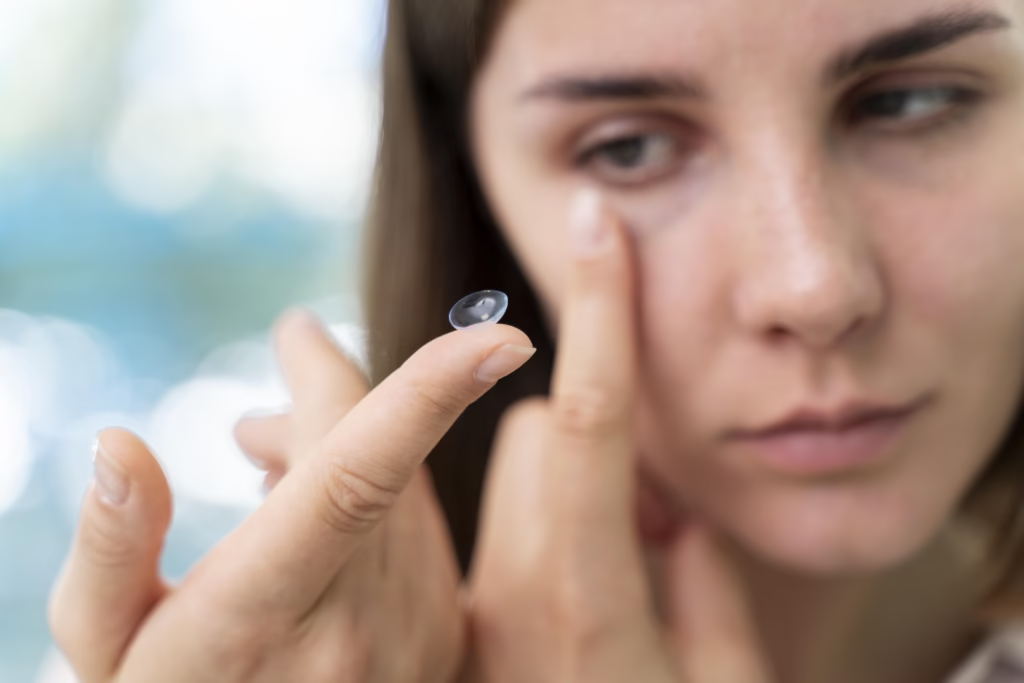
Orthokeratology or Ortho-K is a non-surgical vision correction method that uses specially designed, gas-permeable contact lenses to reshape the cornea temporarily. The process is entirely reversible and safe when supervised by an eye care professional.
When worn at night, the lenses apply controlled pressure to the cornea, flattening it slightly to correct refractive errors such as:
- Myopia (nearsightedness)
- Astigmatism
- Low levels of hyperopia (farsightedness)
- Presbyopia (in some cases, with specialized designs)
When you wake up and remove the lenses, your corneas hold the corrected shape, allowing you to see clearly throughout the day without glasses or contact lenses.
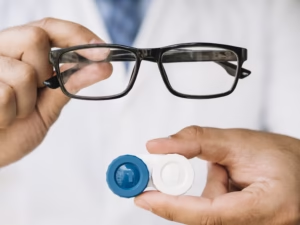
How Orthokeratology Lenses Work
Orthokeratology lenses are made from highly breathable materials that allow oxygen to pass through while reshaping the cornea. Their unique design includes a reverse-curve pattern that applies gentle hydraulic forces to mold the outer surface of the eye.
The Process in Simple Steps
- Eye Examination
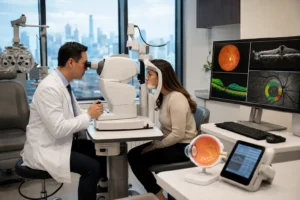
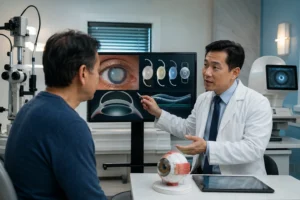
The journey starts with a detailed corneal mapping (topography), visual assessment and consultation. - Lens Fitting
Your doctor chooses a customized lens for orthokeratology based on your corneal shape and refractive error. Each pair is unique to the individual. - Nighttime Wear
You wear the lenses at night while sleeping. Most people require 6 to 8 hours of wear. - Daytime Vision
After removing the lenses in the morning, you can enjoy clear vision for up to 24 to 48 hours depending on your specific case. - Follow-up Care
Regular checkups ensure corneal health and stability.
This non-invasive method provides the convenience of refractive surgery without its risks or permanence.
Who Can Benefit from Orthokeratology Lenses?
Orthokeratology lenses are suitable for a wide range of people, from children to adults. Here is a detailed look at who can benefit most:
- Children with Progressive Myopia
Research shows that orthokeratology can help slow down the progression of childhood myopia. It is considered one of the most effective myopia-control strategies available today.
- Adults Who Want Freedom from Daytime Lenses
People with active lifestyles often prefer Ortho-K because it eliminates the need for contact lenses or glasses during:
- Sports
- Outdoor activities
- Office work
- Long days in dry environments
- People Unsuitable for Laser Eye Surgery
If you are not eligible for LASIK because of thin corneas, unstable refractive error or personal preference, orthokeratology offers similar freedom but without surgery.
- Those with Dry Eye From Regular Contact Lenses
Many contact lens users experience dryness, especially in air-conditioned environments. Since Ortho-K lenses are worn only during sleep, daytime dryness is significantly reduced.
Advantages of Orthokeratology Lenses
Orthokeratology offers a wide range of benefits, making it one of the most popular alternatives to glasses, contact lenses and LASIK.
- Non-Surgical and Completely Reversible
Unlike surgical procedures such as LASIK or PRK, Ortho-K does not permanently alter the cornea. If you stop wearing the lenses, your corneas gradually return to their natural shape.
- Daytime Freedom
Wake up, remove the lenses, and enjoy clear vision all day long. No dry eyes, no foggy glasses and no discomfort during sports.
- Excellent for Kids
Orthokeratology is one of the safest and most effective options for reducing the risk of high myopia in children.
- Enhanced Comfort
Since the lenses are worn during sleep, discomfort is minimal because the eyelids remain closed.
- Safe for Long-Term Use
Ortho-K has been studied for decades, and when performed with professional supervision, it is safe and effective for long-term use.
How Long Does It Take to See Results?
Most people notice a significant improvement after the first night of wearing orthokeratology lenses. However, it may take a few days to a couple of weeks for full correction depending on:
- Your level of myopia
- Corneal flexibility
- Lens design
- Adherence to nightly usage
During the adjustment period, your doctor may provide soft lenses for temporary daytime use.
Are Orthokeratology Lenses Safe?
When fitted and monitored by an experienced optometrist or ophthalmologist, Ortho-K is considered extremely safe. The risk of complications such as infection is low and comparable to regular contact lens wear, provided you follow proper lens hygiene.
Safety Tips
- Clean and disinfect lenses daily.
- Avoid tap water contact at all costs.
- Attend follow-up visits as scheduled.
- Replace lenses as recommended by your practitioner.
If you experience redness, pain or blurry vision, contact your doctor immediately.
Types of Ortho-K Lenses
Several brands and designs are available and your practitioner will recommend the best lens for orthokeratology based on your individual needs.
Some common designs include:
- Paragon CRT
- Emerald lenses
- Euclid Ortho-K lenses
- MoonLens
- Wave Ortho-K custom lenses
Each design offers unique features but all serve the same purpose safe and effective corneal reshaping.
How to Find Orthokeratology Near Me
If you’re ready to explore orthokeratology, searching for orthokeratology near me is a great first step. But selecting the right provider is crucial.
What to Look For
- Certified Ortho-K Practitioner
Not all optometrists specialize in corneal reshaping. Look for a certified Ortho-K expert. - Advanced Corneal Topography Equipment
The provider must have modern diagnostic machines to map your cornea accurately. - Experience with Children (if applicable)
If seeking myopia control for kids, choose someone experienced in pediatric vision care. - Reviews & Success Stories
Check online ratings and patient testimonials. - Transparent Pricing
Ask about consultation fees, lens costs and follow-up visits.
Cost of Orthokeratology
The cost varies depending on your region and provider. Generally, the investment includes:
- Initial consultation
- Corneal topography
- Customized lenses
- Follow-up visits
The price is usually higher than regular contact lenses but significantly lower than refractive surgery.
Though pricing differs everywhere, most people consider it a valuable long-term investment for clear vision and myopia control.
Maintenance and Care Tips
Proper lens hygiene is essential to keeping your eyes healthy. Follow these steps:
Daily Care
- Wash hands thoroughly before handling lenses.
- Use approved solutions to clean and disinfect.
- Never use expired products.
Weekly Care
- Use a protein remover (if recommended).
- Inspect lenses for scratches or warping.
Lens Replacement
Most orthokeratology lenses last between 12 to 18 months. Your eye care professional will guide you on when to replace them to maintain optimal vision and safety.
Potential Side Effects (Rare but Possible)
While orthokeratology is generally safe, a few mild side effects may occur temporarily:
- Mild glare or halos
- Slight corneal staining
- Morning vision fluctuations
- Light sensitivity
- Redness or irritation if lenses are not cleaned properly
These issues usually resolve with proper care or minor adjustments to the lens design.
Frequently Asked Questions:
- How long does the vision correction last?
Most people enjoy clear vision for 24 hours or more after removing the lenses, depending on their prescription and usage pattern.
- Is orthokeratology painful?
No, the lenses may feel noticeable for the first few nights but are generally comfortable because your eyes remain closed during sleep.
- Are these lenses safe for children?
Yes, orthokeratology is widely used to control myopia progression in children and is considered safe with proper supervision.
- Can I stop using the lenses anytime?
Yes, The process is reversible. Your vision will return to its original state within days.
- Can I wear the lenses during the day?
They are designed for nighttime wear. Some practitioners may allow temporary daytime use during the adaptation phase.
- What is the maximum prescription Ortho-K can correct?
Most designs correct up to −6.00D of myopia and moderate astigmatism, though this varies by lens design and practitioner experience.
- Does orthokeratology help with astigmatism?
Yes, specialized Ortho-K lenses can correct certain levels of astigmatism.
- How often do I need follow-ups?
Typically:
- Initial fitting – multiple visits within the first month
- After stabilization – every 6 months
- Are there risks of eye infection?
Risk is low and similar to regular contact lens use, as long as proper care and hygiene are maintained.
- Can I travel while using orthokeratology lenses?
Absolutely. Just bring your cleaning solutions, storage case and backup glasses.
Conclusion:
Orthokeratology lenses offer a safe, effective and non-surgical solution for achieving clear vision without daytime eyewear. Whether you are an adult who wants visual freedom or a parent searching for an advanced myopia-control method, Ortho-K provides outstanding benefits.
From convenience and comfort to proven results, this technology continues to grow in popularity worldwide. And with the right practitioner, you can enjoy clearer, sharper vision naturally and safely.
If you are interested in experiencing Ortho-K yourself, simply search for orthokeratology near me and schedule a professional evaluation. It may just be the life-changing vision solution you have been looking for.