


Vision Test Machine: How Modern Eye Exams Help Detect Vision Problems Early
Many people assume an eye exam is only necessary when their vision becomes blurry or they need a new pair of glasses. In reality, some of the most important eye conditions begin long before noticeable symptoms appear. One of the most valuable tools we use in modern ophthalmology is the vision test machine, which allows us to evaluate much more than visual clarity alone.
At LeeVision in Flushing, Queens, patients often tell me they expected a simple vision check but were surprised by how much information today’s diagnostic technology can provide. A comprehensive eye examination can reveal early signs of glaucoma, cataracts, retinal disease, binocular vision problems, dry eye disease, and even certain health conditions that affect the eyes before symptoms become severe.
As a Board-Certified Ophthalmologist, my goal is not simply to determine whether someone needs glasses. Every examination is an opportunity to understand how the eyes work together, assess the overall health of the visual system, and identify problems while they are still easier to manage. Early diagnosis frequently provides more treatment options and helps protect long-term vision.
Whether you have noticed blurry vision, frequent headaches, double vision, eye strain after long hours on digital devices, or you simply want to maintain healthy eyesight as you age, understanding how a modern vision test machine works can help you appreciate why comprehensive eye examinations are one of the most important investments you can make in your vision.
Why Modern Eye Exams Are Different Than They Used to Be
Years ago, many eye examinations focused primarily on reading letters from a wall chart and updating a glasses prescription. While visual acuity remains important, modern ophthalmology has evolved dramatically.
Today’s eye care combines physician expertise with advanced diagnostic technology to evaluate the eye from multiple perspectives. Instead of asking only, “Can you see clearly?” we now ask much broader questions:
- Are both eyes working together properly?
- Is the optic nerve healthy?
- Are there early signs of glaucoma?
- Is the retina functioning normally?
- Are the eye muscles properly aligned?
- Is dry eye affecting vision?
- Could neurological conditions be contributing to visual symptoms?
These questions cannot be answered by reading an eye chart alone.
Modern diagnostic equipment helps ophthalmologists collect precise measurements that support clinical judgment. Importantly, the technology does not replace the physician’s expertise—it enhances it by providing detailed information that guides personalized care.
What Is a Vision Test Machine?
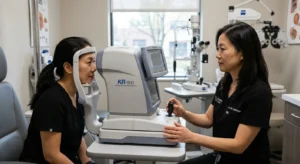
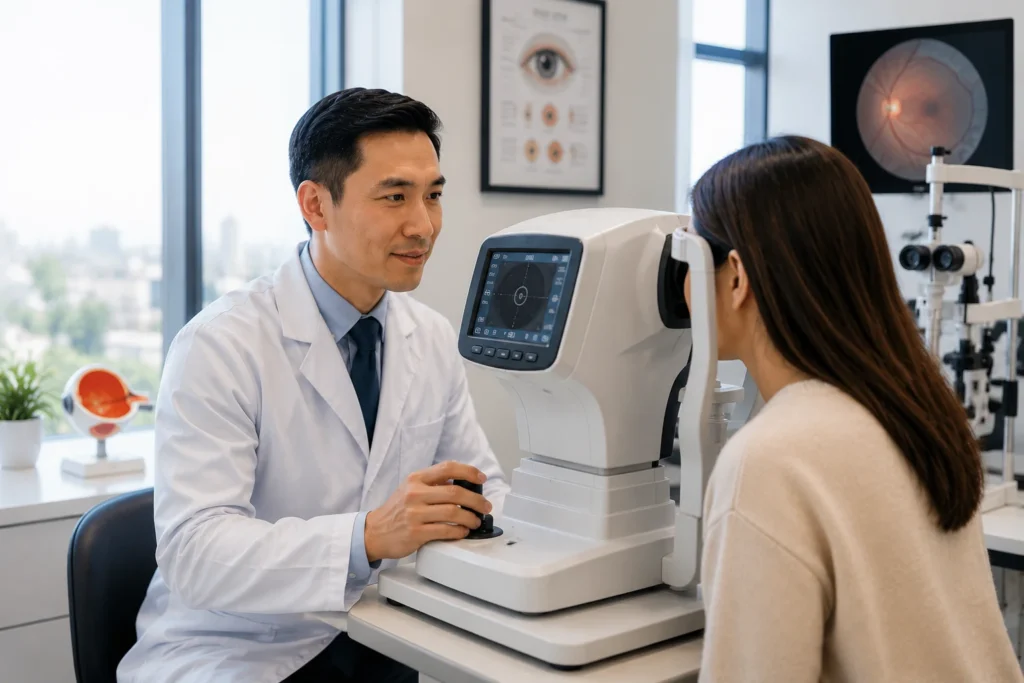
A vision test machine is not a single device but rather a collection of specialized instruments used during a comprehensive eye examination. Each machine evaluates a different aspect of vision or eye health, allowing your ophthalmologist to build a complete picture of how your eyes function.
During a routine visit, several diagnostic tools may be used depending on your symptoms, age, medical history, and risk factors.
Some machines measure your glasses prescription, while others assess eye pressure, examine the retina, evaluate the cornea, or analyze how your eyes work together as a team. Certain devices can even detect subtle changes before you notice any problems yourself.
One of the most common questions patients ask is whether these tests are painful. Fortunately, the vast majority of modern vision tests are completely non-invasive. Most simply involve looking at a target, resting your chin on a support, or following a light while images are captured in just a few seconds.
What Can a Vision Test Machine Detect?
One of the biggest misconceptions is that eye testing is only about determining whether someone needs glasses. In reality, modern diagnostic technology helps identify a wide range of conditions that may otherwise go unnoticed.
A comprehensive examination may detect:
| Condition | What the Test Can Reveal |
|---|---|
| Refractive errors | Nearsightedness, farsightedness, and astigmatism |
| Cataracts | Clouding of the eye’s natural lens |
| Glaucoma | Elevated eye pressure and optic nerve damage |
| Retinal diseases | Macular degeneration, diabetic retinopathy, retinal tears |
| Dry eye disease | Tear film instability and ocular surface damage |
| Eye muscle disorders | Misalignment causing eye strain or double vision |
| Binocular vision problems | Difficulty coordinating both eyes together |
| Neurological concerns | Certain visual changes requiring further evaluation |
Because many eye diseases develop gradually, patients often do not realize anything is wrong until permanent vision loss has already occurred. This is why regular comprehensive eye examinations remain essential, particularly for adults over 40 and individuals with diabetes, high blood pressure, or a family history of eye disease.
Signs You Should Schedule a Comprehensive Eye Examination
In clinical practice, many patients delay care because they assume their symptoms are caused by fatigue or spending too much time on computers. While digital eye strain is common, persistent visual symptoms deserve professional evaluation.
You should consider scheduling an eye examination if you notice:
- Blurry vision that comes and goes
- Frequent headaches after reading or computer work
- Difficulty focusing between near and distant objects
- Eye fatigue during long workdays
- Double vision
- Trouble driving at night
- Increasing sensitivity to light
- Difficulty reading small print
- Eyes that feel dry or irritated
- Reduced depth perception
- Sudden changes in vision
Even if these symptoms seem mild, they may indicate underlying conditions that are easier to address when detected early.
What Happens During Your Eye Examination?
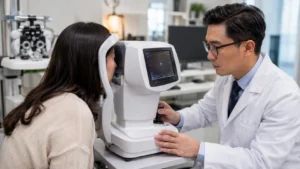
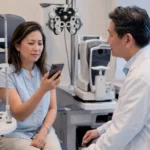
Many patients feel anxious before their first comprehensive ophthalmology visit because they are unsure what to expect. In reality, the examination is designed to be comfortable, informative, and tailored to your specific concerns.
At LeeVision in Flushing, Queens, every evaluation begins with a conversation rather than immediately moving to testing equipment. Understanding your symptoms, medical history, medications, lifestyle, and visual demands helps determine which diagnostic tests are most appropriate.
For example, someone experiencing headaches while using a computer may require different testing than an older adult noticing new episodes of double vision or difficulty driving at night.
After discussing your concerns, several diagnostic instruments may be used to evaluate:
- Visual acuity
- Prescription changes
- Eye alignment
- Eye movement
- Pupil function
- Corneal health
- Lens clarity
- Eye pressure
- Retinal health
- Optic nerve appearance
If additional testing is needed, it is selected based on your individual findings rather than following a one-size-fits-all approach.
Understanding Binocular Vision: Why Clear Eyesight Depends on Both Eyes Working Together
Many people believe that having 20/20 vision means their eyes are healthy. In reality, you can have excellent vision in each eye individually and still struggle with everyday tasks because your eyes are not working together properly.
This is where a binocular vision test becomes important. Rather than measuring how clearly each eye sees on its own, it evaluates how both eyes function as a coordinated team. Reading, driving, using a computer, judging distances, and maintaining comfortable vision throughout the day all depend on this coordination.
At LeeVision in Flushing, Queens, we frequently evaluate patients who describe symptoms such as eye fatigue, headaches, difficulty concentrating, or occasional double vision—even though their glasses prescription appears accurate. In many cases, the underlying issue is not poor eyesight but a problem with how the brain and eyes communicate.
What Is Binocular Vision?
Binocular vision is the ability of both eyes to focus on the same object at the same time while sending matching images to the brain. The brain then combines these two images into a single, clear picture with depth perception.
This process happens automatically in healthy eyes. You rarely think about it because the eye muscles and brain work together continuously.
When binocular vision is disrupted, the eyes may struggle to stay aligned. The brain has to work harder to maintain single vision, often leading to symptoms that worsen as the day progresses.
Patients commonly describe:
- Eye strain after reading
- Headaches around the forehead or temples
- Difficulty focusing on computer screens
- Words appearing to move on a page
- Trouble judging distances
- Fatigue after visual tasks
- Intermittent double vision
These symptoms are often mistaken for simple tiredness or the need for stronger glasses, which is why a comprehensive examination is so important.
What Is a Binocular Vision Test?
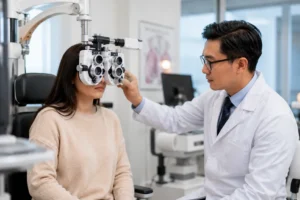
A binocular vision test is a series of evaluations designed to determine how well your eyes work together. Unlike a standard vision screening that mainly checks clarity, these tests assess eye coordination, focusing ability, and alignment.
Depending on your symptoms, your ophthalmologist may evaluate:
| Test | Purpose |
|---|---|
| Eye alignment | Determines whether both eyes are properly positioned |
| Eye movement | Evaluates how smoothly the eyes track moving objects |
| Convergence testing | Measures how well the eyes move inward while reading |
| Depth perception | Assesses three-dimensional vision |
| Focusing ability | Determines how efficiently the eyes maintain focus |
| Fusion testing | Evaluates how the brain combines images from both eyes |
Each test provides different information, allowing the ophthalmologist to understand why symptoms occur rather than simply treating the symptoms themselves.
What Is a Binocular Vision Dysfunction Test?
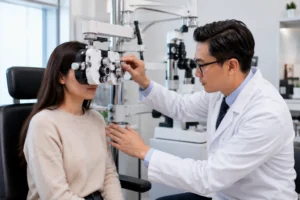
When symptoms suggest that the eyes are struggling to work together, a more detailed binocular vision dysfunction test may be recommended.
Binocular Vision Dysfunction (BVD) refers to subtle eye misalignment that forces the eye muscles and brain to work harder to keep images single and clear. Even a very small misalignment can cause significant discomfort for some individuals.
The purpose of a binocular vision dysfunction test is to identify these small alignment problems that may not be obvious during a routine vision screening.
Testing may include:
- Measuring tiny differences in eye alignment
- Assessing eye muscle coordination
- Evaluating visual tracking
- Checking focusing endurance
- Testing image fusion
- Observing eye movements during reading and near work
Not every patient requires this level of testing. It is generally recommended when symptoms cannot be explained by glasses prescription alone.
Symptoms That May Suggest Binocular Vision Dysfunction

One of the challenges with binocular vision dysfunction is that its symptoms often resemble other conditions, including migraines, fatigue, or digital eye strain.
Patients frequently report:
- Persistent headaches
- Neck and shoulder discomfort after reading
- Dizziness
- Difficulty concentrating
- Motion sensitivity
- Feeling overwhelmed in busy environments
- Eye fatigue after computer work
- Difficulty reading for extended periods
- Words appearing blurry or overlapping
- Intermittent double vision
These symptoms do not automatically mean someone has binocular vision dysfunction, but they deserve a thorough evaluation by an ophthalmologist.
Why Office Workers in NYC Commonly Experience These Symptoms
In New York City, many professionals spend eight to twelve hours each day looking at computer monitors, tablets, and smartphones.
Extended near work places continuous demand on the eye muscles responsible for focusing and maintaining alignment. Even individuals with otherwise healthy eyes may notice symptoms after prolonged screen use.
During consultations, patients often say:
“My vision is clear in the morning, but by evening everything feels strained.”
Others explain that they have difficulty switching focus between multiple computer screens or feel exhausted after long virtual meetings.
While digital eye strain is common, persistent symptoms should not simply be accepted as part of modern life. A comprehensive examination helps determine whether screen use is the only cause or whether an underlying binocular vision issue is contributing.
Causes of Double Vision in Elderly Adults
One of the most concerning symptoms we evaluate is double vision, particularly in older adults.
Understanding the causes of double vision in elderly patients is important because the condition may range from relatively minor eye muscle problems to medical issues requiring prompt attention.
Double vision, also called diplopia, occurs when a person sees two images instead of one.
Common causes include:
Age-Related Eye Muscle Changes
As we age, the muscles responsible for coordinating eye movement may gradually weaken. Small alignment changes that were previously unnoticed can begin causing intermittent double vision, especially when reading or looking into the distance.
Stroke and Neurological Conditions
Although less common, sudden double vision can occasionally be associated with serious neurological conditions, including stroke.
If double vision begins suddenly—especially when accompanied by facial weakness, difficulty speaking, imbalance, or numbness—it should be treated as a medical emergency, and immediate emergency care is essential.
How Advanced Vision Test Machines Help Identify the Real Cause of Your Symptoms
When patients hear the phrase “advanced diagnostic technology,” they often imagine complex machines replacing the doctor’s expertise. In reality, the opposite is true.
A vision test machine provides precise measurements, but it is the ophthalmologist who interprets those findings within the context of your symptoms, medical history, lifestyle, and overall eye health.
At LeeVision in Flushing, Queens, every diagnostic test is selected with a purpose. We do not perform unnecessary testing. Instead, each examination is tailored to answer a specific clinical question and guide the next step in your care.
For example, someone experiencing blurred vision after long hours on a computer may require different testing than an older adult with newly developed double vision. Personalized testing helps ensure that the evaluation focuses on the most likely causes rather than relying on a one-size-fits-all approach.
Common Vision Test Machines Used During a Comprehensive Eye Exam
Modern ophthalmology uses several specialized instruments, each designed to evaluate a different part of the visual system.
Digital Auto Refractor
One of the first machines patients encounter is the autorefractor. It estimates your glasses prescription by analyzing how light passes through your eye.
Although it provides a helpful starting point, it does not replace the detailed refraction performed by your ophthalmologist or optometrist, where lenses are refined based on your responses.
Slit Lamp Microscope
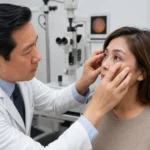
The slit lamp is one of the most valuable diagnostic tools in ophthalmology.
Using a bright beam of light and high magnification, your ophthalmologist can examine:
- Eyelids
- Cornea
- Conjunctiva
- Iris
- Natural lens
- Tear film
This examination helps detect conditions such as cataracts, corneal injuries, dry eye disease, infections, and inflammation.
Optical Coherence Tomography (OCT)
OCT has transformed modern ophthalmology.
Think of it as an optical ultrasound that uses light instead of sound waves to produce detailed cross-sectional images of the retina and optic nerve.
This technology helps detect:
- Glaucoma
- Macular degeneration
- Diabetic retinopathy
- Retinal swelling
- Optic nerve damage
In many cases, OCT identifies subtle structural changes long before patients notice vision loss.
How Eye Coordination Problems Are Diagnosed
When patients report headaches, dizziness, reading fatigue, or intermittent double vision, additional testing may be performed to evaluate how the eyes function together.
Rather than relying on one single binocular vision test, ophthalmologists combine several assessments to understand how the visual system performs during everyday activities.
These evaluations may include:
| Diagnostic Test | What It Evaluates |
|---|---|
| Eye alignment testing | Whether both eyes are properly aligned |
| Cover testing | Detects hidden eye muscle imbalance |
| Prism measurements | Measures the degree of eye misalignment |
| Eye movement assessment | Tracks how smoothly the eyes follow moving targets |
| Convergence testing | Determines how well the eyes work during near tasks |
| Depth perception testing | Evaluates binocular vision and three-dimensional perception |
Each test contributes to a complete understanding of how the eyes and brain are working together.
When Should You See a Board-Certified Ophthalmologist?
Some visual changes can safely wait for a routine appointment, while others require prompt evaluation.
You should schedule a comprehensive eye examination if you experience:
- Blurry vision that persists
- Frequent headaches during reading
- New difficulty focusing
- Eye strain despite updated glasses
- Intermittent or constant double vision
- Difficulty driving at night
- Loss of depth perception
- Increasing glare around lights
- Sudden changes in vision
Adults over the age of 40 should also receive regular comprehensive eye examinations, even if they believe their eyesight is normal. Many age-related eye diseases develop silently, making early detection one of the most effective ways to preserve long-term vision.
Eye Health in Flushing, Queens, and New York City
Living in New York City places unique demands on the visual system.
Many of our patients spend long hours working on computers, commuting by subway, switching between multiple digital devices, and navigating busy urban environments. These habits often contribute to eye fatigue, dry eye symptoms, and focusing difficulties.
Seasonal allergies are another common concern throughout Queens, causing itchy, watery, and irritated eyes that can temporarily affect vision.
In addition, NYC’s growing older adult population means we regularly evaluate patients for age-related conditions such as cataracts, glaucoma, and eye muscle changes that may contribute to double vision.
For these reasons, regular comprehensive eye examinations are especially important—not only to update your prescription but also to detect eye diseases before they begin affecting your quality of life.
Frequently Asked Questions
What is a vision test machine?
A vision test machine is advanced diagnostic equipment used during a comprehensive eye exam to evaluate your vision, eye health, eye pressure, retina, and overall visual function.
What does a vision test machine detect?
A vision test machine can help detect glaucoma, cataracts, retinal disease, refractive errors, dry eye disease, binocular vision problems, and other eye conditions.
What is a binocular vision test?
A binocular vision test checks how well both eyes work together. It helps diagnose eye alignment problems, poor depth perception, and focusing difficulties.
Who needs a binocular vision dysfunction test?
A binocular vision dysfunction test may be recommended if you have headaches, eye strain, dizziness, blurred vision, or double vision despite wearing the correct glasses.
What are the common causes of double vision in elderly adults?
Common causes of double vision in elderly adults include cataracts, age-related eye muscle changes, dry eye disease, diabetes, nerve disorders, and certain neurological conditions.
Can a vision test machine detect glaucoma?
Yes. A vision test machine, combined with a comprehensive eye examination, helps ophthalmologists detect early signs of glaucoma and optic nerve damage.
How often should I have a comprehensive eye exam?
Most adults should have regular comprehensive eye exams, especially after age 40 or if they have diabetes, glaucoma risk factors, or vision changes.
When should I see an ophthalmologist for double vision?
Seek prompt evaluation if you experience sudden or persistent double vision, blurred vision, headaches, or difficulty focusing.