






Advanced Cataracts: Symptoms, Treatment Options, Surgery Costs, Recovery, and Modern Surgical Technology
Cataracts are one of the leading causes of vision impairment worldwide, particularly among older adults. While early-stage cataracts can often be managed with updated prescriptions and lifestyle adjustments, advanced cataracts can significantly affect daily life, making activities such as driving, reading, recognizing faces, and working increasingly difficult.
Fortunately, modern cataract treatment has evolved dramatically. Today’s surgical techniques, advanced lens technology, and laser-assisted procedures provide patients with safer, more precise, and highly effective treatment options than ever before.
In this comprehensive guide, we’ll explain what advanced cataracts are, when surgery becomes necessary, available treatment options, costs, recovery expectations, and the latest innovations in cataract care.

What Are Advanced Cataracts?
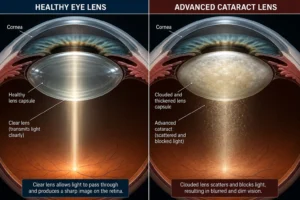
Advanced cataracts occur when the eye’s natural lens becomes significantly clouded, causing substantial vision loss. Cataracts develop gradually as proteins within the lens break down and clump together, reducing the amount of light reaching the retina.
In the early stages, symptoms may be mild. However, as the condition progresses, vision can become severely blurred, distorted, or dim.
Common signs of advanced cataracts include:
- Persistent blurry vision
- Difficulty seeing at night
- Increased sensitivity to light and glare
- Faded or yellowed colors
- Frequent prescription changes
- Double vision in one eye
- Reduced contrast sensitivity
- Difficulty reading even with corrective lenses
When these symptoms begin interfering with everyday activities, cataract treatment should be evaluated by an experienced eye specialist.
Understanding Cataract Progression
Cataracts do not develop overnight. Most patients experience a gradual decline in vision over several years.
Early Cataracts
- Mild clouding of the lens
- Minimal impact on daily activities
- Improved vision with updated glasses
Moderate Cataracts
- Noticeable blur
- Increased glare while driving
- Reduced night vision
Advanced Cataracts
- Significant vision impairment
- Daily tasks become challenging
- Increased risk of falls and accidents
- Surgery is often recommended
Without treatment, advanced cataracts may eventually lead to severe visual disability.
What Causes Advanced Cataracts?
Several factors can contribute to cataract development and progression.
Age-Related Changes
The most common cause is aging. As the lens naturally ages, structural changes cause it to become less transparent.
Medical Conditions
Certain health conditions increase cataract risk, including:
- Diabetes
- Chronic inflammation
- Previous eye injuries
- Retinal disorders
Lifestyle Factors
Additional contributing factors may include:
- Smoking
- Excessive UV exposure
- Long-term steroid use
- Poor nutrition
- Alcohol misuse
Genetic Predisposition
Some individuals have a family history that increases susceptibility to cataract formation.
When Is Advanced Cataract Surgery Necessary?
Surgery becomes appropriate when vision loss begins affecting quality of life.
Patients often consider surgery when they experience:
- Difficulty driving safely
- Trouble reading or working
- Frequent falls or balance issues
- Challenges recognizing faces
- Reduced independence
Contrary to common myths, patients do not need to wait until cataracts are “fully mature” before seeking treatment.
Modern ophthalmology allows cataract removal surgery at an earlier stage when symptoms become bothersome.
Advanced Cataract Surgery: How the Procedure Works
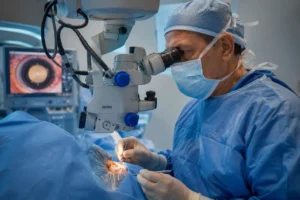
Advanced cataract surgery is one of the most commonly performed and successful surgical procedures worldwide.
The goal is simple:
- Remove the clouded natural lens.
- Replace it with a clear artificial intraocular lens (IOL).
- Restore visual clarity.
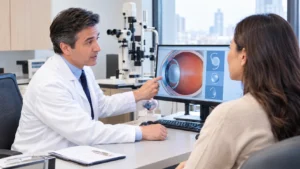
Step 1: Comprehensive Cataract Surgery Consultation
Before surgery, the eye surgeon performs:
- Detailed eye examination
- Corneal measurements
- Lens calculations
- Retinal evaluation
- Medical history review
These measurements help determine the most appropriate lens implant.
Step 2: Lens Removal
A small incision is created in the eye.
Using advanced ultrasound technology, the cataract is gently broken into tiny fragments and removed.
Step 3: Lens Replacement
A customized intraocular lens is inserted into the eye.
The lens remains permanently in place and typically requires no maintenance.
Step 4: Recovery and Follow-Up
Most patients return home the same day and begin visual recovery within a short period.
This is why same day cataract surgery has become the standard approach for many eligible patients.
How Long Does Cataract Surgery Take?
One of the most common patient questions is:

How long does cataract surgery take?
The actual cataract surgery procedure generally takes:
| Stage | Approximate Time |
|---|---|
| Pre-operative preparation | 30–60 minutes |
| Cataract surgery procedure | 10–20 minutes |
| Recovery observation | 30–60 minutes |
| Total clinic visit | 2–3 hours |
While surgery itself is relatively quick, patients should plan for several hours at the clinic on the day of treatment.
Advanced Cataract Surgery Technology
Modern cataract surgery continues to evolve through technological innovation.
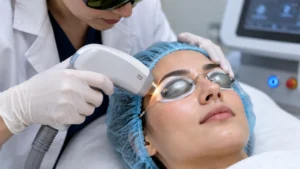
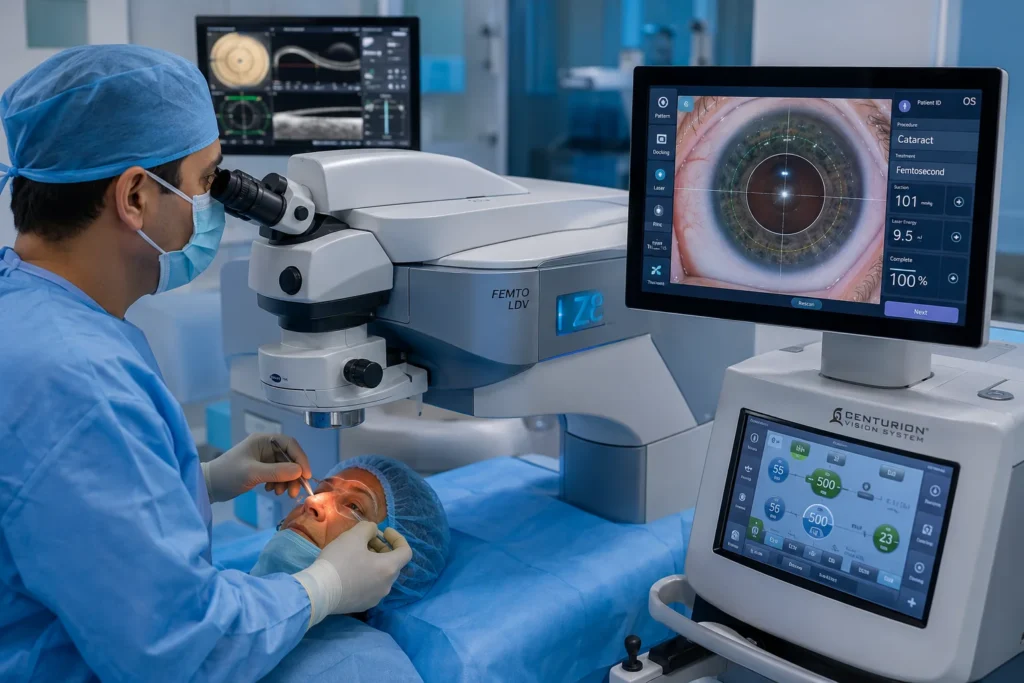
Femtosecond Laser Technology
Laser cataract surgery uses computer-guided lasers to assist specific surgical steps.
Potential benefits may include:
- Greater precision
- Reduced ultrasound energy
- Improved incision accuracy
- Enhanced lens positioning

Digital Imaging Systems
Advanced imaging helps surgeons:
- Plan procedures more accurately
- Improve lens calculations
- Optimize visual outcomes
Intraoperative Guidance
Real-time surgical guidance systems provide enhanced precision during cataract removal and lens placement.
These technologies contribute to what many specialists refer to as premium cataract surgery.
Laser Cataract Surgery vs Traditional Cataract Surgery
Both approaches are effective, but they differ in certain aspects.
| Feature | Traditional Surgery | Laser Cataract Surgery |
|---|---|---|
| Lens removal | Ultrasound-assisted | Laser-assisted |
| Incision creation | Manual | Laser-guided |
| Precision | High | Very high |
| Recovery | Excellent | Excellent |
| Cost | Lower | Higher |
| Availability | Widely available | Select clinics |
Not every patient requires laser cataract surgery. A comprehensive evaluation helps determine the most appropriate option.
Choosing the Best Lens for Cataract Surgery
Selecting the right intraocular lens can significantly impact visual outcomes.
Monofocal Lenses
Designed to provide clear vision at one distance.
Benefits:
- Proven performance
- Lower cost
- Often covered by insurance plans
Multifocal IOLs
Multifocal IOL technology allows patients to see at multiple distances.
Benefits:
- Reduced dependence on glasses
- Improved near and distance vision
Toric Lenses
Used to correct astigmatism during cataract surgery.
Extended Depth of Focus (EDOF) Lenses
Provide a continuous range of vision with fewer visual disturbances for some patients.
The best lens for cataract surgery varies depending on lifestyle, visual goals, and eye health.
Cataract Surgery Cost: What Patients Should Expect
Cost varies based on several factors:
- Geographic location
- Surgeon experience
- Facility fees
- Lens selection
- Laser technology use
- Insurance coverage
Cataract Surgery Cost Comparison
| Treatment Type | Estimated Cost Range Per Eye |
|---|---|
| Standard cataract surgery | $3,000–$5,000 |
| Cataract surgery without insurance | $3,000–$7,000 |
| Laser cataract surgery | $4,000–$8,000 |
| Multifocal IOL surgery | $4,500–$10,000+ |
| Premium cataract surgery packages | $5,000–$12,000+ |
Actual costs vary considerably by region and provider.
Patients should always request a detailed quote during their cataract surgery consultation.
Cataract Surgery Recovery Timeline
Most patients recover quickly following modern cataract eye surgery.
First 24 Hours
- Mild discomfort
- Slight blurriness
- Light sensitivity
First Week
- Vision gradually improves
- Most daily activities resume
- Eye drops continue
Weeks 2–4
- Improved clarity
- Reduced inflammation
- Continued healing
One to Three Months
- Vision stabilizes
- Final outcomes assessed
While cataract surgery recovery time varies, many patients notice visual improvement within days.
Cataract Surgery Recovery Tips
Following your surgeon’s recommendations can support smoother healing.
Helpful Recovery Strategies
- Use prescribed eye drops consistently
- Avoid rubbing the eye
- Wear protective eyewear as instructed
- Avoid swimming during early recovery
- Limit heavy lifting temporarily
- Attend all follow-up appointments
Proper cataract surgery aftercare plays an important role in achieving the best possible outcome.
Benefits of Cataract Removal Surgery
Many patients report meaningful improvements in daily life after surgery.
Potential cataract surgery benefits include:
- Sharper vision
- Better color perception
- Improved night driving
- Greater independence
- Enhanced quality of life
- Reduced glare sensitivity
Studies consistently show cataract surgery to be among the most successful procedures in modern medicine.
Cataract Surgery Risks and Complications
Although cataract surgery has an excellent safety profile, no procedure is completely risk-free.
Potential cataract surgery complications may include:
- Infection
- Inflammation
- Retinal detachment
- Swelling
- Elevated eye pressure
- Lens displacement
- Residual refractive error
The American Academy of Ophthalmology and Mayo Clinic emphasize that serious complications are uncommon when surgery is performed by qualified eye surgeons and patients follow post-operative instructions carefully.
Who Is a Good Candidate for Advanced Cataract Surgery?
You may be a suitable candidate if:
- Cataracts are affecting daily activities
- Vision cannot be adequately corrected with glasses
- Overall eye health supports surgery
- You have realistic expectations
A personalized examination remains the best way to determine candidacy.
Finding a Cataract Surgery Provider Near You
Many patients begin their search using phrases such as “cataract surgery near me.”

When evaluating providers, consider:
- Board certification
- Surgical experience
- Technology available
- Patient reviews
- Lens options offered
- Comprehensive follow-up care
Choosing a qualified and experienced cataract surgeon is often more important than selecting the newest technology alone.
For individuals exploring advanced eye care services, clinics such as https://www.leevision.com/ provide information about cataract surgery, laser cataract surgery, multifocal IOLs, LASIK, and other vision correction procedures.
Before and After Cataract Surgery: What Results Can You Expect?
Results vary among patients, but most experience significant visual improvement.
Before Surgery
- Clouded vision
- Difficulty reading
- Glare sensitivity
- Reduced contrast
After Surgery
- Improved clarity
- Better color perception
- Enhanced visual function
- Increased confidence in daily activities
Patients should understand that some individuals may still require glasses for certain tasks, depending on the lens selected and pre-existing eye conditions.
Frequently Asked Questions
What is cataract surgery?
Cataract surgery is a procedure that removes the eye’s cloudy natural lens and replaces it with a clear artificial lens to restore vision.
How much does cataract surgery cost?
Costs typically range from $3,000 to over $10,000 per eye depending on technology, lens selection, surgeon expertise, and insurance coverage.
How long does cataract surgery take?
The actual surgery usually takes 10–20 minutes, although the total clinic visit often lasts several hours.
Is cataract surgery painful?
Most patients experience little to no pain. Numbing drops and sedation are commonly used to maximize comfort.
What is the recovery time after cataract surgery?
Many patients notice improvement within a few days, while complete healing generally occurs over several weeks.
Are cataract surgery results permanent?
The artificial lens does not develop cataracts. However, some patients may later develop posterior capsule opacification, which can usually be treated with a quick laser procedure.
Is laser cataract surgery better?
Laser technology may improve precision for certain surgical steps, but traditional surgery also achieves excellent outcomes. The best option depends on individual circumstances.
What is the best lens for cataract surgery?
The ideal lens depends on your lifestyle, visual goals, eye health, and whether reducing dependence on glasses is a priority.
Are advanced cataracts dangerous?
If left untreated, advanced cataracts can lead to severe vision loss and reduced quality of life. Timely evaluation is recommended.
Can cataracts come back after surgery?
No. Once the cataract is removed, it does not return. However, some patients develop a secondary clouding behind the implant that can be treated easily.
Final Thoughts
Advanced cataracts can significantly impact vision, independence, and overall quality of life. Fortunately, modern cataract treatment offers highly effective solutions through sophisticated surgical techniques, advanced imaging systems, premium lens technology, and laser-assisted procedures.
Whether you’re exploring standard cataract removal surgery, multifocal IOL options, or advanced cataract surgery technology, a thorough evaluation by an experienced eye specialist is the most important first step.
A personalized consultation can help determine the severity of your cataracts, identify the most suitable lens options, discuss expected outcomes, and create a treatment plan tailored to your visual needs and lifestyle goals.